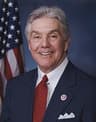
Roger Williams (R-TX)
Freedom to Compete Act of 2025
A Republican bill with no cosponsors
Last activity — Referred to the House Committee on the Judiciary.
In committee
Introduced and handed to a committee in the chamber it started in.
The committee holds it, and most bills are never heard from again. A hearing or a committee vote would be news; silence is the usual outcome, and it kills the bill without anyone voting against it.
Its path through Congress
- Introduced
- In Committee
What this bill would do
This bill is titled the "Freedom to Compete Act of 2025." Its primary purpose is to codify Executive Order 14267, which relates to reducing anti-competitive regulatory barriers. By passing this act, the provisions of that Executive Order would have the force and effect of law. The bill was introduced by Mr. Williams of Texas and referred to the Committee on the Judiciary.
Yes· 3 of 8
- Scored +5
Would business owners be better off under this?
The bill specifically targets the removal of regulatory barriers that hinder business competition.
- Scored +4
Does this make it easier to run a small business?
Lowering anti-competitive regulatory barriers can make it easier for small businesses to enter and compete in markets.
- Scored +3
Is this likely to create jobs?
Reducing anti-competitive regulatory barriers can lower entry costs for businesses, potentially leading to job creation.
The opposite
No question was scored the opposite.
Who it would affect, and how
Potential Positive Impacts for People
- Reduction of anti-competitive regulatory barriers: The bill aims to codify Executive Order s 14267, which relates to reducing these barriers (Section 2). This could potentially benefit individuals or groups by addressing regulatory hurdles that prevent competition.
Potential Negative Impacts for People
- No negative impacts are explicitly stated in the provided text: The text provided focuses solely on the intent to codify the Executive Order and does not list any specific negative consequences or burdens.
Groups and Interests Ranking
Every group the model scored this bill for, from -10 to +10. Tap or hover a score for the reason it gave.
- Demographic And Interest Groups
- Would business owners be better off under this? — The bill specifically targets the removal of regulatory barriers that hinder business competition. Would households on low incomes be better off under this? — Increased competition can lead to lower prices for goods and services, benefiting low-income consumers. Would middle-income households be better off under this? — Increased market competition can help lower costs for consumer goods and services. Would people in cities be better off under this? — Increased market competition may lead to more diverse service options in urban areas.
- Economy And Finance
- Does this make it easier to run a small business? — Lowering anti-competitive regulatory barriers can make it easier for small businesses to enter and compete in markets. Is this likely to grow the economy? — The reduction of regulatory barriers is intended to foster more competitive markets which can drive economic growth. Is this likely to create jobs? — Reducing anti-competitive regulatory barriers can lower entry costs for businesses, potentially leading to job creation.
- Governance And Ideology
- Does this leave more decisions to the states? — Reducing federal regulatory barriers may shift more operational freedom to private and state-level entities.
- 8/1/2025
- Referred to the House Committee on the Judiciary.
- Introduced in House