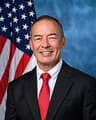
A Republican bill with 3 Democratic cosponsors · See all 5 cosponsors
Last activity — Referred to the House Committee on Ways and Means.
In committee
Introduced and handed to a committee in the chamber it started in.
The committee holds it, and most bills are never heard from again. A hearing or a committee vote would be news; silence is the usual outcome, and it kills the bill without anyone voting against it.
Its path through Congress
- Introduced
- In Committee
What this bill would do
The Supplemental Security Income Equality Act aims to extend the supplemental security income program to several territories. These territories include Puerto Rico, the United States Virgin Islands, Guam, and American Samoa. The bill amends the Social Security Act to include these locations in the definition of a state. It also removes limitations on total payments to these territories. Additionally, it ensures United States nationals are treated the same as citizens regarding these benefits.
Yes· 3 of 9
- Scored +8
Would households on low incomes be better off under this?
The bill directly assists low-income individuals by extending the SSI program to territories.
- Scored +8
Would people with disabilities be better off under this?
It extends essential SSI benefits to individuals with disabilities living in US territories.
- Scored +8
Does this strengthen Social Security?
The bill expands the scope of the Supplemental Security Income program to includes those in US territories.
The opposite
No question was scored the opposite.
Who it would affect, and how
Potential Positive Impacts for People
-
Extension of benefits to territories: The bill extends the supplemental security income program to Puerto Rico, the United States Virgin Islands, Guam, and American Samoa (Section 2(a)).
-
Equality for nationals: The bill amends the law so that United States nationals are treated the same as citizens (Section 2(b)(3)).
-
Removal of payment caps: The bill strikes the limitation on total payments to the territories (Section 2(b)(2)).
-
Flexibility for local needs: The Commissioner of Social Security is given authority to waive or modify requirements to adapt the program to the specific needs of the territories involved (Section 2(c)).
Potential Negative Impacts for People
- Delayed implementation: The amendments do not take effect until the 1st day of the 1st Federal fiscal year that begins 1 year or more after the Act is enacted (Section 2(d)).
Groups and Interests Ranking
Every group the model scored this bill for, from -10 to +10. Tap or hover a score for the reason it gave.
- Demographic And Interest Groups
- Would households on low incomes be better off under this? — The bill directly assists low-income individuals by extending the SSI program to territories. Would people with disabilities be better off under this? — It extends essential SSI benefits to individuals with disabilities living in US territories. Would Hispanic Americans be better off under this? — The bill benefits residents of Puerto Rico, a significant demographic group. Would retired people be better off under this? — The extension of benefits provides financial security for retirees in the territories. Would people over 65 be better off under this? — Extending SSI provides crucial support for seniors living in US territories.
- Social Issues And Justice
- Does this strengthen Social Security? — The bill expands the scope of the Supplemental Security Income program to includes those in US territories. Does this expand the rights of people with disabilities? — Extending SSI provides critical financial support for individuals with disabilities in US territories. Is this likely to lift people out of poverty? — Extending SSI benefits will provide essential financial assistance to low-income residents in the territories. Does this narrow racial gaps in how people are treated? — By extending SSI to territories, it promotes equity for residents in those regions.
- 7/29/2025
- Referred to the House Committee on Ways and Means.
- 5 Cosponsors added.
- Introduced in House
3 bills Congress.gov lists as related to this one — companions in the other chamber, earlier versions, and bills this one absorbed or was folded into.
 Pablo Hernández
Democrat · Puerto Rico
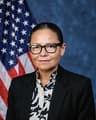 Kimberlyn King-Hinds
Republican · Northern Mariana Islands
 Eleanor Norton
Democrat · District of Columbia
 Stacey Plaskett
Democrat · Virgin Islands
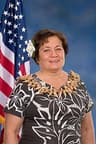 Aumua Amata Radewagen
Republican · American Samoa