
A Republican bill with 6 Democratic cosponsors · See all 14 cosponsors
Last activity — Subcommittee Hearings Held
In committee
Introduced and handed to a committee in the chamber it started in.
The committee holds it, and most bills are never heard from again. A hearing or a committee vote would be news; silence is the usual outcome, and it kills the bill without anyone voting against it.
Its path through Congress
- Introduced
- In Committee
What this bill would do
This bill is known as the Warrior Impact from Neurological and G-Force Stress Act or the WINGS Act. It directs the Secretary of Veterans Affairs to conduct a comprehensive study on the long-term physiological and psychological effects on military aviation veterans. The study will look at brain health, mental health, and the connection between flight hours and injuries like traumatic brain injuries. The Secretary must also establish a centralized Military Aviator Neurohealth Registry to track health data over time. Finally, the Secretary is required to submit an interim report within one year and a final report within three years to Congress.
Yes· 3 of 6
- Scored +5
Would veterans be better off under this, taking everything together?
The bill specifically targets the long-term health impacts faced by military aviators to improve their future care and understanding.
- Scored +4
Does this increase the pay, pensions or support veterans receive?
The bill seeks to improve the monitoring, prevention, and treatment of health conditions specifically affecting military aviators.
- Scored +3
Does this make mental health care easier to get?
The bill directs a study into the long-term mental health outcomes of aviators to better understand and treat depression, anxiety, and PTSD.
The opposite
No question was scored the opposite.
Who it would affect, and how
Potential Positive Impacts for People
-
Section 2(a) and Section 2(b) could benefit veterans by studying the long-term physiological and psychological effects of military aviation, including brain health, mental health, and the risks of traumatic brain injuries and neurodegenerative conditions. This is positive because understanding these issues is the first step toward better care for our people.
-
Section 2(d) creates a centralized Military Aviator Neurohealth Registry to track health outcomes and flight exposure metrics over time for participating aviators. This is helpful for keeping track of veteran health data so officials can be held accountable for understanding these conditions.
-
Section 2(e) requires interim and final reports to be submitted to Congress within one and three years, respectively, detailing findings and recommendations. This ensures our elected officials have the information needed to act on behalf of veterans.
Potential Negative Impacts for People
- The provided text does not contain any specific sections or provisions that outline potential negative consequences or burdens for individuals or groups of people in the United States.
Groups and Interests Ranking
Every group the model scored this bill for, from -10 to +10. Tap or hover a score for the reason it gave.
- Healthcare
- Does this make mental health care easier to get? — The bill directs a study into the long-term mental health outcomes of aviators to better understand and treat depression, anxiety, and PTSD. Does this put more money into medical research? — The bill mandates a comprehensive, longitudinal study on the physiological and psychological effects of military aviation. Does this make health care easier to get in general? — The establishment of a neurohealth registry aims to improve the monitoring and treatment of aviation-related health challenges.
- Demographic And Interest Groups
- Would veterans be better off under this, taking everything together? — The bill specifically targets the long-term health impacts faced by military aviators to improve their future care and understanding.
- National Security And Foreign Policy
- Does this increase the pay, pensions or support veterans receive? — The bill seeks to improve the monitoring, prevention, and treatment of health conditions specifically affecting military aviators.
- Education And Technology
- Does this put more money into scientific research? — The act funds a specialized study involving neuroscience, psychiatry, and aviation medicine.
- 9/21/2026
- 1 Cosponsor added.
- 8/20/2026
- 1 Cosponsor added.
- 6/30/2026
- Subcommittee Hearings Held
- 6/2/2026
- 1 Cosponsor added.
- 4/9/2026
- 1 Cosponsor added.
- 2/24/2026
- 3 Cosponsors added.
- 10/24/2025
- 1 Cosponsor added.
- 10/22/2025
- Referred to the Subcommittee on Health.
- 9/3/2025
- 1 Cosponsor added.
- 8/15/2025
- 1 Cosponsor added.
- 8/5/2025
- 3 Cosponsors added.
- 7/29/2025
- Referred to the House Committee on Veterans' Affairs.
- 1 Cosponsor added.
- Introduced in House
 Don Bacon
Republican · Nebraska
 Laura Friedman
Democrat · California
 Maggie Goodlander
Democrat · New Hampshire
 Abraham Hamadeh
Republican · Arizona
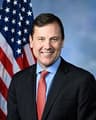 Thomas Kean
Republican · New Jersey
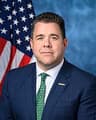 Nick LaLota
Republican · New York
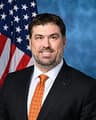 Morgan Luttrell
Republican · Texas
 Seth Moulton
Democrat · Massachusetts
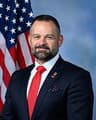 Cory Mills
Republican · Florida
 August Pfluger
Republican · Texas
 Jimmy Patronis
Republican · Florida
 Eric Sorensen
Democrat · Illinois
 Jill Tokuda
Democrat · Hawaii
 Eugene Vindman
Democrat · Virginia