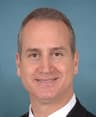
Mario Diaz-Balart (R-FL)
National Security, Department of State, and Related Programs Appropriations Act, 2026
A Republican bill with no cosponsors
Last activity — Placed on the Union Calendar, Calendar No. 177.
Cleared committee, waiting for its first floor vote
A committee approved it and it is on the calendar of the chamber it started in.
This is further than most bills get, and still no promise of a vote: the calendar is a queue, and the majority leadership decides what is called. A bill can sit here until the Congress ends.
Its path through Congress
- Introduced
- On Calendar
What this bill would do
This bill provides funding for the Department of State, various international organizations, and related national security programs for the fiscal year ending September 30, 2026. It allocates money for diplomatic programs, consular services, educational exchanges, and international peacekeeping activities. Significant funds are designated for global health, humanitarian assistance, food security, water and sanitation, and international narcotics control. The legislation also establishes funding priorities for democracy, religious freedom, and women's empowerment while implementing strict oversight on financial transparency and anti-corruption efforts. Additionally, the bill imposes several prohibitions regarding specific countries, social programming, and environmental spending. Finally, the act implements large-scale rescissions of previously unobligated funds across various programs.
Yes· 3 of 20
- Scored +8
Does this narrow the gap between how men and women are treated?
The bill allocates $160,000,000 for economic opportunities for women and $200,000,000 to prevent violence against women and girls.
- Scored +7
Would women be better off under this?
The bill provides extensive funding for women's leadership, economic empowerment, and protection from violence.
- Scored +7
Does this make health care easier to get in general?
The bill allocates significant funds for global health programs, including maternal health, immunization, and disease prevention.
The opposite· 3 of 6
- Scored -6
Does this strengthen ties with allied countries?
The bill restricts funding to several major international organizations, including the United Nations and the WHO.
- Scored -5
Does this make the country readier for the next outbreak?
The bill restricts funding for the Pandemic Prevention, Preparedness and Response Accord and the World Health Organization.
- Scored -5
Does this cut the pollution that drives climate change?
The bill restricts funding for the Green Climate Fund and the Paris Agreement.
Who it would affect, and how
Potential Positive Impacts for People
-
Passport and Visa Services: Funds are directed toward reducing passport backlogs and reducing visa wait times through consular and border security programs. (Consular and Border Security Programs)
-
Educational and Cultural Exchange: The bill funds educational and cultural exchange programs, including the Fulbright Program, to support learning and international interaction. (Educational and Cultural Exchange Programs)
-
Global Health Improvements: Money is allocated for training, equipment, and technical assistance to build capacity in public health institutions, addressing needs like maternal health, immunization, and the prevention and treatment of diseases such as HIV/AIDS, tuberculosis, and malaria. (Global Health Programs)
-
Humanitarian and Disaster Relief: Funds are provided for international disaster relief, rehabilitation, and reconstruction assistance, as well as meeting refugee and migration needs. (International Humanitarian Assistance)
-
Economic Resilience: Funding is directed toward the Economic Resilience Initiative to enhance economic security and stability for the United States and partner countries. (Sec. 7030)
-
Support for Democracy and Human Rights: Funding is provided for democracy programs in adversarial or anti-American countries to strengthen democratic institutions (Sec. 7032(a)). Additionally, $94,000,000 is allocated to promote Internet freedom globally (Sec. 7050).
-
Religious Freedom and Minority Protection: At least $50,000,000 is set aside for international religious freedom programs (Sec. 7033(b)(1)), and humanitarian assistance is available for vulnerable and persecuted ethnic and religious minorities (Sec. 7033(b)(2)).
-
Women's Empowerment: The bill allocates $160,000,000 to expand economic opportunities for women (Sec. 7059(b)) and $200,000,000 to prevent and respond to violence against women and girls (Sec. 7059(d)).
-
Global Health and Survival: Funds are directed toward child survival, malaria, and tuberculosis treatments (Sec. 7058(a)), and up to $200,000,000 is available to respond to international infectious disease outbreaks (Sec. 7058(c)(2)).
-
Education and Conservation: The bill provides $737,600,000 for the Nita M. Lowey Basic Education Fund (Sec. 7060(a)(1)(A)) and $292,600,000 for biodiversity conservation programs (Sec. 7060(b)(1)).
-
Countering Fentanyl: At least $175,000,000 is made available for programs to counter the flow of fentanyl and other synthetic drugs into the United States (Sec. 7036(a)).
-
Food Security: At least $768,000,000 is designated for food security and agricultural development programs to support the purposes of the Global Food Security Act of 2016. (Section (c))
-
Human Trafficking Combat: At least $111,000,000 is allocated for activities to combat international human trafficking, including the Program to End Modern Slavery. (Section (d)(1))
-
Water and Sanitation: Not less than $451,000,000 is made available for water supply and sanitation projects, with at least $225,500,000 specifically for sub-Saharan Africa. (Section (e))
-
Human Rights Protection: The bill requires that funds for combating human trafficking be used consistent with country-specific recommendations in the annual Trafficking in Persons Report. (Section (d)(1))
-
Oversight of Assistance: The bill mandates oversight policies and third-party monitoring for assistance provided to Gaza to prevent diversion to terrorist or criminal entities. (Section 7065 (a) and (d))
Potential Negative Impacts for People
-
Restrictions on Family Planning: There are strict prohibitions stating that funds may not be used for the performance of abortions or involuntary sterilization as a method of family planning, nor to motivate or coerce any person to practice them. (Global Health Programs)
-
Impact on Assistance to Certain Countries: Assistance is prohibited for the governments of Cuba, North Korea, or Iran. (Sec. 7007)
-
Impact of Coups: Assistance may be denied to any country where the elected head of government is deposed by a military coup d'etat or decree. (Sec. 7008)
-
Restrictions on Assistance to Countries in Default: No part of the appropriation may be used to furnish assistance to a country that has been in default on a loan to the United States for more than one year, unless specific national interest determinations are made. (Sec. 7012)
-
Restrictions on Assistance for the Palestinian Authority: Funds may not be provided to support a Palestinian state unless specific commitment and peace requirements are met (Sec. 7037(a)), and specific limitations exist regarding the Palestinian Authority (Sec. 7040).
-
Sanctions and Ineligibility Due to Corruption: Foreign government officials and their families may be ineligible for entry into the United States if they are involved in significant corruption or gross violations of human rights (Sec. 7031(c)(1)(A)).
-
Restrictions on Mining and Natural Resources: Assistance for mining activities is prohibited until specific certification regarding U.S. mining capabilities is met (Sec. 7031(d)(1)).
-
Limitations on Economic Development in Cuba: Funds are prohibited for business promotion, economic reform, or entrepreneurship in Cuba (Sec. 7045(d)(2)).
-
Financial and Assistance Restrictions for Certain Countries: Funding is subject to specific prohibitions or limitations for various nations, such as restrictions on assistance for the central government of Sudan (Sec. 7042(c)) and limitations on assistance to Mexico based on water delivery requirements (Sec. 7045(h)(1)).
-
Loss of Funding through Rescissions: The bill permanently rescinds billions of dollars in unobligated funds from various programs, including $1,300,000,000 from Development Assistance and $753,482,000 from the Economic Support Fund. (Section 7068)
-
Restrictions on Environmental Funding: Funds cannot be used for contributions to the Green Climate Fund, the Clean Technology Fund, or the Loss and Damages Fund. (Section 7061 (a))
-
Limitations on Expression and Training: The bill prohibits funding for any program that teaches concepts regarding systemic racism or sexism, or those that involve "drag queen" workshops, performances, or documentaries. (Section s 7067 (b) and (c))
-
Restrictions on Healthcare-related Information: Funds cannot be used for any program that offers counseling regarding or promotes sex change surgeries or the use of medications to halt the onset of puberty in minors. (Section 7067 (f))
-
Religious and Moral Conviction Restrictions: The bill prohibits taking discriminatory actions against individuals based on religious beliefs that marriage should be recognized as a union of one man and one woman, which could impact tax treatments, grants, or employment. (Section 7067 (i))
Groups and Interests Ranking
Every group the model scored this bill for, from -10 to +10. Tap or hover a score for the reason it gave.
- Economy And Finance
- Does this reduce what the federal government spends? — The bill implements significant rescissions of previous funding for international organizations and development assistance. Does this make it easier to run a small business? — The bill funds the Economic Resilience Initiative to enhance economic security for partner countries. Does this reduce what the federal government owes? — The bill rescinds billions of dollars in unobligated balances across various foreign assistance accounts. Does this give people more protection from unfair business practices? — The bill prioritizes diplomatic engagement to safeguard and promote United States business interests abroad.
- Demographic And Interest Groups
- Would women be better off under this? — The bill provides extensive funding for women's leadership, economic empowerment, and protection from violence. Would children be better off under this? — The bill funds child survival, maternal health, and basic education programs. Would retired people be better off under this? — The bill's rescissions may reduce the long-term federal deficit. Would union members be better off under this? — The bill includes provisions to protect and promote United States producers from foreign competition in specific commodities. Would veterans be better off under this, taking everything together? — The bill provides funds for the Foreign Service Retirement and Disability Fund and combat casualty care. Would households on low incomes be better off under this? — The bill rescinds large portions of development assistance intended for poverty reduction and food security. Would Black Americans be better off under this? — The bill limits certain diversity, equity, and inclusion programs.
- Social Issues And Justice
- Does this narrow the gap between how men and women are treated? — The bill allocates $160,000,000 for economic opportunities for women and $200,000,000 to prevent violence against women and girls. Does this protect the freedom to practise a religion? — The bill includes protections against discriminatory actions based on sincerely held religious beliefs. Does this narrow racial gaps in how people are treated? — The bill provides funding for democracy and human rights programs globally. Is this likely to lift people out of poverty? — The bill rescinds significant funds previously allocated for international development assistance.
- Education And Technology
- Does this get reliable internet to more people? — The bill allocates $94 million to promote internet freedom and expand access for women and girls in Afghanistan. Does this make college cost less? — The bill allocates significant funding for international higher education programs.
- Governance And Ideology
- Does this make what the government does easier for the public to see? — The bill mandates increased fiscal transparency and audit requirements for many foreign governments receiving assistance.
- Healthcare
- Does this make health care easier to get in general? — The bill allocates significant funds for global health programs, including maternal health, immunization, and disease prevention. Does this make the country readier for the next outbreak? — The bill restricts funding for the Pandemic Prevention, Preparedness and Response Accord and the World Health Organization.
- Environment Energy And Infrastructure
- Does this better protect air, water and wildlife? — The bill provides $292,600,000 for biodiversity conservation programs. Does this put more money into wind, solar and other renewable power? — The bill supports an all-of-the-above energy policy including civil nuclear power. Does this cut the pollution that drives climate change? — The bill restricts funding for the Green Climate Fund and the Paris Agreement.
- National Security And Foreign Policy
- Does this send more money or help to other countries? — The bill allocates significant funds for various international assistance and security programs. Does this increase the pay, pensions or support veterans receive? — The bill provides funds for the Foreign Service Retirement and Disability Fund and establishes the America First Opportunity Fund. Does this strengthen ties with allied countries? — The bill restricts funding to several major international organizations, including the United Nations and the WHO.
- 7/25/2025
- The House Committee on Appropriations reported an original measure, H. Rept. 119-217, by Mr. Diaz-Balart.
- Placed on the Union Calendar, Calendar No. 177.
- Bill introduced.
2 bills Congress.gov lists as related to this one — companions in the other chamber, earlier versions, and bills this one absorbed or was folded into.