
A Democratic bill with 2 Republican cosponsors · See all 23 cosponsors
Last activity — Referred to the House Committee on Ways and Means.
In committee
Introduced and handed to a committee in the chamber it started in.
The committee holds it, and most bills are never heard from again. A hearing or a committee vote would be news; silence is the usual outcome, and it kills the bill without anyone voting against it.
Its path through Congress
- Introduced
- In Committee
What this bill would do
The Foster Youth Mentoring Act of 2025 aims to support programs that provide mentoring for children in foster care and those with experience in foster care. It authorizes the Secretary to award grants to various eligible entities, such as nonprofits and state agencies, to establish or expand these mentoring networks. The bill emphasizes the importance of consistent, long-term relationships through trained adult or peer mentors. These programs are intended to focus on areas like academic support, social skills, and minimizing risk behaviors. The legislation includes specific requirements for mentor training, screening, and community engagement. Finally, it authorizes significant funding to ensure these programs can serve the needs of foster youth effectively.
Yes· 3 of 17
- Scored +7
Would children be better off under this?
The bill provides direct mentoring services and support for children in foster care.
- Scored +6
Would people in their twenties and thirties be better off under this?
The bill includes support for youth with experience in foster care up to the age of 26.
- Scored +5
Would Native Americans be better off under this?
The bill specifically mentions supporting indigenous youth and coordinating with tribal organizations.
The opposite
No question was scored the opposite.
Who it would affect, and how
Potential Positive Impacts for People
-
Improved Life Outcomes for Youth: The bill notes that mentoring can lead to better mental health, reduced substance misuse, increased life satisfaction, and higher rates of college enrollment (Section 2).
-
Educational and Social Success: Mentoring is linked to improved school attendance, increased likelihood of holding leadership positions, and better academic achievement (Section 2).
-
Support for Transitions: Mentoring relationships can help reduce placement changes and improve the use of transition services when youth exit foster care (Section 2).
-
Reduced Legal Involvement: Research cited in the bill indicates that mentored youth show lower rates of involvement in the juvenile justice system and the legal system as adults (Section 2).
-
Targeted Support for Diverse Groups: The grant application process requires programs to be responsive to specific groups, including youth of color, indigenous youth, and youth with disabilities (Section 3, subsection c, paragraph 2, subparagraph A, clause iii).
Potential Negative Impacts for People
- No specific negative impacts or burdens are explicitly stated in the provided text.
Groups and Interests Ranking
Every group the model scored this bill for, from -10 to +10. Tap or hover a score for the reason it gave.
- Demographic And Interest Groups
- Would children be better off under this? — The bill provides direct mentoring services and support for children in foster care. Would people in their twenties and thirties be better off under this? — The bill includes support for youth with experience in foster care up to the age of 26. Would LGBTQ people be better off under this? — The bill requires programs to be responsive to youth who are lesbian, gay, bisexual, transgendered, or queer. Would Native Americans be better off under this? — The bill specifically mentions supporting indigenous youth and coordinating with tribal organizations. Would people with disabilities be better off under this? — The bill requires grant applicants to demonstrate capacity to serve youth with disabilities. Would Black Americans be better off under this? — The bill emphasizes responsiveness to youth of color in its grant application requirements. Would Hispanic Americans be better off under this? — The bill emphasizes responsiveness to youth of color in its grant application requirements. Would households on low incomes be better off under this? — The bill provides social support services that benefit children in the foster care system, which often correlates with low-income status.
- Social Issues And Justice
- Does this expand the rights of people with disabilities? — The bill requires programs to be responsive to the needs of youth with disabilities. Does this narrow racial gaps in how people are treated? — The bill encourages recruiting mentors who reflect the race and ethnicity of the children served. Does this expand the rights of LGBTQ people? — The bill requires grant applications to be responsive to youth who are lesbian, gay, bisexual, transgendered, or queer. Does this shorten or soften prison sentences? — The bill notes that mentoring is associated with lower rates of involvement in the juvenile justice system. Is this likely to lift people out of poverty? — The bill aims to improve life outcomes and academic success, which are factors in long-term poverty reduction.
- Healthcare
- Does this make mental health care easier to get? — The bill explicitly notes that mentoring can improve mental health for foster youth. Does this do more about addiction and overdose deaths? — The bill notes that mentoring can help reduce substance misuse among at-risk youth.
- Education And Technology
- Does this make college cost less? — The bill aims to increase college enrollment rates through mentoring support.
- Economy And Finance
- Is this likely to create jobs? — The bill authorizes funding for recruiting and compensating mentors, which may support job creation in the nonprofit sector.
- 7/22/2026
- 1 Cosponsor added.
- 5/14/2026
- 1 Cosponsor added.
- 4/14/2026
- 1 Cosponsor added.
- 3/26/2026
- 1 Cosponsor added.
- 3/24/2026
- 1 Cosponsor added.
- 2/23/2026
- 1 Cosponsor added.
- 2/10/2026
- 1 Cosponsor added.
- 9/2/2025
- 6 Cosponsors added.
- 7/25/2025
- Referred to the House Committee on Ways and Means.
- 10 Cosponsors added.
- Introduced in House
 Don Bacon
Republican · Nebraska
 Emanuel Cleaver
Democrat · Missouri
 Steve Cohen
Democrat · Tennessee
 Sean Casten
Democrat · Illinois
 Sheila Cherfilus-McCormick
Democrat · Florida
 Dwight Evans
Democrat · Pennsylvania
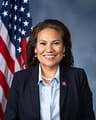 Veronica Escobar
Democrat · Texas
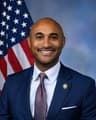 Shomari Figures
Democrat · Alabama
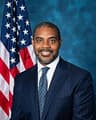 Steven Horsford
Democrat · Nevada
 Josh Harder
Democrat · California
 John Larson
Democrat · Connecticut
 Gwen Moore
Democrat · Wisconsin
 Seth Magaziner
Democrat · Rhode Island
 Sarah McBride
Democrat · Delaware
 Eleanor Norton
Democrat · District of Columbia
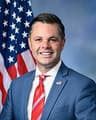 Zachary Nunn
Republican · Iowa
 Deborah Ross
Democrat · North Carolina
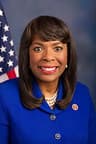 Terri Sewell
Democrat · Alabama
 Lateefah Simon
Democrat · California
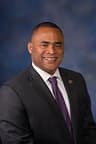 Marc Veasey
Democrat · Texas
 Eugene Vindman
Democrat · Virginia
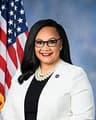 Nikema Williams
Democrat · Georgia
 Debbie Wasserman Schultz
Democrat · Florida