
A Republican bill with 8 Republican cosponsors · See all 8 cosponsors
Last activity — Referred to the Subcommittee on Aviation.
In committee
Introduced and handed to a committee in the chamber it started in.
The committee holds it, and most bills are never heard from again. A hearing or a committee vote would be news; silence is the usual outcome, and it kills the bill without anyone voting against it.
Its path through Congress
- Introduced
- In Committee
What this bill would do
The LIFT Act of 2025 directs the Secretary of Transportation to expand Beyond Visual Line of Sight (BVLOS) operations for unmanned aircraft systems. The Secretary is required to issue proposed and final rules to enable these routine operations and establish safety metrics. The bill also tasks the Secretary with exploring options for unmanned aircraft operating over the high seas. Additionally, the act mandates the use of artificial intelligence to expedite the review of waiver applications. Finally, it establishes an electric Vertical Takeoff and Landing (eVTOL) pilot program to provide grants to various levels of government for deployment projects.
Yes· 3 of 9
- Scored +4
Would business owners be better off under this?
The prioritization of U.S.-manufactured systems and streamlined waiver processes benefits domestic aviation businesses.
- Scored +4
Is this likely to create jobs?
The expansion of BVLOS operations and the eVTOL pilot program supports growth in the unmanned aircraft and advanced air mobility sectors.
- Scored +3
Would people in rural areas be better off under this?
The eVTOL pilot program specifically targets projects that can provide improved rural access.
The opposite
No question was scored the opposite.
Who it would affect, and how
Potential Positive Impacts for People
-
Expansion of Unmanned Aircraft Operations: The Secretary must issue rules to enable routine Beyond Visual Line of Sight (BVLOS) operations (Section 3(a)). This could allow for more advanced uses of unmanned aircraft systems.
-
Streamlined Waiver Processes: The deployment of artificial intelligence tools is intended to assist in and expedite the review of unmanned aircraft system waiver applications (Section 5(a)). This could lead to faster approvals through performance- and risk-based evaluations (Section 5(b)(1)).
-
Support for eVTOL Development: The creation of an electric Vertical Takeoff and Landing (eVTOL) integration pilot program provides grants to State, local, Tribal, and territorial governments to accelerate safe operations (Section 6(a)). These projects may include advanced air mobility, medical response, cargo transport, and rural access (Section 6(c)(3)).
-
Support for Domestic Manufacturing: The Secretary is directed to prioritize the integration of unmanned aircraft systems manufactured in the United States over those manufactured outside of the United States (Section 7).
Potential Negative Impacts for People
-
Regulatory Barriers and Challenges: The Secretary is tasked with identifying additional regulatory barriers and challenges to the implementation of BVLOS operations (Section 3(b)(2)).
-
Requirement for Private Sector Partners: To receive grants for the eVTOL pilot program, local government proposals must include a private sector partner with demonstrated experience (Section 6(b)(2)).
Groups and Interests Ranking
Every group the model scored this bill for, from -10 to +10. Tap or hover a score for the reason it gave.
- Demographic And Interest Groups
- Would business owners be better off under this? — The prioritization of U.S.-manufactured systems and streamlined waiver processes benefits domestic aviation businesses. Would people in rural areas be better off under this? — The eVTOL pilot program specifically targets projects that can provide improved rural access.
- Economy And Finance
- Is this likely to create jobs? — The expansion of BVLOS operations and the eVTOL pilot program supports growth in the unmanned aircraft and advanced air mobility sectors. Does this make it easier to run a small business? — The expedited waiver process using artificial intelligence may reduce regulatory hurdles for smaller drone operators.
- Environment Energy And Infrastructure
- Does this invest in rural communities? — The bill directs the eVTOL pilot program to consider projects that support rural access.
- Healthcare
- Does this make health care easier to get in general? — The eVTOL pilot program specifically includes medical response as a potential use case for advanced air mobility.
- Education And Technology
- Does this put more money into scientific research? — The bill involves coordination with the Office of Science and Technology Policy to advance flight technologies.
- National Security And Foreign Policy
- Does this make trade with other countries easier? — The bill explores options for unmanned aircraft systems to operate more freely over the high seas.
- Governance And Ideology
- Does this make what the government does easier for the public to see? — The bill mandates various reports to be submitted to the appropriate committees of Congress regarding program progress.
- 10/24/2025
- 1 Cosponsor added.
- 7/25/2025
- 1 Cosponsor added.
- 7/24/2025
- Referred to the Subcommittee on Aviation.
- 7/23/2025
- Referred to the House Committee on Transportation and Infrastructure.
- 6 Cosponsors added.
- Introduced in House
 Dan Crenshaw
Republican · Texas
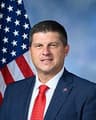 Brad Finstad
Republican · Minnesota
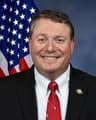 Randy Fine
Republican · Florida
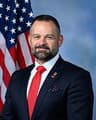 Cory Mills
Republican · Florida
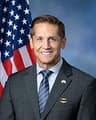 Richard McCormick
Republican · Georgia
 Jay Obernolte
Republican · California
 Jefferson Shreve
Republican · Indiana
 Robert Wittman
Republican · Virginia