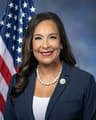
Monica De La Cruz (R-TX)
Whistleblower Protection Act of 2025
A Republican bill with 3 Democratic cosponsors · See all 7 cosponsors
Last activity — Received in the Senate and Read twice and referred to the Committee on Banking, Housing, and Urban Affairs.
In the other chamber's committee
Passed one chamber and has been handed to a committee in the other.
The committee decides whether it goes any further, and most bills that reach a committee never leave it. A committee that simply does nothing kills a bill without anyone ever voting against it, so no news from here is usually the news.
Its path through Congress
- Introduced
- Passed House 424–0
- In Senate committee
What this bill would do
This bill, titled the "Whistleblower Protection Act of 2025," aims to expand existing whistleblower protections. It clarifies that protections under section 4712 of title 41, United States Code, apply to a broader range of funding. Specifically, these protections would cover any contract, subcontract, grant, subgrant, or personal services contract funded by the Department of Housing and Urban Development. This applies regardless of when the specific contract was executed.
Yes· 3 of 4
- Scored +5
Does this make what the government does easier for the public to see?
Increases transparency and accountability by protecting whistleblowers in HUD funding.
- Scored +5
Does this protect the individual right to speak freely?
Protects the right of employees to report waste, fraud, and abuse without retaliation.
- Scored +3
Would union members be better off under this?
Provides additional legal protections for workers in HUD-funded contracts.
The opposite
- Scored -2
Would business owners be better off under this?
Increases potential legal liability for HUD contractors regarding whistleblower claims.
What Congress actually voted on
One recorded vote has been taken on this bill.
- The House: a fast-track vote, needing two-thirds to pass The House sets aside its normal procedure to move quickly: no amendments, little debate, and a two-thirds bar instead of a simple majority. It is used for measures expected to be uncontroversial, so a bill that fails here failed despite broad expectations that it would not. Passed 424 yes · 0 no
09/15/2026 · Roll call 303 · recorded as “On Motion to Suspend the Rules and Pass, as Amended”
Who it would affect, and how
Potential Positive Impacts for People
-
Expanded Protections for Workers: The bill ensures that anyone involved in a contract, subcontract, grant, subgrant, or personal services contract funded by the Secretary of Housing and Urban Development is covered under whistleblower protections (Section 2). This is positive because it provides a safety net for individuals reporting misconduct within these funded projects.
-
Consistent Coverage: By applying the law regardless of when the contract was executed, the bill ensures that older contracts are not left without these protections (Section 2). This provides long-term clarity for those working on Department of Housing and Urban Development projects.
Potential Negative Impacts for People
- No negative impacts are explicitly stated in the provided text.
Groups and Interests Ranking
Every group the model scored this bill for, from -10 to +10. Tap or hover a score for the reason it gave.
- Governance And Ideology
- Does this protect the individual right to speak freely? — Protects the right of employees to report waste, fraud, and abuse without retaliation. Does this make what the government does easier for the public to see? — Increases transparency and accountability by protecting whistleblowers in HUD funding. Does this give the federal government more power? — Extends federal whistleblower protections to HUD-funded contracts.
- Demographic And Interest Groups
- Would union members be better off under this? — Provides additional legal protections for workers in HUD-funded contracts. Would business owners be better off under this? — Increases potential legal liability for HUD contractors regarding whistleblower claims.
- 9/16/2026
- Received in the Senate and Read twice and referred to the Committee on Banking, Housing, and Urban Affairs.
- 9/15/2026
- Motion to reconsider laid on the table Agreed to without objection.
- Passed/agreed to in House: On motion to suspend the rules and pass the bill, as amended Agreed to by the Yeas and Nays: (2/3 required): 424 - 0 (Roll no. 303). (text: CR H5608)
- On motion to suspend the rules and pass the bill, as amended Agreed to by the Yeas and Nays: (2/3 required): 424 - 0 (Roll no. 303). (text: CR H5608)
- Considered as unfinished business. (consideration: CR H5823-5824)
- 9/14/2026
- At the conclusion of debate, the Yeas and Nays were demanded and ordered. Pursuant to the provisions of clause 8, rule XX, the Chair announced that further proceedings on the motion would be postponed.
- DEBATE - The House proceeded with forty minutes of debate on H.R. 4646.
- Considered under suspension of the rules. (consideration: CR H5608-5609)
- Ms. De La Cruz moved to suspend the rules and pass the bill, as amended.
- 9/1/2026
- Reported (Amended) by the Committee on Financial Services. H. Rept. 119-786, Part I.
- Committee on Oversight and Gov Reform discharged.
- Placed on the Union Calendar, Calendar No. 686.
- 1/12/2026
- 1 Cosponsor added.
- 12/17/2025
- Committee Consideration and Mark-up Session Held
- Ordered to be Reported (Amended) by the Yeas and Nays: 51 - 0.
- 12/16/2025
- Committee Consideration and Mark-up Session Held
- 1 Cosponsor added.
- 12/15/2025
- 3 Cosponsors added.
- 12/4/2025
- 1 Cosponsor added.
- 7/23/2025
- Referred to the Committee on Financial Services, and in addition to the Committee on Oversight and Government Reform, for a period to be subsequently determined by the Speaker, in each case for consideration of such provisions as fall within the jurisdiction of the committee concerned.
- 1 Cosponsor added.
- Introduced in House
 Warren Davidson
Republican · Ohio
 Josh Gottheimer
Democrat · New Jersey
 Michael Lawler
Republican · New York
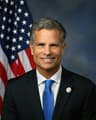 Daniel Meuser
Republican · Pennsylvania
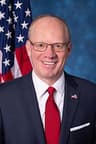 John Rose
Republican · Tennessee
 Eugene Vindman
Democrat · Virginia
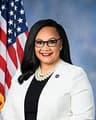 Nikema Williams
Democrat · Georgia