
A Democratic bill with 29 Democratic cosponsors · See all 29 cosponsors
Last activity — Referred to the House Committee on Energy and Commerce.
In committee
Introduced and handed to a committee in the chamber it started in.
The committee holds it, and most bills are never heard from again. A hearing or a committee vote would be news; silence is the usual outcome, and it kills the bill without anyone voting against it.
Its path through Congress
- Introduced
- In Committee
What this bill would do
The ``Right to FDA-Approved Medicines Act'' establishes a statutory right for individuals to obtain medicines approved by the FDA without coercion. It also grants health care providers the right to provide these medicines along with related information, referrals, and services. The bill prohibits any government entity from implementing requirements that single out or impede access to such medicines or providers. This Act supersedes existing Federal and State laws and applies to all branches and agencies of government. It includes enforcement mechanisms through the Attorney General and a private right of action for affected individuals.
Yes· 3 of 7
- Scored +8
Does this make health care easier to get in general?
The bill establishes a statutory right to access FDA-approved medicines and protects provider autonomy to facilitate that access.
- Scored +7
Does this make abortion easier to get?
The bill provides a mechanism to protect access to medicines that could be used in reproductive healthcare by preventing government interference.
- Scored +6
Would women be better off under this?
The bill protects access to medicines that are often central to reproductive health rights.
The opposite
- Scored -7
Does this leave more decisions to the states?
The bill significantly reduces state authority by superseding state laws and restricting state-level regulations.
- Scored -5
Does this protect the freedom to practise a religion?
The bill explicitly states it applies notwithstanding the Religious Freedom Restoration Act, which may limit certain religious exemptions.
Who it would affect, and how
Potential Positive Impacts for People
-
Increased Access to Medicine: Individuals gain a statutory right to obtain FDA-approved medicines free from coercion (Section 4(a)).
-
Support for Health Care Providers: Providers have a protected right to provide medicines, information, referrals, and services related to those medicines (Section 4(a)).
-
Protection Against Targeted Restrictions: The bill prevents any requirement or limitation that singles out the provision of medicines, the providers, or the facilities where they are provided (Section 4(b)).
-
Legal Recourse for Violations: Patients and providers can take legal action against government entities that violate these rights, with the ability to seek injunctions and recover attorney's fees (Section 7).
Potential Negative Impacts for People
- Limitations on Health Insurance Coverage: The Act does not supersede or affect Federal laws regarding coverage under group health plans, individual health insurance, or Federal health care programs (Section 5(c)).
Groups and Interests Ranking
Every group the model scored this bill for, from -10 to +10. Tap or hover a score for the reason it gave.
- Healthcare
- Does this make health care easier to get in general? — The bill establishes a statutory right to access FDA-approved medicines and protects provider autonomy to facilitate that access. Does this make abortion easier to get? — The bill provides a mechanism to protect access to medicines that could be used in reproductive healthcare by preventing government interference.
- Demographic And Interest Groups
- Would women be better off under this? — The bill protects access to medicines that are often central to reproductive health rights. Would households on low incomes be better off under this? — Enhanced access to medicine can benefit low-income individuals by reducing barriers to care.
- Economy And Finance
- Does this give people more protection from unfair business practices? — The bill enhances consumer protection by ensuring statutory rights to access FDA-approved medicines.
- Social Issues And Justice
- Does this protect the freedom to practise a religion? — The bill explicitly states it applies notwithstanding the Religious Freedom Restoration Act, which may limit certain religious exemptions.
- Governance And Ideology
- Does this give the federal government more power? — The bill increases federal authority by preempting state laws regarding access to FDA-approved medicines. Does this protect the right to fair treatment by the courts? — The bill establishes legal recourse for individuals to challenge government restrictions via civil actions. Does this leave more decisions to the states? — The bill significantly reduces state authority by superseding state laws and restricting state-level regulations.
- 7/9/2026
- 1 Cosponsor added.
- 6/24/2026
- 1 Cosponsor added.
- 4/30/2026
- 1 Cosponsor added.
- 4/27/2026
- 1 Cosponsor added.
- 3/19/2026
- 2 Cosponsors added.
- 2/11/2026
- 2 Cosponsors added.
- 1/30/2026
- 3 Cosponsors added.
- 1/22/2026
- 2 Cosponsors added.
- 1/21/2026
- 2 Cosponsors added.
- 1/20/2026
- 2 Cosponsors added.
- 8/12/2025
- 3 Cosponsors added.
- 8/5/2025
- 1 Cosponsor added.
- 7/29/2025
- 3 Cosponsors added.
- 7/21/2025
- 1 Cosponsor added.
- 7/17/2025
- Referred to the House Committee on Energy and Commerce.
- 4 Cosponsors added.
- Introduced in House
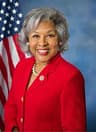 Joyce Beatty
Democrat · Ohio
 Wesley Bell
Democrat · Missouri
 Kathy Castor
Democrat · Florida
 Yvette Clarke
Democrat · New York
 Steve Cohen
Democrat · Tennessee
 Angie Craig
Democrat · Minnesota
 Christopher Deluzio
Democrat · Pennsylvania
 Suzan DelBene
Democrat · Washington
 Mark DeSaulnier
Democrat · California
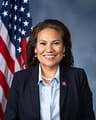 Veronica Escobar
Democrat · Texas
 Sarah Elfreth
Democrat · Maryland
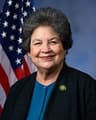 Lois Frankel
Democrat · Florida
 Lizzie Fletcher
Democrat · Texas
 Jahana Hayes
Democrat · Connecticut
 Julie Johnson
Democrat · Texas
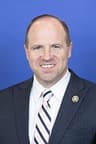 Timothy Kennedy
Democrat · New York
 Ted Lieu
Democrat · California
 Grace Meng
Democrat · New York
 Jennifer McClellan
Democrat · Virginia
 April McClain Delaney
Democrat · Maryland
 Scott Peters
Democrat · California
 Marilyn Strickland
Democrat · Washington
 Mary Gay Scanlon
Democrat · Pennsylvania
 Kim Schrier
Democrat · Washington
 Dina Titus
Democrat · Nevada
 Lori Trahan
Democrat · Massachusetts
 Marc Veasey
Democrat · Texas
 Nikema Williams
Democrat · Georgia
 Bonnie Watson Coleman
Democrat · New Jersey