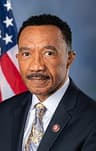
Kweisi Mfume (D-MD)
Jordan McNair Student Athlete Heat Fatality Prevention Act
A Democratic bill with 1 Republican cosponsor · See all 9 cosponsors
Last activity — Referred to the House Committee on Education and Workforce.
In committee
Introduced and handed to a committee in the chamber it started in.
The committee holds it, and most bills are never heard from again. A hearing or a committee vote would be news; silence is the usual outcome, and it kills the bill without anyone voting against it.
Its path through Congress
- Introduced
- In Committee
What this bill would do
The Jordan McNair Student Athlete Heat Fatality Prevention Act seeks to amend existing education laws to improve safety during heat-related emergencies. It requires institutions of higher education that participate in certain programs and belong to athletic associations to create venue-specific emergency action plans. These plans must include procedures for using equipment like cold water immersion and automatic external defibrillators. Similar requirements are established for secondary schools with student athletics programs to ensure student safety. The bill also mandates annual compliance reporting to the Secretary and authorizing committees. Finally, the Secretary of Education is tasked with informing schools about available Federal funds for heat-related illness prevention and equipment.
Yes· 3 of 6
- Scored +8
Would students be better off under this?
The bill provides critical safety protocols to prevent heat-related fatalities among student athletes.
- Scored +6
Would people in their twenties and thirties be better off under this?
The bill implements safety protocols that directly benefit college-aged student athletes.
- Scored +5
Would children be better off under this?
The bill provides safety protections for secondary school student athletes.
The opposite
No question was scored the opposite.
Who it would affect, and how
Potential Positive Impacts for People
-
Improved Safety for Student Athletes: By requiring venue-specific emergency action plans, institutions can better prepare for and respond to heat-related illnesses such as heatstroke (Section 3 and Section 4).
-
Clearer Emergency Procedures: The requirement for a "symptom identification structure and a coordination of care plan" ensures that staff and athletes know exactly how to respond when someone shows signs of illness (Section 3, paragraph 2(A); Section 4, subsection (b)(1)).
-
Increased Awareness and Preparedness: Mandating that plans be "visibly posted" in locker rooms, training facilities, and weight rooms, as well as being distributed to and "practiced in-person" by staff and athletes, helps ensure everyone is ready for an emergency (Section 3, paragraph 2(A) and (D); Section 4, subsection (b)(1) and (4)).
-
Access to Information on Funding: The bill directs the Secretary of Education to inform schools about Federal funds that can be used for "preventing students and faculty from suffering from heat-related illnesses," developing training, or acquiring treatment equipment (Section 5).
Potential Negative Impacts for People
-
Administrative and Reporting Burdens: Institutions must develop these plans in consultation with local responders and "submit to the Secretary and authorizing committees a report that demonstrates compliance" on an annual basis (Section 3, paragraph 1(A) and (B); Section 4, subsection (a)(2)).
-
Mandatory Training Requirements: Schools must ensure that a wide variety of individuals, including student athletes, coaches, and even legal counsel, "practice in-person" the emergency action plans every year before practical training begins (Section 3, paragraph 2(D); Section 4, subsection (b)(4)).
Groups and Interests Ranking
Every group the model scored this bill for, from -10 to +10. Tap or hover a score for the reason it gave.
- Demographic And Interest Groups
- Would students be better off under this? — The bill provides critical safety protocols to prevent heat-related fatalities among student athletes. Would people in their twenties and thirties be better off under this? — The bill implements safety protocols that directly benefit college-aged student athletes. Would children be better off under this? — The bill provides safety protections for secondary school student athletes.
- Education And Technology
- Does this put more money into public schools? — The bill directs the Secretary to inform schools about available Federal funds to assist with heat-related illness prevention and equipment.
- Governance And Ideology
- Does this give the federal government more power? — The bill expands federal oversight by requiring institutions to submit annual compliance reports to the Secretary of Education. Does this make what the government does easier for the public to see? — The bill increases transparency by requiring emergency plans to be available on institutional websites.
- 10/6/2026
- 2 Cosponsors added.
- 9/8/2025
- 1 Cosponsor added.
- 8/29/2025
- 1 Cosponsor added.
- 7/22/2025
- 2 Cosponsors added.
- 7/17/2025
- Referred to the House Committee on Education and Workforce.
- 3 Cosponsors added.
- Introduced in House
4 bills Congress.gov lists as related to this one — companions in the other chamber, earlier versions, and bills this one absorbed or was folded into.
 André Carson
Democrat · Indiana
 Sarah Elfreth
Democrat · Maryland
 Henry Johnson
Democrat · Georgia
 Michael Lawler
Republican · New York
 April McClain Delaney
Democrat · Maryland
 Eleanor Norton
Democrat · District of Columbia
 Johnny Olszewski
Democrat · Maryland
 David Scott
Democrat · Georgia
 Greg Stanton
Democrat · Arizona