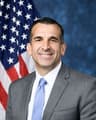
Sam Liccardo (D-CA)
To amend the National Housing Act to direct the Secretary of Housing and Urban Development to establish a program to insure certain second liens secured against property for the purpose of financing the construction of an accessory dwelling unit, and for other purposes.
A Democratic bill with 16 Democratic cosponsors · See all 16 cosponsors
Last activity — Referred to the House Committee on Financial Services.
In committee
Introduced and handed to a committee in the chamber it started in.
The committee holds it, and most bills are never heard from again. A hearing or a committee vote would be news; silence is the usual outcome, and it kills the bill without anyone voting against it.
Its path through Congress
- Introduced
- In Committee
What this bill would do
This bill seeks to amend the National Housing Act to create a new insurance program through the Secretary of Housing and Urban Development. The program is designed to insure second liens used to finance the construction of accessory dwelling units. These units can include modular or prefabricated units, manufactured units, or conversions of existing structures. The bill establishes specific limits on loan amounts and allows for increases based on projected rental income. Additionally, it authorizes Fannie Mae and Freddie Mac to purchase and securitize these insured loans.
Yes· 3 of 13
- Scored +6
Does this make housing cost less?
The bill makes it easier to finance the construction of accessory dwelling units, which can increase housing supply.
- Scored +5
Would middle-income households be better off under this?
Homeowners can use these loans to add value and income to their property.
- Scored +4
Would people in middle age be better off under this?
Homeowners may benefit from the ability to finance ADUs for supplemental income.
The opposite
No question was scored the opposite.
Who it would affect, and how
Potential Positive Impacts for People
-
Financing for Accessory Dwelling Units: The Secretary will establish a program to insure second liens used to finance the construction of accessory dwelling units, providing a way to fund these projects (Section 259(a)).
-
Increased Loan Amounts via Rental Income: The Secretary has the authority to increase the maximum loan amount based on 50 percent of any projected annual rental income from the accessory dwelling unit (Section 259(b)(2)).
-
Loan Securitization: The Director of the Federal Housing Finance Agency will permit the Federal National Mortgage Association and the Federal Home Loan Mortgage Corporation to purchase and securitize these loans (Section 2).
Potential Negative Impacts for People
-
Insurance Premium Costs: Borrowers will be subject to a premium charge for the insurance, which may not exceed 1 percent of the principal amount insured for each year (Section 259(d)).
-
Loan Limits: The amount that can be insured is restricted to the lesser of 30 percent of a specific dollar amount related to a one-unit residence or 100 percent of the projected property value after construction (Section 259(b)(1)).
-
Risk of Market Prohibition: The Director of the Federal Housing Finance Agency has the power to prohibit the purchase and securitization of these loans if they determine there are market pressures posing excessive and unmitigable risk to the lending market (Section 2(b)(1)).
Groups and Interests Ranking
Every group the model scored this bill for, from -10 to +10. Tap or hover a score for the reason it gave.
- Demographic And Interest Groups
- Would middle-income households be better off under this? — Homeowners can use these loans to add value and income to their property. Would people in middle age be better off under this? — Homeowners may benefit from the ability to finance ADUs for supplemental income. Would people in cities be better off under this? — Increased density is often a primary goal of urban housing policy. Would households on low incomes be better off under this? — Increased density and supply may help lower housing costs over time. Would people in their twenties and thirties be better off under this? — Increased rental options may benefit younger generations looking for affordable housing. Would students be better off under this? — Increased availability of accessory dwelling units may lead to more rental options for students.
- Social Issues And Justice
- Does this make housing cost less? — The bill makes it easier to finance the construction of accessory dwelling units, which can increase housing supply. Is this likely to reduce homelessness? — By increasing housing supply through ADUs, the bill could indirectly mitigate homelessness. Is this likely to lift people out of poverty? — Increased housing options may help alleviate housing costs for some populations.
- Economy And Finance
- Is this likely to create jobs? — By facilitating construction of accessory dwelling units, the bill may indirectly support construction jobs. Is this likely to grow the economy? — The bill facilitates private investment in housing construction.
- Governance And Ideology
- Does this give the federal government more power? — The bill expands the Secretary of HUD's authority to establish a new insurance program. Does this make what the government does easier for the public to see? — The bill requires annual reports to Congress, increasing transparency of the program's activities.
- 7/17/2025
- Sponsor introductory remarks on measure. (CR H3469)
- Referred to the House Committee on Financial Services.
- 16 Cosponsors added.
- Introduced in House
One bill Congress.gov lists as related to this one — companions in the other chamber, earlier versions, and bills this one absorbed or was folded into.
 Emanuel Cleaver
Democrat · Missouri
 Gilbert Cisneros
Democrat · California
 Sarah Elfreth
Democrat · Maryland
 Cleo Fields
Democrat · Louisiana
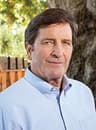 John Garamendi
Democrat · California
 Maggie Goodlander
Democrat · New Hampshire
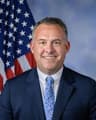 Adam Gray
Democrat · California
 Josh Harder
Democrat · California
 Sarah McBride
Democrat · Delaware
 Scott Peters
Democrat · California
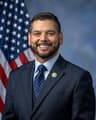 Raul Ruiz
Democrat · California
 Brad Sherman
Democrat · California
 Eric Swalwell
Democrat · California
 Darren Soto
Democrat · Florida
 Greg Stanton
Democrat · Arizona
 Mike Thompson
Democrat · California