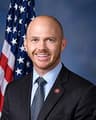
A Republican bill with 1 Democratic cosponsor · See the cosponsor
Last activity — Received in the Senate and Read twice and referred to the Committee on Banking, Housing, and Urban Affairs.
In the other chamber's committee
Passed one chamber and has been handed to a committee in the other.
The committee decides whether it goes any further, and most bills that reach a committee never leave it. A committee that simply does nothing kills a bill without anyone ever voting against it, so no news from here is usually the news.
Its path through Congress
- Introduced
- Passed House voice vote
- In Senate committee
The House by voice vote (members called out yes or no together): no member's position on it was recorded.
What this bill would do
The SMART Act of 2025 aims to reduce regulatory burdens on certain well-managed and well-capitalized financial institutions. It focuses on insured depository institutions and insured credit unions with $6,000,000,000 or less in consolidated assets. The bill allows these institutions to utilize alternating limited-scope examinations and combine multiple types of examinations upon request. Additionally, it mandates specific examination practices to minimize time and personnel used during on-site visits. Federal banking agencies and the National Credit Union Administration are required to issue new rules and provide annual reports to Congress regarding these practices.
Yes
- Scored +5
Would business owners be better off under this?
The bill provides significant relief and efficiency gains for small financial institution owners.
- Scored +5
Does this make it easier to run a small business?
The bill reduces regulatory burdens and streamlines examination processes for small financial institutions.
- Scored +3
Does this make what the government does easier for the public to see?
The bill requires federal agencies to report on their compliance with new examination practices.
The opposite
- Scored -2
Does this give people more protection from unfair business practices?
Reduced frequency of full-scope examinations could potentially weaken oversight of consumer compliance.
Who it would affect, and how
Potential Positive Impacts for People
-
Reduced Regulatory Burden: Financial institutions with $6,000,000,000 or less in assets can receive alternating limited-scope examinations instead of full-scope examinations after a full one is completed (Section 2(a), Section 2(b)).
-
Increased Efficiency for Institutions: Institutions can request to combine two or three separate examinations—such as safety and soundness, consumer compliance, and information technology/cybersecurity—to be carried out at the same time (Section 2(a), Section 2(b)).
-
Streamlined On-Site Examinations: For institutions with less than $6,000,000,000 in total assets, agencies are directed to minimize the number of examiners used and the time spent at the institution (Section 3(a), Section 3(b)).
-
Improved Communication and Convenience: Agencies are instructed to schedule examinations at convenient times and provide advance notice of the issues expected to be covered (Section 3(a), Section 3(b)).
-
Higher Quality Oversight: The bill directs that on-site examinations be led by examiners with significant experience to the maximum extent practicable (Section 3(a), Section 3(b)).
Potential Negative Impacts for People
-
Reduced Oversight Frequency: The shift to alternating limited-scope examinations could mean less frequent full-scope reviews for qualifying institutions (Section 2(a), Section 2(b)).
-
Oversight Limitations: The rules for limited-scope examinations must balance streamlining with the need to maintain sufficient oversight to ensure safety, soundness, and compliance with all laws (Section 2(a), Section 2(b)).
Groups and Interests Ranking
Every group the model scored this bill for, from -10 to +10. Tap or hover a score for the reason it gave.
- Demographic And Interest Groups
- Would business owners be better off under this? — The bill provides significant relief and efficiency gains for small financial institution owners.
- Economy And Finance
- Does this make it easier to run a small business? — The bill reduces regulatory burdens and streamlines examination processes for small financial institutions. Does this give people more protection from unfair business practices? — Reduced frequency of full-scope examinations could potentially weaken oversight of consumer compliance.
- Governance And Ideology
- Does this make what the government does easier for the public to see? — The bill requires federal agencies to report on their compliance with new examination practices.
- 5/13/2026
- Received in the Senate and Read twice and referred to the Committee on Banking, Housing, and Urban Affairs.
- 5/12/2026
- Motion to reconsider laid on the table Agreed to without objection.
- Passed/agreed to in House: On motion to suspend the rules and pass the bill, as amended Agreed to by voice vote. (text: CR H3353-3354)
- On motion to suspend the rules and pass the bill, as amended Agreed to by voice vote. (text: CR H3353-3354)
- DEBATE - The House proceeded with forty minutes of debate on H.R. 4437.
- Considered under suspension of the rules. (consideration: CR H3353-3356)
- Mr. Hill (AR) moved to suspend the rules and pass the bill, as amended.
- 9/8/2025
- Reported (Amended) by the Committee on Financial Services. H. Rept. 119-249.
- Placed on the Union Calendar, Calendar No. 206.
- 7/22/2025
- Committee Consideration and Mark-up Session Held
- Ordered to be Reported (Amended) by the Yeas and Nays: 53 - 1.
- 7/16/2025
- Referred to the House Committee on Financial Services.
- 1 Cosponsor added.
- Introduced in House
One bill Congress.gov lists as related to this one — companions in the other chamber, earlier versions, and bills this one absorbed or was folded into.
 Bill Foster
Democrat · Illinois