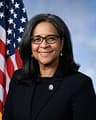
Marilyn Strickland (D-WA)
Cool Corridors Act of 2025
A Democratic bill with 2 Republican cosponsors · See all 28 cosponsors
Last activity — Referred to the Subcommittee on Highways and Transit.
In committee
Introduced and handed to a committee in the chamber it started in.
The committee holds it, and most bills are never heard from again. A hearing or a committee vote would be news; silence is the usual outcome, and it kills the bill without anyone voting against it.
Its path through Congress
- Introduced
- In Committee
What this bill would do
The Cool Corridors Act of 2025 seeks to reauthorize and amend the Healthy Streets program through the year 2030. The bill focuses on enhancing the resilience, accessibility, and safety of national transportation corridors. It aims to support strategic investments in tree canopy, shade infrastructure, and nature-based cooling strategies. These improvements are intended for pedestrian, bicycle, and transit routes. The legislation also prioritizes communities facing disproportionate heat and access challenges.
Yes· 3 of 13
- Scored +6
Is this likely to create jobs?
The bill promotes workforce development and urban forestry job creation strategies.
- Scored +5
Does this better protect air, water and wildlife?
The bill funds nature-based cooling strategies and tree canopy preservation.
- Scored +5
Does this improve buses, trains and other public transport?
The act specifically improves heat mitigation along transit routes, bus stops, and transit hubs.
The opposite
No question was scored the opposite.
Who it would affect, and how
Potential Positive Impacts for People
-
Improved Safety and Usability: The bill aims to enhance the safety and accessibility of transportation systems for pedestrians, cyclists, and transit users (Section 2(b)(2) and Section 2(b)(3)).
-
Heat Mitigation and Temperature Reduction: By investing in tree canopy, shade infrastructure, and other nature-based cooling strategies, the act seeks to reduce surface and air temperatures (Section 2(a)(2) and Section 4(a)(1)(8)(A)).
-
Protection of Infrastructure: The deployment of green infrastructure is intended to protect infrastructure from heat-related degradation (Section 2(a)(2)).
-
Support for Communities in Need: The bill prioritizes investment in disadvantaged communities that are impacted by high heat or low tree canopy coverage (Section 4(a)(4)(A)) and provides for demonstration projects in urban and rural communities with high heat vulnerability (Section 4(a)(2)(A)).
-
Economic and Workforce Opportunities: The act includes provisions for workforce development activities related to heat mitigation and tree planting (Section 4(a)(2)(3)(5)), as well as urban forestry job creation strategies (Section 4(a)(4)(9)).
-
Enhanced Access to Essential Services: The program aims to improve access to transit, schools, jobs, and essential services (Section 4(a)(4)(4)).
Potential Negative Impacts for People
-
Maintenance Responsibilities: Recipients of grant funding for tree planting are held responsible for the ongoing maintenance of those trees, including necessary watering and upkeep (Section 4(k)(2)).
-
Potential for Development Interference: Project plans must undergo review and approval from State or local agencies to ensure that the cooling infrastructure does not interfere or hinder any ongoing or future developments (Section s 4(a)(2)(3)(C)).
Groups and Interests Ranking
Every group the model scored this bill for, from -10 to +10. Tap or hover a score for the reason it gave.
- Environment Energy And Infrastructure
- Does this better protect air, water and wildlife? — The bill funds nature-based cooling strategies and tree canopy preservation. Does this improve buses, trains and other public transport? — The act specifically improves heat mitigation along transit routes, bus stops, and transit hubs. Does this repair or build roads and bridges? — The bill enhances the resilience and safety of transportation corridors through green infrastructure. Does this cut the pollution that drives climate change? — The focus on green infrastructure and tree canopy aids in climate resilience. Does this invest in rural communities? — The bill includes demonstration projects specifically for rural communities.
- Demographic And Interest Groups
- Would people in cities be better off under this? — The bill provides significant benefits for urban communities through tree canopy and cooling infrastructure. Would households on low incomes be better off under this? — The bill targets disadvantaged communities that face disproportionate heat challenges. Would children be better off under this? — The bill prioritizes safety and cooling in school zones. Would students be better off under this? — The bill emphasizes safety and cooling in school zones. Would people in rural areas be better off under this? — The bill includes provisions for demonstration projects in rural communities.
- Economy And Finance
- Is this likely to create jobs? — The bill promotes workforce development and urban forestry job creation strategies.
- Social Issues And Justice
- Does this narrow racial gaps in how people are treated? — The bill prioritizes disadvantaged communities that face disproportionate heat exposure.
- Education And Technology
- Does this put more money into public schools? — The bill supports improvements to cooling infrastructure within public-school zones.
- 10/24/2025
- 1 Cosponsor added.
- 10/3/2025
- 1 Cosponsor added.
- 9/9/2025
- 1 Cosponsor added.
- 8/29/2025
- 1 Cosponsor added.
- 8/26/2025
- 3 Cosponsors added.
- 8/15/2025
- 1 Cosponsor added.
- 7/29/2025
- 3 Cosponsors added.
- 7/23/2025
- 1 Cosponsor added.
- 7/16/2025
- Referred to the Subcommittee on Highways and Transit.
- 1 Cosponsor added.
- 7/15/2025
- Referred to the House Committee on Transportation and Infrastructure.
- 15 Cosponsors added.
- Introduced in House
 Alma Adams
Democrat · North Carolina
 Yassamin Ansari
Democrat · Arizona
 Suzanne Bonamici
Democrat · Oregon
 Emanuel Cleaver
Democrat · Missouri
 Steve Cohen
Democrat · Tennessee
 André Carson
Democrat · Indiana
 Troy Carter
Democrat · Louisiana
 Dwight Evans
Democrat · Pennsylvania
 Brian Fitzpatrick
Republican · Pennsylvania
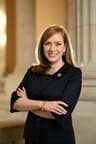 Lizzie Fletcher
Democrat · Texas
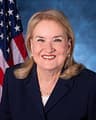 Sylvia Garcia
Democrat · Texas
 Josh Harder
Democrat · California
 Julie Johnson
Democrat · Texas
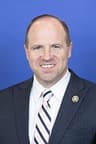 Timothy Kennedy
Democrat · New York
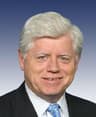 John Larson
Democrat · Connecticut
 Michael Lawler
Republican · New York
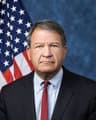 George Latimer
Democrat · New York
 Doris Matsui
Democrat · California
 Kevin Mullin
Democrat · California
 LaMonica McIver
Democrat · New Jersey
 Eleanor Norton
Democrat · District of Columbia
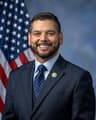 Raul Ruiz
Democrat · California
 Adam Smith
Democrat · Washington
 Mary Gay Scanlon
Democrat · Pennsylvania
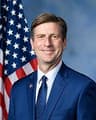 Greg Stanton
Democrat · Arizona
 Dina Titus
Democrat · Nevada
 Shri Thanedar
Democrat · Michigan
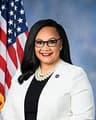 Nikema Williams
Democrat · Georgia