
Tim Walberg (R-MI)
Enhancing Detection of Human Trafficking Act
A Republican bill with 2 Democratic cosponsors · See all 3 cosponsors
Last activity — Became Public Law No: 119-131.
Became law
Passed both chambers and was signed by the President, or became law without a signature.
Nothing more in Congress: it is law. When it takes effect depends on the dates written into it — some parts start at once, others a year or more later.
Its path through Congress
- Introduced
- Passed House voice vote
- Passed Senate unanimous consent
- To President
- Became Law
No one's position on it was recorded: the House by voice vote (members called out yes or no together), and the Senate by unanimous consent (no one objected, so there was no vote).
What this bill would do
This bill is called the Enhancing Detection of Human Trafficking Act. It requires the Secretary of Labor to set up a training program for certain Department of Labor employees. The training will teach these employees how to spot human trafficking and help law enforcement prevent it. Specifically, the Secretary must consider the training needs for Wage and Hour Division employees working in States with a big increase in oppressive child labor. The training will cover how to find victims, spot traffickers, and report cases to the right authorities. Finally, the Secretary must report to Congress every year about how the training is going and how many cases were referred.
Yes
- Scored +6
Would children be better off under this?
The bill specifically addresses the detection of human trafficking and oppressive child labor.
- Scored +5
Does this make what the government does easier for the public to see?
The act requires annual reports to Congress regarding the effectiveness of training and human trafficking case referrals.
The opposite
No question was scored the opposite.
Who it would affect, and how
Potential Positive Impacts for People
-
Section 3(a) requires the Secretary of Labor to create a training program for certain Department employees so they can effectively detect and help law enforcement prevent human trafficking during their jobs. This could benefit people by helping stop human trafficking through better-trained government workers.
-
Section 3(a) also requires the Secretary to consider the training needs of Wage and Hour Division employees working in a State with a significant increase in oppressive child labor. This is a positive step to focus training where child labor problems are growing.
-
Section 3(b)(2)(A)(iii)(III) ensures that the training includes a clear course of action for referring potential cases of human trafficking to the Department of Justice and other appropriate authorities while protecting the rights of victims and working with victim advocacy groups. This is beneficial because it helps rescue victims safely and properly.
-
Section 4 requires the Secretary of Labor to report annually to congressional committees on the training's effectiveness, the number of people trained, and the number of cases referred to the Department of Justice. This holds our officials accountable by making sure Congress checks in on the program's results every year.
Potential Negative Impacts for People
Based on the provided text, there are no explicitly stated negative consequences or burdens for individuals or groups of people in the United States.
Groups and Interests Ranking
Every group the model scored this bill for, from -10 to +10. Tap or hover a score for the reason it gave.
- Demographic And Interest Groups
- Would children be better off under this? — The bill specifically addresses the detection of human trafficking and oppressive child labor.
- Governance And Ideology
- Does this make what the government does easier for the public to see? — The act requires annual reports to Congress regarding the effectiveness of training and human trafficking case referrals.
- Public Law (10/21/2026)
The text as it became law
- Enrolled Bill
The final version, on its way to the President
What changed from Received in Senate: No change to the wording. Only the printed details that record the bill’s progress, such as the heading and dates, are different.
Arrived from the other chamber; nothing has been done to it there yet
- 10/20/2026
- Signed by President.
- Became Public Law No: 119-131.
- 10/15/2026
- Presented to President.
- 10/14/2026
- Message on Senate action sent to the House.
- 9/30/2026
- Passed/agreed to in Senate: Passed Senate without amendment by Unanimous Consent.
- Passed Senate without amendment by Unanimous Consent. (consideration: CR S5299)
- 3/4/2026
- Received in the Senate, read twice.
- 3/3/2026
- Motion to reconsider laid on the table Agreed to without objection.
- Passed/agreed to in House: On motion to suspend the rules and pass the bill, as amended Agreed to by voice vote. (text: CR H2363)
- On motion to suspend the rules and pass the bill, as amended Agreed to by voice vote. (text: CR H2363)
- DEBATE - The House proceeded with forty minutes of debate on H.R. 4307.
- Considered under suspension of the rules. (consideration: CR H2363-2364)
- Mr. Walberg moved to suspend the rules and pass the bill, as amended.
- 2/20/2026
- Reported (Amended) by the Committee on Education and Workforce. H. Rept. 119-507.
- Placed on the Union Calendar, Calendar No. 433.
- 1/8/2026
- Committee Consideration and Mark-up Session Held
- Ordered to be Reported (Amended) by the Yeas and Nays: 36 - 0.
- 1 Cosponsor added.
- 1/7/2026
- 1 Cosponsor added.
- 7/10/2025
- Referred to the House Committee on Education and Workforce.
- 1 Cosponsor added.
- Introduced in House
2 bills Congress.gov lists as related to this one — companions in the other chamber, earlier versions, and bills this one absorbed or was folded into.
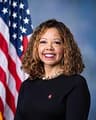 Lucy McBath
Democrat · Georgia
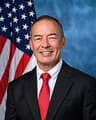 James Moylan
Republican · Guam
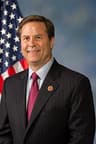 Donald Norcross
Democrat · New Jersey