
A Democratic bill with 4 Republican cosponsors · See all 10 cosponsors
Last activity — Received in the Senate and Read twice and referred to the Committee on Commerce, Science, and Transportation.
In the other chamber's committee
Passed one chamber and has been handed to a committee in the other.
The committee decides whether it goes any further, and most bills that reach a committee never leave it. A committee that simply does nothing kills a bill without anyone ever voting against it, so no news from here is usually the news.
Its path through Congress
- Introduced
- Passed House 320–66
- In Senate committee
What this bill would do
This bill directs the Secretary of Commerce to create a two-year pilot program focused on the sale of blue catfish caught in the Chesapeake Bay Watershed. Under this program, the Secretary will form agreements with certain businesses that make pet food, animal feed, or aquaculture feed to purchase blue catfish from local watermen and seafood processors. The bill requires the Secretary to set a minimum price per pound for these fish after considering market factors and feedback. Additionally, the Secretary must develop estimates on the abundance of blue catfish in the watershed and make them publicly available. Finally, the Secretary must submit a report to Congress and provide regular briefings detailing the program's effects and market responses.
Yes· 3 of 15
- Scored +5
Does this better protect air, water and wildlife?
Aids in managing and mitigating the population of invasive blue catfish in the Chesapeake Bay Watershed.
- Scored +4
Would people in rural areas be better off under this?
Directly benefits rural watermen and regional coastal communities in the Chesapeake Bay watershed.
- Scored +4
Does this make it easier to run a small business?
Provides cooperative agreements and financial mechanisms to assist local watermen and seafood processors.
The opposite
No question was scored the opposite.
What Congress actually voted on
One recorded vote has been taken on this bill.
- The House: a fast-track vote, needing two-thirds to pass The House sets aside its normal procedure to move quickly: no amendments, little debate, and a two-thirds bar instead of a simple majority. It is used for measures expected to be uncontroversial, so a bill that fails here failed despite broad expectations that it would not. Passed 320 yes · 66 no
03/17/2026 · Roll call 88 · recorded as “On Motion to Suspend the Rules and Pass, as Amended”
Who it would affect, and how
Potential Positive Impacts for People
-
Section 2(e)(1) allows watermen and seafood processors to sell blue catfish caught in the Chesapeake Bay Watershed to approved businesses through cooperative agreements. This could provide a reliable market and financial support for local watermen.
-
Section 2(e)(3)(B) allows participating entities to use up to 15 percent of their awarded funds to offset the cost of transporting the blue catfish to manufacturing or processing facilities. This helps businesses cover logistical expenses associated with handling the fish.
-
Section 2(e)(5) requires the Secretary to determine a minimum purchase amount per pound for blue catfish based on market factors and feedback from watermen, seafood processors, and participating entities. This ensures that sellers receive a fair baseline price for their catch.
Potential Negative Impacts for People
- Section 2(e)(3)(A) limits how award money can be spent by restricting covered entities to using the funds strictly to purchase blue catfish from watermen or seafood processors at or above the Secretary's set minimum price. This places strict spending controls on the businesses involved in the pilot program.
Groups and Interests Ranking
Every group the model scored this bill for, from -10 to +10. Tap or hover a score for the reason it gave.
- Demographic And Interest Groups
- Would people in rural areas be better off under this? — Directly benefits rural watermen and regional coastal communities in the Chesapeake Bay watershed. Would business owners be better off under this? — Beneficial for participating seafood processors and agricultural feed manufacturers receiving pilot program contracts. Would farmers be better off under this? — Supports agricultural feed supply chains by incorporating blue catfish into animal and aquaculture feed products. Would middle-income households be better off under this? — Offers minor economic benefits to small-scale commercial operators and processors.
- Environment Energy And Infrastructure
- Does this better protect air, water and wildlife? — Aids in managing and mitigating the population of invasive blue catfish in the Chesapeake Bay Watershed. Does this invest in rural communities? — Supports rural coastal economies and local fishing communities within the Chesapeake Bay region. Does this better protect public land such as parks and forests? — Encourages data collection and management strategies for invasive species in regional watersheds.
- Economy And Finance
- Does this make it easier to run a small business? — Provides cooperative agreements and financial mechanisms to assist local watermen and seafood processors. Is this likely to create jobs? — The bill establishes a pilot program supporting local commercial fishing and processing markets, which may sustain jobs for regional watermen. Is this likely to grow the economy? — The pilot program provides modest economic support to regional seafood and processing industries in the Chesapeake Bay area.
- Governance And Ideology
- Does this make what the government does easier for the public to see? — Requires regular congressional reports and public reporting of abundance baselines and program evaluations. Does this make it easier to do business across state lines? — Coordinates commercial agreements across multiple states in the Chesapeake Bay Watershed. Does this leave more decisions to the states? — Involves state-level partnerships with Maryland and Virginia for data collection and resource management. Does this give the federal government more power? — Tasks the Secretary of Commerce with establishing and overseeing a federal pilot program.
- Education And Technology
- Does this put more money into scientific research? — Promotes research partnerships and data collection regarding fish population abundance and environmental impacts.
- 3/18/2026
- Received in the Senate and Read twice and referred to the Committee on Commerce, Science, and Transportation.
- 3/17/2026
- Motion to reconsider laid on the table Agreed to without objection.
- Passed/agreed to in House: On motion to suspend the rules and pass the bill, as amended Agreed to by the Yeas and Nays: (2/3 required): 320 - 66 (Roll no. 88).
- On motion to suspend the rules and pass the bill, as amended Agreed to by the Yeas and Nays: (2/3 required): 320 - 66 (Roll no. 88).
- Considered as unfinished business. (consideration: CR H2545)
- 3/16/2026
- At the conclusion of debate, the Yeas and Nays were demanded and ordered. Pursuant to the provisions of clause 8, rule XX, the Chair announced that further proceedings on the motion would be postponed.
- DEBATE - The House proceeded with forty minutes of debate on H.R. 4294.
- Considered under suspension of the rules. (consideration: CR H2516-2519; text: CR H2516-2517)
- Mr. Wittman moved to suspend the rules and pass the bill, as amended.
- 2/23/2026
- Reported (Amended) by the Committee on Natural Resources. H. Rept. 119-510.
- Placed on the Union Calendar, Calendar No. 436.
- 1/22/2026
- Subcommittee on Water, Wildlife and Fisheries Discharged
- Committee Consideration and Mark-up Session Held
- Ordered to be Reported in the Nature of a Substitute (Amended) by Unanimous Consent.
- 1/16/2026
- 1 Cosponsor added.
- 1/15/2026
- 1 Cosponsor added.
- 8/1/2025
- 1 Cosponsor added.
- 7/22/2025
- Subcommittee Hearings Held
- 1 Cosponsor added.
- 7/17/2025
- 1 Cosponsor added.
- 7/16/2025
- Referred to the Subcommittee on Water, Wildlife and Fisheries.
- 2 Cosponsors added.
- 7/7/2025
- Referred to the House Committee on Natural Resources.
- 3 Cosponsors added.
- Introduced in House
 Paul Gosar
Republican · Arizona
 Steny Hoyer
Democrat · Maryland
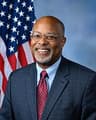 Glenn Ivey
Democrat · Maryland
 Jennifer Kiggans
Republican · Virginia
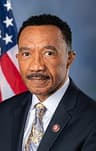 Kweisi Mfume
Democrat · Maryland
 Celeste Maloy
Republican · Utah
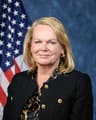 April McClain Delaney
Democrat · Maryland
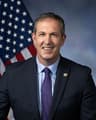 Johnny Olszewski
Democrat · Maryland
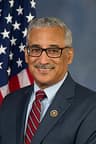 Robert Scott
Democrat · Virginia
 Robert Wittman
Republican · Virginia