
Ed Case (D-HI)
National Wildlife Refuge System Invasive Species Strike Team Act of 2025
A Democratic bill with 1 Republican cosponsor · See the cosponsor
Last activity — Received in the Senate and Read twice and referred to the Committee on Environment and Public Works.
In the other chamber's committee
Passed one chamber and has been handed to a committee in the other.
The committee decides whether it goes any further, and most bills that reach a committee never leave it. A committee that simply does nothing kills a bill without anyone ever voting against it, so no news from here is usually the news.
Its path through Congress
- Introduced
- Passed House 371–33
- In Senate committee
What this bill would do
This bill directs the Secretary of the Interior to create the National Wildlife Refuge System Invasive Species Strike Team Program. The program will identify and respond to priority invasive species threats within or adjacent to National Wildlife Refuge System lands and waters. It requires setting up at least one strike team in each region of the United States Fish and Wildlife Service. The program allows for partnerships, financial and technical assistance, and reporting on the work done. It also authorizes $10,000,000 to be appropriated for each of the fiscal years 2027 through 2033.
Yes· 3 of 19
- Scored +9
Does this better protect public land such as parks and forests?
Directly enhances the management of National Wildlife Refuge System lands and waters.
- Scored +8
Does this better protect air, water and wildlife?
Creates a dedicated system to identify and respond to threats from invasive species in wildlife refuges.
- Scored +5
Would farmers be better off under this?
Protects agricultural interests by combating invasive species that cause economic harm.
The opposite
- Scored -1
Does this reduce what the federal government owes?
Authorizes new spending of $10 million annually through 2033.
- Scored -1
Does this reduce what the federal government spends?
Increases government spending by establishing a new program.
What Congress actually voted on
One recorded vote has been taken on this bill.
- The House: a fast-track vote, needing two-thirds to pass The House sets aside its normal procedure to move quickly: no amendments, little debate, and a two-thirds bar instead of a simple majority. It is used for measures expected to be uncontroversial, so a bill that fails here failed despite broad expectations that it would not. Passed 371 yes · 33 no
09/14/2026 · Roll call 296 · recorded as “On Motion to Suspend the Rules and Pass, as Amended”
Who it would affect, and how
Potential Positive Impacts for People
-
Section 2(a)(2)(A): This provision requires the establishment of trained strike teams to conserve, manage, and restore habitats so native biological communities can flourish. This is positive because it helps protect local environments and native species from harmful invaders.
-
Section 2(a)(3)(A): This provision allows the Secretary to provide financial assistance, technical assistance, contracts, grants, or cooperative agreements to various governments and private individuals to address invasive species management. This is beneficial as it gives local partners and landowners direct support to tackle these environmental problems.
-
Section 2(a)(5): This provision requires the Secretary to submit reports to congressional committees and make them available to the public on the United States Fish and Wildlife Service website. This holds officials accountable by letting the public see the progress made in controlling invasive species.
Potential Negative Impacts for People
- Section 2(b): This provision authorizes $10,000,000 to be appropriated for each fiscal year from 2027 through 2033 to carry out the program. Some people may view this spending negatively because it uses taxpayer funds for these specific federal operations over a multi-year period.
Groups and Interests Ranking
Every group the model scored this bill for, from -10 to +10. Tap or hover a score for the reason it gave.
- Demographic And Interest Groups
- Would farmers be better off under this? — Protects agricultural interests by combating invasive species that cause economic harm. Would people in rural areas be better off under this? — Focuses on land and water management in rural areas and wildlife refuges. Would Native Americans be better off under this? — Specifically authorizes financial and technical assistance to Tribal governments. Would business owners be better off under this? — Reduces potential economic harm caused by invasive species. Would children be better off under this? — Protects the environment for future generations. Would people in middle age be better off under this? — Protects the environment and native biological communities. Would people over 65 be better off under this? — Protects the environment and native biological communities. Would people in their twenties and thirties be better off under this? — Protects the environment for future generations.
- Environment Energy And Infrastructure
- Does this better protect public land such as parks and forests? — Directly enhances the management of National Wildlife Refuge System lands and waters. Does this better protect air, water and wildlife? — Creates a dedicated system to identify and respond to threats from invasive species in wildlife refuges. Does this invest in rural communities? — Provides technical and financial assistance to local and Tribal governments for ecosystem management.
- Governance And Ideology
- Does this make what the government does easier for the public to see? — Requires public reports on program progress to be posted on the USFWS website. Does this leave more decisions to the states? — Provides grants and technical assistance to State and Tribal governments. Does this give the federal government more power? — Establishes a new federal program under the Secretary of the Interior.
- Education And Technology
- Does this put more money into scientific research? — Utilizes and promotes research and scientific monitoring to manage invasive species.
- Economy And Finance
- Is this likely to create jobs? — Establishment of strike teams and program funding may create specialized conservation and technical roles. Is this likely to grow the economy? — Mitigates economic harm caused by invasive species. Does this make it easier to run a small business? — Prevents invasive species that can cause economic harm to local businesses. Does this reduce what the federal government spends? — Increases government spending by establishing a new program. Does this reduce what the federal government owes? — Authorizes new spending of $10 million annually through 2033.
- Healthcare
- Does this put more money into medical research? — Encourages the use of research and innovations to improve detection and response effectiveness.
- 9/15/2026
- Received in the Senate and Read twice and referred to the Committee on Environment and Public Works.
- 9/14/2026
- Motion to reconsider laid on the table Agreed to without objection.
- Passed/agreed to in House: On motion to suspend the rules and pass the bill, as amended Agreed to by the Yeas and Nays: (2/3 required): 371 - 33 (Roll no. 296). (text: CR H5560-5561)
- On motion to suspend the rules and pass the bill, as amended Agreed to by the Yeas and Nays: (2/3 required): 371 - 33 (Roll no. 296). (text: CR H5560-5561)
- Considered as unfinished business. (consideration: CR H5598-5599)
- At the conclusion of debate, the Yeas and Nays were demanded and ordered. Pursuant to the provisions of clause 8, rule XX, the Chair announced that further proceedings on the motion would be postponed.
- DEBATE - The House proceeded with forty minutes of debate on H.R. 4219.
- Considered under suspension of the rules. (consideration: CR H5560-5562)
- Mr. Westerman moved to suspend the rules and pass the bill, as amended.
- 8/27/2026
- Reported (Amended) by the Committee on Natural Resources. H. Rept. 119-771.
- Placed on the Union Calendar, Calendar No. 672.
- 7/22/2026
- Subcommittee on Water, Wildlife and Fisheries Discharged
- Committee Consideration and Mark-up Session Held
- Ordered to be Reported in the Nature of a Substitute (Amended) by Unanimous Consent.
- 4/16/2026
- Subcommittee Hearings Held
- 4/9/2026
- Referred to the Subcommittee on Water, Wildlife and Fisheries.
- 6/27/2025
- Sponsor introductory remarks on measure. (CR E631)
- Referred to the House Committee on Natural Resources.
- 1 Cosponsor added.
- Introduced in House
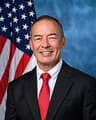 James Moylan
Republican · Guam