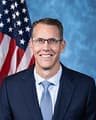
Randy Feenstra (R-IA)
Lowering Broadband Costs for Consumers Act of 2025
A Republican bill with 10 Democratic cosponsors · See all 26 cosponsors
Last activity — Referred to the House Committee on Energy and Commerce.
In committee
Introduced and handed to a committee in the chamber it started in.
The committee holds it, and most bills are never heard from again. A hearing or a committee vote would be news; silence is the usual outcome, and it kills the bill without anyone voting against it.
Its path through Congress
- Introduced
- In Committee
What this bill would do
The Lowering Broadband Costs for Consumers Act of 2025 directs the FCC to reform the Universal Service Fund. It requires the Commission to create a rulemaking to expand the contribution base to include broadband and edge providers. This expansion aims to ensure these providers contribute equitably to mechanisms that advance universal service. Additionally, the bill directs the adoption of a new mechanism under the high-cost program to support specific expenses for eligible telecommunications carriers. The overall goal is to promote affordable and available broadband while reducing the financial burden on consumers.
Yes· 3 of 10
- Scored +7
Does this get reliable internet to more people?
The act aims to promote affordable and available broadband access through fund reform.
- Scored +6
Would people in rural areas be better off under this?
The bill provides support for carriers providing services in high-cost/rural areas.
- Scored +6
Does this put more rules on large technology companies?
The bill requires edge providers, including social media and search engines, to contribute to the Universal Service Fund.
The opposite
- Scored -3
Would business owners be better off under this?
Broadband and edge providers will face new contribution requirements.
Who it would affect, and how
Potential Positive Impacts for People
-
Reduced Financial Burden on Consumers: The bill's stated purpose is to reduce the financial burden on consumers and promote affordable broadband (Section 2(e)(1)).
-
Expanded Contribution Base: The Commission is required to reform the Universal Service Fund by expanding the contribution base to include broadband providers and edge providers (Section 2(b)(2)(A)).
-
Support for High-Cost Areas: The bill directs the Commission to adopt a new mechanism under the high-cost program to provide support for expenses incurred by eligible telecommunications carriers providing supported services (Section 2(c)(1)).
Potential Negative Impacts for People
-
Requirements for Specific Providers: Broadband providers and edge providers will be required to contribute to the mechanisms that preserve and advance universal service (Section 2(b)(2)(A)).
-
Limitation on Support: The Commission must ensure that no more than one eligible telecommunications carrier for any given area receives support from the new high-cost program mechanism (Section 2(c)(2)).
Groups and Interests Ranking
Every group the model scored this bill for, from -10 to +10. Tap or hover a score for the reason it gave.
- Demographic And Interest Groups
- Would people in rural areas be better off under this? — The bill provides support for carriers providing services in high-cost/rural areas. Would households on low incomes be better off under this? — Increasing broadband accessibility and affordability helps low-income households. Would middle-income households be better off under this? — The bill aims to reduce the financial burden on consumers for broadband services. Would students be better off under this? — Improved and more affordable broadband access benefits students. Would business owners be better off under this? — Broadband and edge providers will face new contribution requirements.
- Education And Technology
- Does this get reliable internet to more people? — The act aims to promote affordable and available broadband access through fund reform. Does this put more rules on large technology companies? — The bill requires edge providers, including social media and search engines, to contribute to the Universal Service Fund.
- Economy And Finance
- Does this raise the taxes companies pay? — The bill requires broadband and edge providers to contribute to the Universal Service Fund. Does this give people more protection from unfair business practices? — The bill aims to reduce the financial burden on consumers regarding broadband costs.
- Environment Energy And Infrastructure
- Does this invest in rural communities? — The bill supports broadband accessibility in high-cost areas which benefits rural development.
- Governance And Ideology
- Does this give the federal government more power? — The bill expands the FCC's rulemaking authority to reform the Universal Service Fund contribution base.
- 9/10/2026
- 1 Cosponsor added.
- 6/18/2026
- 1 Cosponsor added.
- 5/12/2026
- 1 Cosponsor added.
- 3/17/2026
- 1 Cosponsor added.
- 2/23/2026
- 1 Cosponsor added.
- 1/20/2026
- 1 Cosponsor added.
- 1/12/2026
- 2 Cosponsors added.
- 1/7/2026
- 1 Cosponsor added.
- 12/18/2025
- 1 Cosponsor added.
- 12/12/2025
- 1 Cosponsor added.
- 11/20/2025
- 1 Cosponsor added.
- 11/19/2025
- 1 Cosponsor added.
- 10/24/2025
- 1 Cosponsor added.
- 10/17/2025
- 1 Cosponsor added.
- 9/30/2025
- 2 Cosponsors added.
- 9/16/2025
- 1 Cosponsor added.
- 9/15/2025
- 1 Cosponsor added.
- 6/24/2025
- 1 Cosponsor added.
- 6/23/2025
- 2 Cosponsors added.
- 6/17/2025
- Referred to the House Committee on Energy and Commerce.
- 4 Cosponsors added.
- Introduced in House
One bill Congress.gov lists as related to this one — companions in the other chamber, earlier versions, and bills this one absorbed or was folded into.
 Mark Alford
Republican · Missouri
 Mike Bost
Republican · Illinois
 Don Bacon
Republican · Nebraska
 Janelle Bynum
Democrat · Oregon
 Tom Cole
Republican · Oklahoma
 Emanuel Cleaver
Democrat · Missouri
 Brad Finstad
Republican · Minnesota
 Shomari Figures
Democrat · Alabama
 Glenn Grothman
Republican · Wisconsin
 Adelita Grijalva
Democrat · Arizona
 Josh Harder
Democrat · California
 Erin Houchin
Republican · Indiana
 Dusty Johnson
Republican · South Dakota
 Teresa Leger Fernandez
Democrat · New Mexico
 Frank Lucas
Republican · Oklahoma
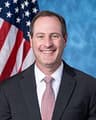 Tracey Mann
Republican · Kansas
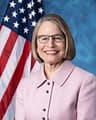 Mariannette Miller-Meeks
Republican · Iowa
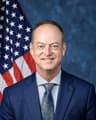 Mark Messmer
Republican · Indiana
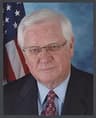 Harold Rogers
Republican · Kentucky
 Adrian Smith
Republican · Nebraska
 Melanie Stansbury
Democrat · New Mexico
 Hillary Scholten
Democrat · Michigan
 Derek Schmidt
Republican · Kansas
 Dina Titus
Democrat · Nevada
 Gabe Vasquez
Democrat · New Mexico
 Randy Weber
Republican · Texas