
Joe Neguse (D-CO)
Cross-Boundary Wildfire Solutions Act
A Democratic bill with 4 Republican cosponsors · See all 6 cosponsors
Last activity — Read twice. Placed on Senate Legislative Calendar under General Orders. Calendar No. 435.
Waiting for a floor vote in the other chamber
Passed one chamber and is on the other chamber's calendar.
The calendar is a queue, not a date. The majority leadership decides what comes to the floor and when; much of what is placed on it is never called, and a bill that is never called simply expires with the Congress.
Its path through Congress
- Introduced
- Passed House voice vote
- Awaiting Senate
- On Senate calendar
The House by voice vote (members called out yes or no together): no member's position on it was recorded.
What this bill would do
This bill, known as the "Cross-Boundary Wildfire Solutions Act," directs the Comptroller General of the United States to conduct a specific study. The study focuses on existing programs, rules, and authorities that help or hinder wildfire mitigation across different land ownership boundaries. It examines how these authorities affect Federal and non-Federal land. Additionally, the study looks at whether changing these rules could increase funding or capacity for mitigation and improve community protection. The Comptroller General must submit a report with findings and recommendations within two years of enactment.
Yes· 3 of 6
- Scored +5
Does this better protect public land such as parks and forests?
The bill specifically targets improving how federal and non-federal land is managed regarding wildfire mitigation.
- Scored +4
Does this improve help for people hit by a disaster?
By studying wildfire mitigation, the bill aims to improve community protection and reduce disaster impacts.
- Scored +4
Would people in rural areas be better off under this?
Improved wildfire mitigation directly benefits rural communities frequently at risk of forest fires.
The opposite
No question was scored the opposite.
Who it would affect, and how
Potential Positive Impacts for People
-
Improved community protection: The study aims to determine if changes to programs or rules could enable better community protection and prevent the loss of structures due to wildfire (Section 3(a)(2)(B)).
-
Increased capacity and funding: The study investigates if changes to existing authorities would allow covered agencies to have increased capacity or more access to funding to mitigate wildfires or improve forest health (Section 3(a)(2)(A)).
-
Increased efficacy of mitigation: The study looks at how to improve the efficacy of activities carried out under covered authorities to better mitigate wildfires (Section 3(a)(3)(A)).
-
Simplified mitigation processes: The final report is tasked with providing recommendations to simplify cross-boundary wildfire mitigation between Federal land management agencies and State, local, and Tribal governments (Section 3(b)(2)).
Potential Negative Impacts for People
- No specific negative impacts are identified in the text: The provided text focuses entirely on the requirements for a study and the potential benefits of the findings, rather than outlining any negative consequences or burdens.
Groups and Interests Ranking
Every group the model scored this bill for, from -10 to +10. Tap or hover a score for the reason it gave.
- Environment Energy And Infrastructure
- Does this better protect public land such as parks and forests? — The bill specifically targets improving how federal and non-federal land is managed regarding wildfire mitigation. Does this improve help for people hit by a disaster? — By studying wildfire mitigation, the bill aims to improve community protection and reduce disaster impacts. Does this better protect air, water and wildlife? — The study seeks to improve wildfire mitigation and forest health, which contributes to environmental safety.
- Demographic And Interest Groups
- Would people in rural areas be better off under this? — Improved wildfire mitigation directly benefits rural communities frequently at risk of forest fires. Would Native Americans be better off under this? — The study includes interactions with Tribal governments, which may improve wildfire mitigation for Native lands.
- Governance And Ideology
- Does this make what the government does easier for the public to see? — The study adds transparency to how wildfire mitigation authorities are utilized across boundaries.
In the queue for a floor vote, with no date set
- 6/15/2026
- Read twice. Placed on Senate Legislative Calendar under General Orders. Calendar No. 435.
- 6/3/2026
- Received in the Senate.
- 6/2/2026
- Reported (Amended) by the Committee on Natural Resources. H. Rept. 119-673, Part I.
- Committee on Agriculture discharged.
- Placed on the Union Calendar, Calendar No. 587.
- Motion to reconsider laid on the table Agreed to without objection.
- Passed/agreed to in House: On motion to suspend the rules and pass the bill, as amended Agreed to by voice vote. (text: CR H3767)
- On motion to suspend the rules and pass the bill, as amended Agreed to by voice vote. (text: CR H3767)
- DEBATE - The House proceeded with forty minutes of debate on H.R. 3922.
- Considered under suspension of the rules. (consideration: CR H3767-3769)
- Mr. Westerman moved to suspend the rules and pass the bill, as amended.
- 2/11/2026
- Subcommittee on Federal Lands Discharged
- Committee Consideration and Mark-up Session Held
- Ordered to be Reported in the Nature of a Substitute (Amended) by Unanimous Consent.
- 1 Cosponsor added.
- 1/14/2026
- Subcommittee Hearings Held
- 1/7/2026
- Referred to the Subcommittee on Federal Lands.
- 11/25/2025
- 1 Cosponsor added.
- 6/23/2025
- 1 Cosponsor added.
- 6/11/2025
- Referred to the Committee on Natural Resources, and in addition to the Committee on Agriculture, for a period to be subsequently determined by the Speaker, in each case for consideration of such provisions as fall within the jurisdiction of the committee concerned.
- 3 Cosponsors added.
- Introduced in House
One bill Congress.gov lists as related to this one — companions in the other chamber, earlier versions, and bills this one absorbed or was folded into.
 Brian Fitzpatrick
Republican · Pennsylvania
 Josh Harder
Democrat · California
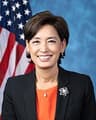 Young Kim
Republican · California
 Mike Kennedy
Republican · Utah
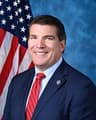 Jay Obernolte
Republican · California
 George Whitesides
Democrat · California