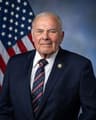
James Baird (R-IN)
NSF and USDA Interagency Research Act
A Republican bill with 4 Democratic cosponsors · See all 4 cosponsors
Last activity — Referred to the Committee on Science, Space, and Technology, and in addition to the Committee on Agriculture, for a period to be subsequently determined by the Speaker, in each case for consideration of such provisions as fall within the jurisdiction of the committee concerned.
In committee
Introduced and handed to a committee in the chamber it started in.
The committee holds it, and most bills are never heard from again. A hearing or a committee vote would be news; silence is the usual outcome, and it kills the bill without anyone voting against it.
Its path through Congress
- Introduced
- In Committee
What this bill would do
The NSF and USDA Interagency Research Act directs the Secretary of Agriculture and the Director of the National Science Foundation to engage in collaborative research and development. This coordination focuses on advancing the mission requirements and priorities of both agencies. The agencies will establish memoranda of understanding or interagency agreements to manage these activities. Research areas include agricultural challenges, food security, and emerging technologies. The act also provides for education, workforce development, and the establishment of research centers. Finally, a report on these activities must be submitted to Congress within two years.
Yes· 3 of 18
- Scored +5
Would farmers be better off under this?
The bill's focus on agricultural research and new tools directly benefits the farming community.
- Scored +5
Would people in rural areas be better off under this?
The bill specifically addresses rural economic revitalization and broadband deployment.
- Scored +5
Does this put more money into scientific research?
The bill promotes large-scale collaborative research and development between agencies.
The opposite
No question was scored the opposite.
Who it would affect, and how
Potential Positive Impacts for People
-
Advancement of Agricultural Research: The bill directs collaborative research in areas such as plant, animal, and microbial biology, food and nutrition security, and the monitoring of food- or water-borne pathogens (Section 2(c)(1)).
-
Economic and Community Development: The act includes focus areas for rural economic revitalization and smart and connected communities (Section 2(c)(1)).
-
Technology and Infrastructure Support: Research and development may support research infrastructure, including new facilities, equipment, and broadband deployment (Section 2(c)(3)).
-
Workforce and Education Opportunities: The bill promotes workforce needs, education, and development, including STEM education and the creation of centers through grants to institutions of higher education, community colleges, or nonprofit institutions (Section s 2(c)(5) and 2(c)(6)).
-
Educational Literacy: The act allows for workshops to educate preschool through grade 12 teachers on increasing agricultural literacy and the development of agricultural-based science curricula (Section 2(c)(5)).
Potential Negative Impacts for People
- No specific negative impacts or burdens are explicitly mentioned in the provided text.
Groups and Interests Ranking
Every group the model scored this bill for, from -10 to +10. Tap or hover a score for the reason it gave.
- Demographic And Interest Groups
- Would farmers be better off under this? — The bill's focus on agricultural research and new tools directly benefits the farming community. Would people in rural areas be better off under this? — The bill specifically addresses rural economic revitalization and broadband deployment. Would students be better off under this? — The bill funds STEM education and centers at higher education and community colleges. Would business owners be better off under this? — Increased research and development can lead to new commercial technologies and opportunities. Would people in their twenties and thirties be better off under this? — The focus on STEM and workforce development provides opportunities for young adults entering the workforce. Would children be better off under this? — The focus on K-12 agricultural literacy and STEM education benefits younger students.
- Economy And Finance
- Is this likely to grow the economy? — By investing in research and development, the bill aims to stimulate agricultural and technological economic growth. Does this give people more protection from unfair business practices? — Enhanced research into food safety and pathogens provides indirect protection for consumers. Is this likely to create jobs? — The bill supports workforce development and STEM education which can drive future employment.
- Education And Technology
- Does this put more money into scientific research? — The bill promotes large-scale collaborative research and development between agencies. Does this get reliable internet to more people? — The bill includes support for broadband deployment.
- Environment Energy And Infrastructure
- Does this invest in rural communities? — The bill explicitly targets rural economic revitalization and broadband deployment. Does this better protect air, water and wildlife? — Research into soil health and water quality contributes to environmental protection.
- Healthcare
- Does this put more money into medical research? — It directs interagency collaboration for research into food and water safety. Does this make the country readier for the next outbreak? — The bill focuses on monitoring pathogens which is critical for public health preparedness.
- Governance And Ideology
- Does this give the federal government more power? — The bill increases interagency coordination at the federal level. Does this make what the government does easier for the public to see? — The requirement to submit a report to Congress increases transparency regarding these activities.
- National Security And Foreign Policy
- Does this better protect the country from computer attacks? — The emphasis on cyber-physical systems and secure data transfer supports national security infrastructure.
- 1/6/2026
- 1 Cosponsor added.
- 11/19/2025
- 1 Cosponsor added.
- 9/3/2025
- 1 Cosponsor added.
- 6/4/2025
- Referred to the Committee on Science, Space, and Technology, and in addition to the Committee on Agriculture, for a period to be subsequently determined by the Speaker, in each case for consideration of such provisions as fall within the jurisdiction of the committee concerned.
- 1 Cosponsor added.
- Introduced in House
One bill Congress.gov lists as related to this one — companions in the other chamber, earlier versions, and bills this one absorbed or was folded into.
 Josh Harder
Democrat · California
 Joe Neguse
Democrat · Colorado
 Andrea Salinas
Democrat · Oregon
 Eugene Vindman
Democrat · Virginia