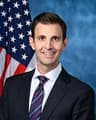
Christopher Deluzio (D-PA)
No Corporate Crooks Act
A Democratic bill with 10 Democratic cosponsors · See all 10 cosponsors
Last activity — Referred to the House Committee on Oversight and Government Reform.
In committee
Introduced and handed to a committee in the chamber it started in.
The committee holds it, and most bills are never heard from again. A hearing or a committee vote would be news; silence is the usual outcome, and it kills the bill without anyone voting against it.
Its path through Congress
- Introduced
- In Committee
What this bill would do
This bill, known as the No Corporate Crooks Act, aims to restrict certain individuals from holding positions in the executive branch. It targets anyone who served as a chief executive officer and was finally convicted of a covered crime. These covered crimes include offenses such as bribery, fraud, and embezzlement. If an individual meets these criteria, they are ineligible for appointment to an executive branch position. Furthermore, anyone found in violation of this rule shall be removed from their service or employment within the executive branch.
Yes· 3 of 5
- Scored +7
Does this make what the government does easier for the public to see?
The act enhances government integrity by barring those with criminal histories of corruption from leadership roles.
- Scored +5
Does this give the federal government more power?
This bill expands the criteria for disqualifying individuals from executive branch service, thereby increasing federal regulatory reach over personnel.
- Scored +5
Does this give people more protection from unfair business practices?
By penalizing executives convicted of crimes like fraud and wage theft, the bill promotes higher ethical standards in corporate conduct.
The opposite
- Scored -3
Would business owners be better off under this?
The bill imposes strict eligibility restrictions that could prevent qualified individuals from serving in leadership roles due to past legal issues.
Who it would affect, and how
Potential Positive Impacts for People
-
Increased integrity in government service: By prohibiting individuals convicted of crimes like bribery, corruption, or fraud from serving in the executive branch, the bill seeks to ensure that those in power have clean records (Section 2(a)(1) and Section 2(a)(2)).
-
Establishment of clear consequences for violations: The bill mandates that any individual found in violation of these restrictions shall be removed from service or employment, providing a mechanism for accountability (Section 2(b)).
Potential Negative Impacts for People
- Restrictions on specific individuals: Individuals who served as a chief executive officer and were convicted of any of the listed covered crimes, such as copyright infringement or tax evasion, will be ineligible for appointment to the executive branch (Section 2(a)(1) and Section 2(a)(2)).
Groups and Interests Ranking
Every group the model scored this bill for, from -10 to +10. Tap or hover a score for the reason it gave.
- Governance And Ideology
- Does this make what the government does easier for the public to see? — The act enhances government integrity by barring those with criminal histories of corruption from leadership roles. Does this give the federal government more power? — This bill expands the criteria for disqualifying individuals from executive branch service, thereby increasing federal regulatory reach over personnel.
- Economy And Finance
- Does this give people more protection from unfair business practices? — By penalizing executives convicted of crimes like fraud and wage theft, the bill promotes higher ethical standards in corporate conduct.
- Demographic And Interest Groups
- Would union members be better off under this? — The prohibition on executives convicted of wage theft provides a symbolic victory for labor rights. Would households on low incomes be better off under this? — By targeting crimes like wage theft, the bill indirectly supports labor standards that benefit low-income workers. Would business owners be better off under this? — The bill imposes strict eligibility restrictions that could prevent qualified individuals from serving in leadership roles due to past legal issues.
- 7/6/2026
- 1 Cosponsor added.
- 5/7/2026
- 1 Cosponsor added.
- 2/25/2026
- 1 Cosponsor added.
- 12/3/2025
- 1 Cosponsor added.
- 8/1/2025
- 1 Cosponsor added.
- 6/3/2025
- Referred to the House Committee on Oversight and Government Reform.
- 5 Cosponsors added.
- Introduced in House
 Angie Craig
Democrat · Minnesota
 Daniel Goldman
Democrat · New York
 John Larson
Democrat · Connecticut
 Mike Levin
Democrat · California
 Joe Neguse
Democrat · Colorado
 Patrick Ryan
Democrat · New York
 Hillary Scholten
Democrat · Michigan
 Emilia Sykes
Democrat · Ohio
 Eugene Vindman
Democrat · Virginia
 George Whitesides
Democrat · California