
A Democratic bill with 3 Democratic cosponsors · See all 3 cosponsors
Last activity — Referred to the Committee on Energy and Commerce, and in addition to the Committee on Ways and Means, for a period to be subsequently determined by the Speaker, in each case for consideration of such provisions as fall within the jurisdiction of the committee concerned.
In committee
Introduced and handed to a committee in the chamber it started in.
The committee holds it, and most bills are never heard from again. A hearing or a committee vote would be news; silence is the usual outcome, and it kills the bill without anyone voting against it.
Its path through Congress
- Introduced
- In Committee
What this bill would do
The STAR Plus Scholarship Act aims to amend the Public Health Service Act to create a new scholarship program. This program is designed to ensure there is an adequate supply of workers in substance use disorder treatment and behavioral and mental health fields. The Secretary will award scholarships to full-time students enrolled in accredited institutions pursuing specific courses of study. In exchange for the scholarship, recipients must sign a contract to serve in a mental health professional shortage area for a specific period. The act also establishes a replacement fund to address service gaps caused by contract breaches.
Yes· 3 of 10
- Scored +8
Would students be better off under this?
The bill offers direct financial support for tuition and educational expenses for eligible students.
- Scored +7
Does this make mental health care easier to get?
The bill provides scholarships specifically to increase the supply of mental health and substance use disorder professionals in shortage areas.
- Scored +7
Does this make college cost less?
The scholarship covers tuition and reasonable educational expenses for qualifying students.
The opposite
No question was scored the opposite.
Who it would affect, and how
Potential Positive Impacts for People
-
Financial Support for Students: The scholarship covers tuition and other reasonable educational expenses, such as fees, books, and laboratory expenses (Section 2(a), Section 2(g)(1)).
-
Priority for Underrepresented Groups: The Secretary will give priority to applications from individuals belonging to groups or populations that are underrepresented in the substance use disorder treatment and behavioral and mental health workforce (Section 2(d)(2)(B)).
-
Career Transition Assistance: The Secretary may provide assistance to professionals who are transitioning out of their period of obligated service if they are remaining in a mental health professional shortage area (Section 2(c)(3)(B)(ii)).
-
Tax Benefits: The scholarship is excluded from the gross income of the recipient (Section 2(b)(1)).
Potential Negative Impacts for People
-
Service Obligations: To receive the scholarship, individuals must sign a contract to serve in a mental health professional shortage area for a period of one year for every school year they received a scholarship (Section 2(b)(3), Section 2(f)(1)(B)(iv)).
-
Financial Penalties for Breach of Contract: Individuals who breach their contract may be liable for damages, for which the Secretary may establish a liquidated damages formula (Section 2(c)(1)(A), Section 2(f)(3), Section 2(j)(1)).
Groups and Interests Ranking
Every group the model scored this bill for, from -10 to +10. Tap or hover a score for the reason it gave.
- Demographic And Interest Groups
- Would students be better off under this? — The bill offers direct financial support for tuition and educational expenses for eligible students. Would people in their twenties and thirties be better off under this? — The scholarship provides significant financial assistance to full-time students pursuing specific careers. Would households on low incomes be better off under this? — The scholarship reduces the financial burden of educational expenses for students. Would people in rural areas be better off under this? — By incentivizing service in shortage areas, the bill may help improve healthcare access in rural communities.
- Healthcare
- Does this make mental health care easier to get? — The bill provides scholarships specifically to increase the supply of mental health and substance use disorder professionals in shortage areas. Does this do more about addiction and overdose deaths? — By targeting substance use disorder treatment professionals, the bill directly addresses the workforce needs related to the opioid crisis. Does this make health care easier to get in general? — Increasing the workforce of mental health professionals helps improve overall healthcare access in underserved areas.
- Education And Technology
- Does this make college cost less? — The scholarship covers tuition and reasonable educational expenses for qualifying students.
- Social Issues And Justice
- Does this narrow racial gaps in how people are treated? — The bill gives priority to applicants from groups that are underrepresented in the mental health workforce.
- Economy And Finance
- Is this likely to create jobs? — The bill encourages the development of a specialized workforce in mental health and substance use disorder treatment.
- 5/29/2025
- Referred to the Committee on Energy and Commerce, and in addition to the Committee on Ways and Means, for a period to be subsequently determined by the Speaker, in each case for consideration of such provisions as fall within the jurisdiction of the committee concerned.
- 3 Cosponsors added.
- Introduced in House
One bill Congress.gov lists as related to this one — companions in the other chamber, earlier versions, and bills this one absorbed or was folded into.
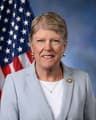 Julia Brownley
Democrat · California
 Daniel Goldman
Democrat · New York
 Paul Tonko
Democrat · New York