
Wesley Bell (D-MO)
Public Safety and Mental Health Reporting Act
A Democratic bill with 9 Democratic cosponsors · See all 9 cosponsors
Last activity — Referred to the House Committee on the Judiciary.
In committee
Introduced and handed to a committee in the chamber it started in.
The committee holds it, and most bills are never heard from again. A hearing or a committee vote would be news; silence is the usual outcome, and it kills the bill without anyone voting against it.
Its path through Congress
- Introduced
- In Committee
What this bill would do
This bill, known as the "Public Safety and Mental Health Reporting Act," directs the Attorney General to gather data regarding how law enforcement officers interact with individuals experiencing mental illness. This process must happen every calendar year. The Attorney General is required to work in consultation with the Secretary of Health and Human Services to acquire this information. Furthermore, the Attorney General must establish specific guidelines for collecting the data. An annual summary of this data must be submitted to Congress and made available to the public. The bill also authorizes funding for these efforts from fiscal years 2026 through 2036.
Yes· 3 of 8
- Scored +5
Does this change how police departments operate?
The bill promotes transparency in law enforcement interactions with mentally ill individuals.
- Scored +5
Does this make what the government does easier for the public to see?
The requirement to make annual summaries publicly available increases government transparency.
- Scored +4
Does this expand the rights of people with disabilities?
Collecting data on interactions with people with mental illness can help protect the rights of those with disabilities.
The opposite
No question was scored the opposite.
Who it would affect, and how
Potential Positive Impacts for People
-
Increased Transparency: The Attorney General is required to submit an annual summary of the data to Congress and make it available to the public (Section 2(d)). This allows people to see the information gathered regarding law enforcement interactions.
-
Data-Driven Research: The data acquired is intended to be used for research or statistical purposes (Section 2(c)).
-
Privacy Protections: The bill ensures that any data collected may not contain information that reveals the identity of an individual victim of a crime (Section 2(c)).
Potential Negative Impacts for People
- No specific negative impacts or burdens are explicitly stated within the provided text.
Groups and Interests Ranking
Every group the model scored this bill for, from -10 to +10. Tap or hover a score for the reason it gave.
- Social Issues And Justice
- Does this change how police departments operate? — The bill promotes transparency in law enforcement interactions with mentally ill individuals. Does this expand the rights of people with disabilities? — Collecting data on interactions with people with mental illness can help protect the rights of those with disabilities.
- Governance And Ideology
- Does this make what the government does easier for the public to see? — The requirement to make annual summaries publicly available increases government transparency. Does this protect people from being watched or searched? — The bill includes provisions to ensure data does not reveal the identities of crime victims. Does this give the federal government more power? — The bill expands the Attorney General's data acquisition responsibilities.
- Demographic And Interest Groups
- Would people with disabilities be better off under this? — The bill focuses on tracking and potentially improving interactions for people with mental illness.
- Healthcare
- Does this make mental health care easier to get? — The bill helps address mental health through increased data collection on interactions with law enforcement.
- Education And Technology
- Does this put more money into scientific research? — The bill supports research through the collection of statistical data on mental health and law enforcement.
- 8/5/2025
- 1 Cosponsor added.
- 7/2/2025
- 1 Cosponsor added.
- 6/5/2025
- 2 Cosponsors added.
- 5/29/2025
- Referred to the House Committee on the Judiciary.
- 5 Cosponsors added.
- Introduced in House
 Yassamin Ansari
Democrat · Arizona
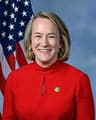 Nikki Budzinski
Democrat · Illinois
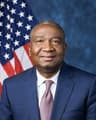 Cleo Fields
Democrat · Louisiana
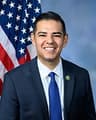 Robert Garcia
Democrat · California
 Henry Johnson
Democrat · Georgia
 LaMonica McIver
Democrat · New Jersey
 Eleanor Norton
Democrat · District of Columbia
 Adam Smith
Democrat · Washington
 Shri Thanedar
Democrat · Michigan