
Brian Fitzpatrick (R-PA)
Mental Health in Schools Excellence Program Act of 2025
A Republican bill with 16 Democratic cosponsors · See all 16 cosponsors
Last activity — Referred to the House Committee on Education and Workforce.
In committee
Introduced and handed to a committee in the chamber it started in.
The committee holds it, and most bills are never heard from again. A hearing or a committee vote would be news; silence is the usual outcome, and it kills the bill without anyone voting against it.
Its path through Congress
- Introduced
- In Committee
What this bill would do
This bill seeks to establish the Mental Health in Schools Excellence Program. The program is designed to increase the recruitment and retention of school-based mental health services providers. It authorizes the Secretary of Education to enter into agreements with eligible graduate institutions to cover portions of a participating student's cost of attendance. Under these agreements, the Secretary will match contributions made by the graduate institutions. The program aims to build the available workforce for school-based mental health services through these public-private contributions.
Yes· 3 of 16
- Scored +7
Would students be better off under this?
Graduate students in specific fields receive significant financial assistance through the program.
- Scored +7
Does this make college cost less?
The program provides direct assistance to graduate students to help cover the cost of attendance.
- Scored +6
Would people in their twenties and thirties be better off under this?
Graduate students benefit from the financial assistance and matching contributions.
The opposite
No question was scored the opposite.
Who it would affect, and how
Potential Positive Impacts for People
-
Financial Assistance for Graduate Students: The bill allows the Secretary to match contributions made by eligible graduate institutions, covering up to 50 percent of a participating student's cost of attendance (Section 2(a) and Section 2(e)).
-
Support for Specific Student Demographics: The program includes outreach to students who, as undergraduates, received a Federal Pell Grant or attended certain institutions (Section 2(d)(2)).
-
Increased Workforce of Mental Health Providers: By establishing agreements to cover costs, the program aims to increase the available workforce of school-sited mental health service providers (Section 2).
-
Targeted Educational Support: The program prioritizes students selected by eligible graduate institutions under specific criteria (Section 2(c)(4)).
Potential Negative Impacts for People
- No negative impacts or burdens are explicitly identified within the provided text.
Groups and Interests Ranking
Every group the model scored this bill for, from -10 to +10. Tap or hover a score for the reason it gave.
- Demographic And Interest Groups
- Would students be better off under this? — Graduate students in specific fields receive significant financial assistance through the program. Would people in their twenties and thirties be better off under this? — Graduate students benefit from the financial assistance and matching contributions. Would children be better off under this? — Increased school mental health providers directly benefit children in the school system. Would households on low incomes be better off under this? — The outreach targets Pell Grant recipients, who are often from low-income backgrounds. Would people with disabilities be better off under this? — Increased mental health accessibility can support individuals with mental health disabilities. Would middle-income households be better off under this? — The bill may indirectly benefit the middle class by improving school services.
- Education And Technology
- Does this make college cost less? — The program provides direct assistance to graduate students to help cover the cost of attendance. Does this put more money into public schools? — The bill funds mental health services within the public school environment through student subsidies. Does this reduce what student borrowers owe or repay? — While not direct loan forgiveness, it reduces the need for student loans via upfront contributions.
- Healthcare
- Does this make mental health care easier to get? — The bill seeks to increase the availability of school-based mental health service providers. Does this make health care easier to get in general? — Increasing the provider workforce can improve access to mental health services in schools.
- Social Issues And Justice
- Does this narrow racial gaps in how people are treated? — The bill targets students who previously received Pell Grants, which can support equity for low-income populations. Is this likely to lift people out of poverty? — Financial assistance for graduate school can aid social mobility for Pell Grant recipients.
- Governance And Ideology
- Does this make what the government does easier for the public to see? — The bill requires the Secretary to publish a list of participating institutions on a public website. Does this give the federal government more power? — The Secretary of Education is tasked with managing new agreements and matching funds.
- Economy And Finance
- Is this likely to create jobs? — The bill aims to increase the workforce of school-based mental health service providers through educational subsidies.
- 5/12/2026
- 1 Cosponsor added.
- 12/18/2025
- 2 Cosponsors added.
- 12/16/2025
- 1 Cosponsor added.
- 11/25/2025
- 1 Cosponsor added.
- 9/26/2025
- 1 Cosponsor added.
- 8/8/2025
- 1 Cosponsor added.
- 8/1/2025
- 2 Cosponsors added.
- 7/25/2025
- 1 Cosponsor added.
- 7/21/2025
- 2 Cosponsors added.
- 7/10/2025
- 2 Cosponsors added.
- 6/4/2025
- 1 Cosponsor added.
- 5/21/2025
- Referred to the House Committee on Education and Workforce.
- 1 Cosponsor added.
- Introduced in House
2 bills Congress.gov lists as related to this one — companions in the other chamber, earlier versions, and bills this one absorbed or was folded into.
 Becca Balint
Democrat · Vermont
 Angie Craig
Democrat · Minnesota
 Jason Crow
Democrat · Colorado
 Donald Davis
Democrat · North Carolina
 Cleo Fields
Democrat · Louisiana
 Jared Golden
Democrat · Maine
 Laura Gillen
Democrat · New York
 Adam Gray
Democrat · California
 Josh Harder
Democrat · California
 Greg Landsman
Democrat · Ohio
 Joe Neguse
Democrat · Colorado
 Chris Pappas
Democrat · New Hampshire
 Derek Tran
Democrat · California
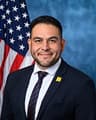 Gabe Vasquez
Democrat · New Mexico
 Eugene Vindman
Democrat · Virginia
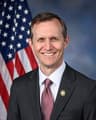 George Whitesides
Democrat · California