
Donald Beyer (D-VA)
Barriers to Suicide Act of 2025
A Democratic bill with 5 Republican cosponsors · See all 45 cosponsors
Last activity — Referred to the House Committee on Transportation and Infrastructure.
In committee
Introduced and handed to a committee in the chamber it started in.
The committee holds it, and most bills are never heard from again. A hearing or a committee vote would be news; silence is the usual outcome, and it kills the bill without anyone voting against it.
Its path through Congress
- Introduced
- In Committee
What this bill would do
The Barriers to Suicide Act of 2025 directs the Secretary of Transportation to create a grant program to install suicide deterrents on specific infrastructure. These deterrents include items like suicide prevention nets and barriers. The program targets covered locations such as bridges, buildings, parking garages, highway-rail grade crossings, and rail stations. Grants may be awarded to States, political subdivisions, or other eligible entities on a competitive basis. Priority is given to areas experiencing high suicide rates. Additionally, the bill mandates a study by the Comptroller General regarding effective structures and deterrents for suicide prevention.
Yes· 3 of 6
- Scored +6
Does this repair or build roads and bridges?
The bill funds safety infrastructure on bridges, parking garages, and rail stations to prevent suicide.
- Scored +5
Does this make mental health care easier to get?
The bill addresses suicide prevention through infrastructure deterrents which is a critical component of mental health crisis intervention.
- Scored +4
Does this improve buses, trains and other public transport?
The bill includes grants for suicide deterrents at rail stations and highway-rail grade crossings.
The opposite
No question was scored the opposite.
Who it would affect, and how
Potential Positive Impacts for People
-
Installation of Life-Saving Infrastructure: The program facilitates the installation of evidence-based suicide deterrents, such as prevention nets and barriers, at covered locations like bridges, buildings, and rail stations (Section 2(a), Section 2(e)).
-
Targeted Assistance for High-Risk Areas: The Secretary is directed to give priority to projects located in areas with a high rate of suicide, specifically considering the number of suicides and the rate of suicides per capita (Section 2(f)).
-
Evidence-Based Approaches: The program focuses on deterrents that demonstrate a rationale based on high-quality research or positive evaluation to reduce or prevent suicide (Section 2(h)(2)).
-
Improved Data and Knowledge: The Comptroller General will conduct a study to identify effective structures, types of nets or barriers, and methods for reducing suicide-by-jumping, which could inform future prevention efforts (Section 4(a)).
Potential Negative Impacts for People
- Financial Responsibility for Local Entities: While the federal government provides grants, the federal share of the cost for a project may not exceed 80 percent, meaning entities may need to cover the remaining cost (Section 2(g)).
Groups and Interests Ranking
Every group the model scored this bill for, from -10 to +10. Tap or hover a score for the reason it gave.
- Environment Energy And Infrastructure
- Does this repair or build roads and bridges? — The bill funds safety infrastructure on bridges, parking garages, and rail stations to prevent suicide. Does this improve buses, trains and other public transport? — The bill includes grants for suicide deterrents at rail stations and highway-rail grade crossings.
- Healthcare
- Does this make mental health care easier to get? — The bill addresses suicide prevention through infrastructure deterrents which is a critical component of mental health crisis intervention. Does this put more money into medical research? — The bill funds a study by the Comptroller General to research the effectiveness of various suicide prevention methods.
- Education And Technology
- Does this put more money into scientific research? — The bill authorizes research via the Comptroller General to identify effective suicide prevention structures.
- Governance And Ideology
- Does this give the federal government more power? — The bill creates a new federal grant program administered by the Secretary of Transportation.
- 7/9/2026
- 1 Cosponsor added.
- 7/6/2026
- 1 Cosponsor added.
- 6/25/2026
- 3 Cosponsors added.
- 6/11/2026
- 1 Cosponsor added.
- 6/9/2026
- 1 Cosponsor added.
- 6/4/2026
- 3 Cosponsors added.
- 5/19/2026
- 2 Cosponsors added.
- 5/14/2026
- 1 Cosponsor added.
- 5/12/2026
- 1 Cosponsor added.
- 4/22/2026
- 1 Cosponsor added.
- 3/3/2026
- 1 Cosponsor added.
- 1/14/2026
- 1 Cosponsor added.
- 1/7/2026
- 1 Cosponsor added.
- 12/12/2025
- 1 Cosponsor added.
- 12/9/2025
- 4 Cosponsors added.
- 12/4/2025
- 1 Cosponsor added.
- 11/18/2025
- 1 Cosponsor added.
- 11/12/2025
- 1 Cosponsor added.
- 10/31/2025
- 1 Cosponsor added.
- 10/17/2025
- 1 Cosponsor added.
- 10/3/2025
- 1 Cosponsor added.
- 8/15/2025
- 1 Cosponsor added.
- 7/2/2025
- 1 Cosponsor added.
- 6/4/2025
- 1 Cosponsor added.
- 5/29/2025
- 1 Cosponsor added.
- 5/21/2025
- 1 Cosponsor added.
- 5/20/2025
- Referred to the House Committee on Transportation and Infrastructure.
- 11 Cosponsors added.
- Introduced in House
 Gabe Amo
Democrat · Rhode Island
 Wesley Bell
Democrat · Missouri
 Robert Bresnahan
Republican · Pennsylvania
 Emanuel Cleaver
Democrat · Missouri
 André Carson
Democrat · Indiana
 Angie Craig
Democrat · Minnesota
 Gilbert Cisneros
Democrat · California
 Danny Davis
Democrat · Illinois
 Christopher Deluzio
Democrat · Pennsylvania
 Mark DeSaulnier
Democrat · California
 Sharice Davids
Democrat · Kansas
 Maxine Dexter
Democrat · Oregon
 Veronica Escobar
Democrat · Texas
 Brian Fitzpatrick
Republican · Pennsylvania
 Laura Friedman
Democrat · California
 Jared Huffman
Democrat · California
 Josh Harder
Democrat · California
 Julie Johnson
Democrat · Texas
 Marcy Kaptur
Democrat · Ohio
 Raja Krishnamoorthi
Democrat · Illinois
 Michael Lawler
Republican · New York
 George Latimer
Democrat · New York
 Betty McCollum
Democrat · Minnesota
 Gwen Moore
Democrat · Wisconsin
 Seth Moulton
Democrat · Massachusetts
 Seth Magaziner
Democrat · Rhode Island
 Ryan Mackenzie
Republican · Pennsylvania
 Kelly Morrison
Democrat · Minnesota
 Sarah McBride
Democrat · Delaware
 Eleanor Norton
Democrat · District of Columbia
 Zachary Nunn
Republican · Iowa
 Ilhan Omar
Democrat · Minnesota
 Chris Pappas
Democrat · New Hampshire
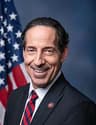 Jamie Raskin
Democrat · Maryland
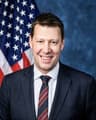 Josh Riley
Democrat · New York
 Darren Soto
Democrat · Florida
 Hillary Scholten
Democrat · Michigan
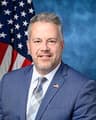 Eric Sorensen
Democrat · Illinois
 Lori Trahan
Democrat · Massachusetts
 Shri Thanedar
Democrat · Michigan
 Eugene Vindman
Democrat · Virginia
 Nikema Williams
Democrat · Georgia
 Bonnie Watson Coleman
Democrat · New Jersey
 George Whitesides
Democrat · California
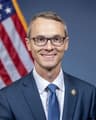 James Walkinshaw
Democrat · Virginia