
A Democratic bill with 6 Republican cosponsors · See all 18 cosponsors
Last activity — Received in the Senate and Read twice and referred to the Committee on Health, Education, Labor, and Pensions.
In the other chamber's committee
Passed one chamber and has been handed to a committee in the other.
The committee decides whether it goes any further, and most bills that reach a committee never leave it. A committee that simply does nothing kills a bill without anyone ever voting against it, so no news from here is usually the news.
Its path through Congress
- Introduced
- Passed House voice vote
- In Senate committee
The House by voice vote (members called out yes or no together): no member's position on it was recorded.
What this bill would do
This act, known as the "DeOndra Dixon INCLUDE Project Act of 2025," amends the Public Health Service Act. It authorizes the Director of NIH to lead a program called the "INCLUDE Project" focused on Down syndrome. The program involves research, training, and investigation related to Down syndrome and its co-occurring conditions. It aims to improve the quality of life for individuals and their families through various scientific efforts. The act also requires coordination between NIH institutes and biennial reports to Congress.
Yes· 3 of 10
- Scored +9
Would people with disabilities be better off under this?
The bill specifically targets research to improve the quality of life for people with Down syndrome.
- Scored +8
Does this expand the rights of people with disabilities?
The act enhances research and interventions to improve the quality of life for individuals with Down syndrome.
- Scored +7
Would people over 65 be better off under this?
Research on Alzheimer's and related dementias directly benefits seniors with Down syndrome.
The opposite
No question was scored the opposite.
Who it would affect, and how
Potential Positive Impacts for People
-
Improved understanding of health and development: The program includes research on how trisomy 21 affects human development and health, which can help people understand the condition better (Section 2(b)(1)).
-
Better care across different ages: Research will include participants across their entire lifespan, which can help improve understanding and create new interventions (Section 2(b)(2)).
-
Expanded medical options: By increasing clinical trials, people with Down syndrome may have access to new biomedical and pharmacological interventions or therapies to help with daily living (Section 2(b)(3)).
-
Better diagnosis and treatment: Research into biological mechanisms and biomarkers aims to improve how conditions co-occurring with Down syndrome are diagnosed and treated (Section 2(b)(4) and Section 2(b)(5)).
-
Focus on specific health risks: The program targets research on causes and treatments for co-occurring conditions like Alzheimer's disease, related dementias, and autoimmunity (Section 2(b)(6)).
-
Improved quality of life: The project specifically includes research and training intended to improve the quality of life for individuals with Down syndrome and their families (Section 2(b)(7)).
-
Inclusion of patient voices: The Director of NIH is directed to consult with stakeholders and patient advocates to ensure the needs of individuals with Down syndrome are considered (Section 2(d)).
Potential Negative Impacts for People
- No specific negative impacts are mentioned in the text.
Groups and Interests Ranking
Every group the model scored this bill for, from -10 to +10. Tap or hover a score for the reason it gave.
- Demographic And Interest Groups
- Would people with disabilities be better off under this? — The bill specifically targets research to improve the quality of life for people with Down syndrome. Would people over 65 be better off under this? — Research on Alzheimer's and related dementias directly benefits seniors with Down syndrome. Would children be better off under this? — Research on human development may benefit children with Down syndrome. Would people in middle age be better off under this? — Research on co-occurring conditions may benefit middle-aged adults. Would retired people be better off under this? — Research on dementia-related conditions benefits retirees with Down syndrome. Would people in their twenties and thirties be better off under this? — Research on human development may benefit young adults with Down syndrome.
- Social Issues And Justice
- Does this expand the rights of people with disabilities? — The act enhances research and interventions to improve the quality of life for individuals with Down syndrome.
- Education And Technology
- Does this put more money into scientific research? — The bill mandates NIH-led research and training specifically for Down syndrome.
- Healthcare
- Does this put more money into medical research? — The bill authorizes significant NIH research and training specifically for Down syndrome.
- Governance And Ideology
- Does this make what the government does easier for the public to see? — The bill requires biennial reports to Congress regarding the research conducted.
- 7/21/2026
- Received in the Senate and Read twice and referred to the Committee on Health, Education, Labor, and Pensions.
- 7/20/2026
- Motion to reconsider laid on the table Agreed to without objection.
- Passed/agreed to in House: On motion to suspend the rules and pass the bill Agreed to by voice vote. (text: CR H4649-4650)
- On motion to suspend the rules and pass the bill Agreed to by voice vote. (text: CR H4649-4650)
- DEBATE - The House proceeded with forty minutes of debate on H.R. 3491.
- Considered under suspension of the rules. (consideration: CR H4649-4651)
- Mr. Guthrie moved to suspend the rules and pass the bill.
- 7/2/2026
- Reported by the Committee on Energy and Commerce. H. Rept. 119-722.
- Placed on the Union Calendar, Calendar No. 627.
- 5/21/2026
- Committee Consideration and Mark-up Session Held
- Ordered to be Reported by the Yeas and Nays: 46 - 0.
- 3/16/2026
- 1 Cosponsor added.
- 3/3/2026
- 3 Cosponsors added.
- 2/20/2026
- 1 Cosponsor added.
- 2/13/2026
- 1 Cosponsor added.
- 2/11/2026
- 1 Cosponsor added.
- 1/7/2026
- 1 Cosponsor added.
- 11/19/2025
- 1 Cosponsor added.
- 11/12/2025
- 1 Cosponsor added.
- 10/10/2025
- 3 Cosponsors added.
- 5/19/2025
- Referred to the House Committee on Energy and Commerce.
- 5 Cosponsors added.
- Introduced in House
3 bills Congress.gov lists as related to this one — companions in the other chamber, earlier versions, and bills this one absorbed or was folded into.
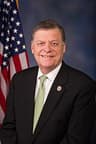 Tom Cole
Republican · Oklahoma
 Angie Craig
Democrat · Minnesota
 Jason Crow
Democrat · Colorado
 Rosa DeLauro
Democrat · Connecticut
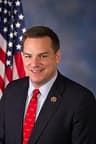 Richard Hudson
Republican · North Carolina
 David Kustoff
Republican · Tennessee
 Jerrold Nadler
Democrat · New York
 Eleanor Norton
Democrat · District of Columbia
 Joe Neguse
Democrat · Colorado
 Mark Pocan
Democrat · Wisconsin
 Brittany Pettersen
Democrat · Colorado
 Deborah Ross
Democrat · North Carolina
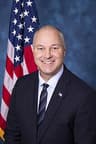 Pete Stauber
Republican · Minnesota
 Suhas Subramanyam
Democrat · Virginia
 Paul Tonko
Democrat · New York
 Robert Wittman
Republican · Virginia
 Ann Wagner
Republican · Missouri
 James Walkinshaw
Democrat · Virginia