
Gerald Connolly (D-VA)
Gerald E. Connolly Esophageal Cancer Awareness Act of 2025
A Democratic bill with 1 Republican cosponsor · See the cosponsor
Last activity — Became Public Law No: 119-96.
Became law
Passed both chambers and was signed by the President, or became law without a signature.
Nothing more in Congress: it is law. When it takes effect depends on the dates written into it — some parts start at once, others a year or more later.
Its path through Congress
- Introduced
- Passed House voice vote
- Passed Senate unanimous consent
- To President
- Became Law
No one's position on it was recorded: the House by voice vote (members called out yes or no together), and the Senate by unanimous consent (no one objected, so there was no vote).
What this bill would do
This Act, known as the ``Gerald E. Connolly Esophageal Cancer Awareness Act of 2025'', directs the Government Accountability Office to perform a specific evaluation. The Comptroller General must submit a report to Congress within one year of the Act's enactment. This report is required to evaluate the total impact of esophageal cancer-related health care spending within the Federal Employee Health Benefits Program. Additionally, the report must examine how often high-risk individuals covered by that program undergo screenings according to established guidelines.
Yes· 3 of 6
- Scored +3
Would people over 65 be better off under this?
The bill addresses health issues and screening protocols relevant to older age groups.
- Scored +3
Would men be better off under this?
The bill addresses esophageal cancer, which is noted as rapidly increasing among American men.
- Scored +3
Would retired people be better off under this?
The bill evaluates health benefits relevant to federal retirees.
The opposite
No question was scored the opposite.
Who it would affect, and how
Potential Positive Impacts for People
-
Increased Transparency on Healthcare Spending: The bill requires an evaluation of the total impact of esophageal cancer-s-related health care spending under the Federal Employee Health Benefits Program (Section 3, Subsection 1). This provides insight into the financial impact on federal employees and retirees.
-
Improved Screening Oversight: The bill mandates an evaluation of how often high-risk individuals covered under the Federal Employees Health Benefits Program undergo recommended screenings (Section 3, Subsection 2). This could help identify if those at higher risk are following established medical guidelines for early detection.
Potential Negative Impacts for People
- No negative impacts are explicitly mentioned in the provided text.
Groups and Interests Ranking
Every group the model scored this bill for, from -10 to +10. Tap or hover a score for the reason it gave.
- Demographic And Interest Groups
- Would men be better off under this? — The bill addresses esophageal cancer, which is noted as rapidly increasing among American men. Would retired people be better off under this? — The bill evaluates health benefits relevant to federal retirees. Would people over 65 be better off under this? — The bill addresses health issues and screening protocols relevant to older age groups. Would white Americans be better off under this? — The bill addresses a disease with risk factors highly noted among non-Hispanic white populations.
- Governance And Ideology
- Does this make what the government does easier for the public to see? — The bill increases transparency regarding healthcare spending within the Federal Employee Health Benefits Program.
- Healthcare
- Does this make health care easier to get in general? — The bill promotes better health outcomes through mandated evaluation of cancer screenings and spending transparency.
- Public Law (6/10/2026)
The text as it became law
- Enrolled Bill
The final version, on its way to the President
- 6/9/2026
- Signed by President.
- Became Public Law No: 119-96.
- 5/29/2026
- Presented to President.
- 5/20/2026
- Senate Committee on Homeland Security and Governmental Affairs discharged by Unanimous Consent.
- Passed/agreed to in Senate: Passed Senate without amendment by Unanimous Consent.
- Passed Senate without amendment by Unanimous Consent. (consideration: CR S2397-2398)
- Message on Senate action sent to the House.
- 6/4/2025
- Received in the Senate and Read twice and referred to the Committee on Homeland Security and Governmental Affairs.
- 6/3/2025
- Motion to reconsider laid on the table Agreed to without objection.
- Passed/agreed to in House: On motion to suspend the rules and pass the bill, as amended Agreed to by voice vote. (text: CR H2390-2391)
- On motion to suspend the rules and pass the bill, as amended Agreed to by voice vote. (text: CR H2390-2391)
- DEBATE - The House proceeded with forty minutes of debate on H.R. 3490.
- Considered under suspension of the rules. (consideration: CR H2390-2392)
- Mr. Comer moved to suspend the rules and pass the bill, as amended.
- 5/21/2025
- Committee Consideration and Mark-up Session Held
- Ordered to be Reported by the Yeas and Nays: 42 - 0.
- 5/19/2025
- Referred to the House Committee on Oversight and Government Reform.
- 1 Cosponsor added.
- Introduced in House
One bill Congress.gov lists as related to this one — companions in the other chamber, earlier versions, and bills this one absorbed or was folded into.
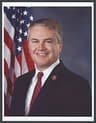 James Comer
Republican · Kentucky