
Trent Kelly (R-MS)
Forest Conservation Easement Program Act of 2025
A Republican bill with 12 Democratic cosponsors · See all 17 cosponsors
Last activity — Referred to the House Committee on Agriculture.
In committee
Introduced and handed to a committee in the chamber it started in.
The committee holds it, and most bills are never heard from again. A hearing or a committee vote would be news; silence is the usual outcome, and it kills the bill without anyone voting against it.
Its path through Congress
- Introduced
- In Committee
What this bill would do
This bill proposes to amend the Food Security Act of 1985 to create the Forest Conservation Easement Program. The program would require the Secretary of Agriculture to establish easements to conserve and restore forest land and natural resources. It includes provisions for forest land easements and forest reserve easements to protect biodiversity, watersheds, and endangered species. The legislation also provides for cost-share assistance and technical assistance for eligible landowners and entities. Funding is set at $100,000,000 annually for fiscal years 2026 through 2030. Finally, it repeals Title V of the Healthy Forests Restoration Act of 2003 to integrate those functions into this new program.
Yes· 3 of 10
- Scored +8
Does this better protect air, water and wildlife?
The bill establishes a program to protect biodiversity, watersheds, and forest land.
- Scored +6
Does this cut the pollution that drives climate change?
The bill aims to enhance carbon sequestration through forest conservation.
- Scored +6
Would veterans be better off under this, taking everything together?
The bill provides enhanced cost-share assistance for veteran forest landowners.
The opposite
No question was scored the opposite.
Who it would affect, and how
Potential Positive Impacts for People
-
Support for Underserved Landowners: The bill requires that, to the maximum extent practicable, 10 percent of funds be used to enroll land owned by beginning, socially disadvantaged, veteran, or limited resource forest landowners (Section 1267D(a)(1)).
-
Financial Assistance for Conservation: The Secretary is directed to provide cost-share assistance for purchasing forest land easements, with a Federal share of 50 percent of the fair market value, which can increase up to 75 percent for specific groups like veterans and socially disadvantaged landowners (Section 1267B(b)(1)-(2)(C)).
-
Habitat and Species Protection: The program aims to promote the restoration and improvement of habitats for threatened and endangered species, as well as other at-risk species (Section 1267(b)(3)).
-
Water Quality and Security: The program's purposes include protecting and restoring watersheds for improvements in water quality and quantity (Section 1267(b)(6)).
-
Protection for Military Installations: One of the stated purposes of the program is to prevent encroachment around military bases and installations (Section 1267(b)(7)).
-
Safe Harbor Protections: Landowners whose conservation activities result in a net conservation benefit for certain species can be provided with safe harbor or similar assurances and protections (Section 1267C(e)(1)).
Potential Negative Impacts for People
-
Land Use Restrictions: Enrollment in a forest land easement involves conveying an interest in land to an eligible entity for the purpose of protecting natural resources and the forest nature of the land (Section 1267A(4)(A)).
-
Limitations on Land Use: Forest land easements may include terms and conditions that limit the amount of impervious surfaces allowed on the land (Section 1267B(4)(C)(iv)).
-
Restrictions on Federal and State Land: The program prohibits using funds to acquire easements on land owned by Federal agencies or land owned in fee title by a State, agency, or local government (Section 1267D(b)(1)).
-
Potential for Program Termination: The Secretary has the authority to approve the termination of an interest in eligible land if it is determined to be in the interest of the Federal Government (Section 1267D(c)(3)(A)).
Groups and Interests Ranking
Every group the model scored this bill for, from -10 to +10. Tap or hover a score for the reason it gave.
- Environment Energy And Infrastructure
- Does this better protect air, water and wildlife? — The bill establishes a program to protect biodiversity, watersheds, and forest land. Does this cut the pollution that drives climate change? — The bill aims to enhance carbon sequestration through forest conservation. Does this better protect public land such as parks and forests? — The bill provides a new mechanism for managing forest land through easements. Does this invest in rural communities? — The bill provides financial assistance and technical support for forest land conservation, which can benefit rural areas.
- Demographic And Interest Groups
- Would veterans be better off under this, taking everything together? — The bill provides enhanced cost-share assistance for veteran forest landowners. Would Native Americans be better off under this? — The bill includes provisions for Indian Tribes to participate in forest reserve easements. Would people in rural areas be better off under this? — The program supports forest land conservation which is often centered in rural areas. Would farmers be better off under this? — The bill involves forest landowners and may benefit those involved in agricultural land use.
- Social Issues And Justice
- Does this narrow racial gaps in how people are treated? — The bill prioritizes funding for socially disadvantaged forest landowners.
- Governance And Ideology
- Does this give the federal government more power? — The bill expands the Secretary of Agriculture's authority to establish and manage forest conservation easements.
- 7/25/2025
- 1 Cosponsor added.
- 7/14/2025
- 1 Cosponsor added.
- 7/10/2025
- 3 Cosponsors added.
- 6/24/2025
- 2 Cosponsors added.
- 6/23/2025
- 1 Cosponsor added.
- 6/10/2025
- 1 Cosponsor added.
- 6/3/2025
- 1 Cosponsor added.
- 6/2/2025
- 1 Cosponsor added.
- 5/17/2025
- Referred to the House Committee on Agriculture.
- 6 Cosponsors added.
- Introduced in House
 Janelle Bynum
Democrat · Oregon
 Earl Carter
Republican · Georgia
 Madeleine Dean
Democrat · Pennsylvania
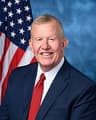 Mike Ezell
Republican · Mississippi
 Michael Guest
Republican · Mississippi
 Maggie Goodlander
Democrat · New Hampshire
 Josh Harder
Democrat · California
 Raja Krishnamoorthi
Democrat · Illinois
 Michael Lawler
Republican · New York
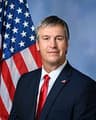 Barry Moore
Republican · Alabama
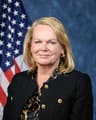 April McClain Delaney
Democrat · Maryland
 Chellie Pingree
Democrat · Maine
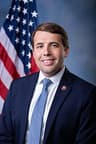 Chris Pappas
Democrat · New Hampshire
 Kim Schrier
Democrat · Washington
 Bennie Thompson
Democrat · Mississippi
 Paul Tonko
Democrat · New York
 Eugene Vindman
Democrat · Virginia