
Bill Huizenga (R-MI)
FDIC Board Accountability Act
A Republican bill with 3 Republican cosponsors · See all 3 cosponsors
Last activity — Placed on the Union Calendar, Calendar No. 201.
Cleared committee, waiting for its first floor vote
A committee approved it and it is on the calendar of the chamber it started in.
This is further than most bills get, and still no promise of a vote: the calendar is a queue, and the majority leadership decides what is called. A bill can sit here until the Congress ends.
Its path through Congress
- Introduced
- On Calendar
What this bill would do
This bill, titled the "FDIC Board Accountability Act," seeks to amend the Federal Deposit Insurance Act. It revises the membership requirements for the Board of Directors of the Federal Deposit Insurance Corporation. Specifically, it changes how Presidentially appointed members are selected by requiring specific types of experience. It also changes the role of the Director of the Bureau of Consumer Financial Protection to a non-voting observer. Additionally, the bill implements new limits on how long individuals can serve on the board.
Yes
- Scored +3
Does this make it easier to run a small business?
The bill mandates that one FDIC board member have experience supervising institutions with less than $10 billion in assets, which prioritizes the needs of smaller depository institutions.
- Scored +2
Does this make what the government does easier for the public to see?
The bill implements term limits and maximum service length for FDIC board members, which can increase institutional turnover and transparency.
- Scored +2
Would business owners be better off under this?
The emphasis on smaller depository institutions may benefit community bank owners.
The opposite
- Scored -4
Does this give people more protection from unfair business practices?
The bill reduces the influence of the Consumer Financial Protection Bureau by converting its Director to a non-voting observer on the FDIC Board.
- Scored -2
Would households on low incomes be better off under this?
The reduction in the voting power of the Consumer Financial Protection Bureau may reduce protections for lower-income consumers.
Who it would affect, and how
Potential Positive Impacts for People
-
Increased expertise in specific banking sectors: The bill requires that one appointed member have State bank supervisory experience and another have experience working in or supervising institutions with less than $10,000,000,000 in total assets (Section 2, subsection (a), paragraph (1), subparagraph (B)).
-
Term limits for board members: The bill establishes that no individual may be appointed for more than two terms and limits total service to no more than twelve years (Section 2, subsection (c), paragraph (1) and (4)).
Potential Negative Impacts for People
- Reduced voting power for consumer protection: The Director of the Bureau of Consumer Financial Protection would serve only as a non-voting observer rather than a voting member of the Board of Directors (Section 2, subsection (a), paragraph (3)).
Groups and Interests Ranking
Every group the model scored this bill for, from -10 to +10. Tap or hover a score for the reason it gave.
- Governance And Ideology
- Does this make what the government does easier for the public to see? — The bill implements term limits and maximum service length for FDIC board members, which can increase institutional turnover and transparency.
- Economy And Finance
- Does this make it easier to run a small business? — The bill mandates that one FDIC board member have experience supervising institutions with less than $10 billion in assets, which prioritizes the needs of smaller depository institutions. Does this give people more protection from unfair business practices? — The bill reduces the influence of the Consumer Financial Protection Bureau by converting its Director to a non-voting observer on the FDIC Board.
- Demographic And Interest Groups
- Would business owners be better off under this? — The emphasis on smaller depository institutions may benefit community bank owners. Would households on low incomes be better off under this? — The reduction in the voting power of the Consumer Financial Protection Bureau may reduce protections for lower-income consumers.
- 9/8/2025
- Reported by the Committee on Financial Services. H. Rept. 119-244.
- Placed on the Union Calendar, Calendar No. 201.
- 7/23/2025
- Committee Consideration and Mark-up Session Held
- Ordered to be Reported by the Yeas and Nays: 26 - 23.
- 7/22/2025
- Committee Consideration and Mark-up Session Held
- 5/15/2025
- Referred to the House Committee on Financial Services.
- 3 Cosponsors added.
- Introduced in House
One bill Congress.gov lists as related to this one — companions in the other chamber, earlier versions, and bills this one absorbed or was folded into.
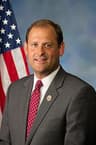 Andy Barr
Republican · Kentucky
 Daniel Meuser
Republican · Pennsylvania
 John Rose
Republican · Tennessee