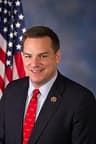
Richard Hudson (R-NC)
When Minutes Count for Emergency Medical Patients Act
A Republican bill with 3 Democratic cosponsors · See all 9 cosponsors
Last activity — Referred to the Committee on Energy and Commerce, and in addition to the Committee on Ways and Means, for a period to be subsequently determined by the Speaker, in each case for consideration of such provisions as fall within the jurisdiction of the committee concerned.
In committee
Introduced and handed to a committee in the chamber it started in.
The committee holds it, and most bills are never heard from again. A hearing or a committee vote would be news; silence is the usual outcome, and it kills the bill without anyone voting against it.
Its path through Congress
- Introduced
- In Committee
What this bill would do
This bill, known as the "When Minutes Count for Emergency Medical Patients Act," establishes a new payment model for emergency medical services (EMS). It creates a system to provide supplemental payments for ground and air ambulance services to cover specific life-saving medications and blood products. The bill also directs the Medicare Payment Advisory Commission (MedPAC) to conduct a comprehensive study on EMS payments, including evaluations of medical directors and professionals. Additionally, it requires the Secretary of Health and Human Services to issue guidance and a report regarding "wall time" at hospitals. The goal is to assess and improve the quality of care and staffing within the EMS system.
Yes· 3 of 6
- Scored +6
Does this make health care easier to get in general?
It aims to improve access to life-sustaining medications and blood products during emergencies.
- Scored +5
Would people over 65 be better off under this?
The bill provides enhanced Medicare coverage for emergency medical services.
- Scored +5
Would people in rural areas be better off under this?
The bill specifically aims to improve care and save lives in rural communities.
The opposite
No question was scored the opposite.
Who it would affect, and how
Potential Positive Impacts for People
-
Improved Access to Life-Saving Supplies: The creation of a supplemental payment model ensures that EMS agencies can maintain a sufficient supply of specified life-saving medications, such as epinephrine and albuterol, and blood products (Section 2, subsection (h)(1) and (h)(3)).
-
Enhanced Quality of Care: The model aims to evaluate and improve patient outcomes, including the reduction of adverse effects caused by medication shortages (Section 2, subsection (h)(5)(A)).
-
Support for Underserved Communities: The bill directs the implementation of the payment model across various geographic areas, including rural and frontier regions, to assess its impact on improving care for traditionally underserved demographics (Section 2, subsection (h)(4) and (h)(5)(C)).
-
Addressing Staffing Shortages: The bill mandates an evaluation of the EMS professional shortage to determine if additional payments are needed to attract and retain capable workers (Section 3, subsection (a)(1)(3)(B)).
-
Reducing Hospital Delays: By requiring guidance and a report on "wall time," the bill seeks to address the time patients spend waiting for hand-offs at hospitals, which is defined as time beyond 30 minutes (Section s 3, subsection (b)).
Potential Negative Impacts for People
-
Administrative Burdens on EMS Agencies: To participate in the new payment model, eligible entities must submit applications and provide specific data regarding quality of care, outcomes, and discrete data elements like ICD-10 and NEMSIS dispositions (Section 2, subsection (h)(2)(A)).
-
Increased Complexity in Data Integration: Participating agencies will need to maintain software and data integration to meet specific reporting requirements (Section 2, subsection (h)(3)(A)(iv)).
Groups and Interests Ranking
Every group the model scored this bill for, from -10 to +10. Tap or hover a score for the reason it gave.
- Demographic And Interest Groups
- Would retired people be better off under this? — It enhances Medicare benefits which are utilized heavily by retirees. Would people in rural areas be better off under this? — The bill specifically aims to improve care and save lives in rural communities. Would people over 65 be better off under this? — The bill provides enhanced Medicare coverage for emergency medical services. Would people in cities be better off under this? — The bill addresses emergency medical services which impacts urban residents.
- Healthcare
- Does this make health care easier to get in general? — It aims to improve access to life-sustaining medications and blood products during emergencies. Does this put more money into Medicare, the health coverage for people over 65? — The bill creates a new supplemental payment model for EMS services under Medicare.
- 9/15/2026
- 1 Cosponsor added.
- 6/9/2026
- 1 Cosponsor added.
- 4/20/2026
- 1 Cosponsor added.
- 4/14/2026
- 1 Cosponsor added.
- 3/16/2026
- 1 Cosponsor added.
- 3/3/2026
- 1 Cosponsor added.
- 2/23/2026
- 1 Cosponsor added.
- 6/3/2025
- 1 Cosponsor added.
- 5/15/2025
- Referred to the Committee on Energy and Commerce, and in addition to the Committee on Ways and Means, for a period to be subsequently determined by the Speaker, in each case for consideration of such provisions as fall within the jurisdiction of the committee concerned.
- 1 Cosponsor added.
- Introduced in House
 Gus Bilirakis
Republican · Florida
 Debbie Dingell
Democrat · Michigan
 Josh Gottheimer
Democrat · New Jersey
 Craig Goldman
Republican · Texas
 Jennifer Kiggans
Republican · Virginia
 Ryan Mackenzie
Republican · Pennsylvania
 Eleanor Norton
Democrat · District of Columbia
 Glenn Thompson
Republican · Pennsylvania
 Claudia Tenney
Republican · New York