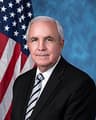
Carlos Gimenez (R-FL)
Women’s and Family Protection Act of 2025
A Republican bill with 1 Democratic cosponsor · See the cosponsor
Last activity — Referred to the House Committee on Financial Services.
In committee
Introduced and handed to a committee in the chamber it started in.
The committee holds it, and most bills are never heard from again. A hearing or a committee vote would be news; silence is the usual outcome, and it kills the bill without anyone voting against it.
Its path through Congress
- Introduced
- In Committee
What this bill would do
The Women's and Family Protection Act of 2025 aims to amend the McKinney-Vento Homeless Assistance Act. It updates the definition of a homeless individual to include those residing in indigenous, rural, or marginalized communities as defined by the Secretary. The bill also expands the domestic violence definition to specifically include women, women with children, and survivors at risk of gender-based violence. Additionally, it establishes a program for emergency solutions grants. These grants are directed toward private nonprofit organizations serving high-needs populations such as pregnant women, families, and victims of trauma.
Yes· 3 of 17
- Scored +8
Would women be better off under this?
The bill specifically targets women and survivors of gender-based violence for protection and support.
- Scored +7
Would children be better off under this?
The bill specifically prioritizes assistance for children and youth.
- Scored +7
Would households on low incomes be better off under this?
The bill provides direct assistance to homeless and high-needs populations.
The opposite
No question was scored the opposite.
Who it would affect, and how
Potential Positive Impacts for People
-
Expanded Definitions of Homelessness: By allowing the definition of a homeless individual to include those residing in indigenous, rural, or marginalized communities, the bill expands who qualifies for assistance (Section 101).
-
Specific Protections for Gender-Based Violence Victims: The bill requires the Secretary to specifically include women, women with children, survivors, and persons at risk of gender-based violence as a recognized subpopulation within the domestic violence definition (Section 101).
-
Targeted Grant Assistance for High-Needs Populations: The bill directs grants to private nonprofit organizations serving specific groups, including pregnant women, families, children, youth, and seniors (Section 201, subsection b).
-
Comprehensive Support Services: Assistance can be used for essential needs such as childcare, employment services, food, mental health services, and trauma counseling (Section 201, subsection c).
-
Housing Stability: Grants can fund housing relocation and stabilization services for individuals or families who are homeless or at risk of becoming homeless (Section 201, subsection c).
-
Technical Assistance for Providers: The Secretary is tasked with providing technical assistance to nonprofits regarding trauma-informed service delivery and coordination with other government social services (Section 201, subsection f).
Potential Negative Impacts for People
- Administrative Requirements: Private nonprofit organizations seeking grants must submit applications and detailed evaluations, including unduplicated counts of specific populations served, which may create an administrative burden (Section 201, subsections d and e).
Groups and Interests Ranking
Every group the model scored this bill for, from -10 to +10. Tap or hover a score for the reason it gave.
- Demographic And Interest Groups
- Would women be better off under this? — The bill specifically targets women and survivors of gender-based violence for protection and support. Would children be better off under this? — The bill specifically prioritizes assistance for children and youth. Would households on low incomes be better off under this? — The bill provides direct assistance to homeless and high-needs populations. Would Native Americans be better off under this? — The bill includes indigenous communities in the definition of homelessness. Would people in rural areas be better off under this? — The bill expands homelessness eligibility to include rural communities. Would people over 65 be better off under this? — The bill includes seniors as a high-needs population for grant assistance.
- Social Issues And Justice
- Does this make housing cost less? — The bill expands homelessness definitions and funds housing relocation and stabilization. Does this narrow the gap between how men and women are treated? — The bill specifically protects and provides services for women and victims of gender-based violence. Is this likely to reduce homelessness? — The bill provides targeted grants and expanded definitions to better address homelessness. Does this make child care cost less? — The bill allows grant funds to be used for childcare services. Is this likely to lift people out of poverty? — The bill provides support services like food and employment to high-needs populations. Does this narrow racial gaps in how people are treated? — The bill expands homelessness definitions to include indigenous and marginalized communities.
- Healthcare
- Does this make mental health care easier to get? — The bill funds mental health and trauma counseling as part of emergency assistance. Does this make health care easier to get in general? — The bill provides for outpatient and mental health services for specific high-needs populations.
- Governance And Ideology
- Does this make what the government does easier for the public to see? — The bill requires detailed evaluations and counts to be submitted to the Secretary. Does this give the federal government more power? — The bill expands the Secretary's role in defining homelessness and administering grants.
- Environment Energy And Infrastructure
- Does this invest in rural communities? — The bill includes rural communities in the definition of homelessness.
- 5/9/2025
- Referred to the House Committee on Financial Services.
- 1 Cosponsor added.
- Introduced in House
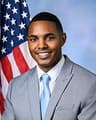 Ritchie Torres
Democrat · New York