
A Democratic bill with 7 Democratic cosponsors · See all 7 cosponsors
Last activity — Referred to the House Committee on Education and Workforce.
In committee
Introduced and handed to a committee in the chamber it started in.
The committee holds it, and most bills are never heard from again. A hearing or a committee vote would be news; silence is the usual outcome, and it kills the bill without anyone voting against it.
Its path through Congress
- Introduced
- In Committee
What this bill would do
The Child Care Workforce Development Act establishes programs to support early childhood educators through loan assistance and grants. The Secretary of Health and Human Services is authorized to enter contracts to repay up to $6,000 of educational loan principal and interest annually for educators who serve for five years. Additionally, the Secretary of Education will manage a competitive grant program for individuals enrolled in qualified early childhood educator programs. These grants are capped at $4,000 per academic year and are intended to assist with tuition, fees, and materials. Both programs include specific service requirements to ensure the workforce is developed and retained.
Yes· 3 of 8
- Scored +8
Would students be better off under this?
The bill offers direct financial aid through grants and future loan repayment incentives.
- Scored +7
Does this make college cost less?
The bill provides direct grants of up to $4,000 per year to help students cover tuition and fees.
- Scored +6
Does this reduce what student borrowers owe or repay?
The bill authorizes the government to repay up to $6,000 of educational loan principal and interest annually for eligible educators.
The opposite
- Scored -1
Does this reduce what the federal government spends?
The bill authorizes significant new federal spending via loan assistance and competitive grants.
Who it would affect, and how
Potential Positive Impacts for People
-
Loan Repayment Assistance: Eligible early childhood educators can have their Federal direct loans repaid by the government, with up to $6,000 of principal and interest covered for each year of a five-year service commitment (Section 2(a)).
-
Educational Support via Grants: Students enrolled in qualified early childhood educator programs can receive grants of up to $4,000 per academic year to help cover the costs of tuition, fees, and necessary materials (Section 3(d), Section 3(e)(1)).
-
Workforce Credit for Experience: Individuals can count their service as a full or part-time educator in a licensed program while they are still enrolled in their studies toward fulfilling their service obligation (Section 3(c)(2)).
-
Financial Hardship Protection: Grant recipients who make a good faith effort to find employment in a licensed early learning program but cannot find a position may receive a hardship extension of up to one year (Section 3(c)(3)(B)).
Potential Negative Impacts for People
-
Service Obligations: To receive loan assistance, educators must commit to serving for at least 5 years with a qualified employer (Section 2(a), Section 2(f)(1)(B)(i)). To receive a grant, applicants must agree to serve in a licensed early learning program for at least one academic year, plus additional months for renewals (Section 3(c)(1)(A)(i)).
-
Financial Risk for Grant Recipients: If a grant recipient fails or refuses to meet their service obligation, the grant money received will be treated as a Federal Direct Unsubsidized Stafford Loan that must be repaid (Section 3(c)(1)(A)(ii), Section 3(c)(3)(A)).
-
Annual Reporting Burdens: Educators seeking to continue receiving payments under the loan assistance program must submit information annually to the Secretary to certify they still meet eligibility criteria (Section 2(b)).
Groups and Interests Ranking
Every group the model scored this bill for, from -10 to +10. Tap or hover a score for the reason it gave.
- Demographic And Interest Groups
- Would students be better off under this? — The bill offers direct financial aid through grants and future loan repayment incentives. Would people in their twenties and thirties be better off under this? — The bill provides significant financial assistance for those pursuing degrees and starting careers in education. Would middle-income households be better off under this? — The program assists educators who may be middle-income professionals managing student debt. Would households on low incomes be better off under this? — The bill supports the childcare workforce which facilitates better care access for families.
- Education And Technology
- Does this make college cost less? — The bill provides direct grants of up to $4,000 per year to help students cover tuition and fees. Does this reduce what student borrowers owe or repay? — The bill authorizes the government to repay up to $6,000 of educational loan principal and interest annually for eligible educators.
- Social Issues And Justice
- Does this make child care cost less? — By developing the workforce, the bill aims to support the infrastructure of childcare services.
- Economy And Finance
- Is this likely to create jobs? — The bill incentivizes entering the early childhood education field through loan repayment and grants. Does this reduce what the federal government spends? — The bill authorizes significant new federal spending via loan assistance and competitive grants.
- 5/19/2026
- 1 Cosponsor added.
- 7/23/2025
- 1 Cosponsor added.
- 5/8/2025
- Referred to the House Committee on Education and Workforce.
- 5 Cosponsors added.
- Introduced in House
 Suzanne Bonamici
Democrat · Oregon
 Jimmy Gomez
Democrat · California
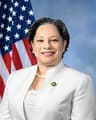 Jennifer McClellan
Democrat · Virginia
 Sarah McBride
Democrat · Delaware
 Brittany Pettersen
Democrat · Colorado
 Greg Stanton
Democrat · Arizona
 Jill Tokuda
Democrat · Hawaii