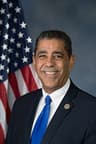
Adriano Espaillat (D-NY)
Artificial Intelligence Literacy and Inclusion Act
A Democratic bill with 4 Democratic cosponsors · See all 4 cosponsors
Last activity — Referred to the Committee on Science, Space, and Technology, and in addition to the Committees on Education and Workforce, Small Business, and Energy and Commerce, for a period to be subsequently determined by the Speaker, in each case for consideration of such provisions as fall within the jurisdiction of the committee concerned.
In committee
Introduced and handed to a committee in the chamber it started in.
The committee holds it, and most bills are never heard from again. A hearing or a committee vote would be news; silence is the usual outcome, and it kills the bill without anyone voting against it.
Its path through Congress
- Introduced
- In Committee
What this bill would do
This bill, known as the "Artificial Intelligence Literacy and Inclusion Act," directs the National Science Foundation to provide awards for artificial intelligence literacy programs. These awards can be given to entities like nonprofits and educational institutions to develop and implement local programs. The funds are intended to cover curricula development, training for specific groups, and outreach activities. Additionally, the bill requires several federal agencies to submit reports to Congress regarding how they can advance AI literacy. These reports aim to integrate AI literacy into workforce development, business competitiveness, and education.
Yes· 3 of 12
- Scored +4
Would households on low incomes be better off under this?
The bill prioritizes low-income populations for AI literacy training and outreach.
- Scored +4
Would Black Americans be better off under this?
The bill prioritizes communities of color for AI literacy programs.
- Scored +4
Would people with disabilities be better off under this?
The bill prioritizes people with disabilities for AI literacy education.
The opposite
No question was scored the opposite.
Who it would affect, and how
Potential Positive Impacts for People
-
Increased access to AI education for underserved groups: The bill allows funds to be used for providing AI literacy education and training to marginalized communities, including communities of color, low-income populations, rural areas, senior citizens, and people with disabilities (Section 2(a)(2)(B)).
-
Development of educational resources: Funds can be used to create curricula and materials that teach the basics of AI, its applications, ethical considerations, and societal impacts (Section 2(a)(2)(A)).
-
Local community engagement: The bill promotes the development of programs that allow communities to learn about AI from local, trusted sources (Section 2(a)(1)).
-
Workforce and business preparation: Federal agencies are tasked with finding ways to integrate AI literacy into workforce development and help small and medium-sized enterprises remain competitive in the global AI economy (Section 2(b)(1)(A) and (B)).
-
Educational integration: The Secretary of Education is directed to identify ways to include AI literacy in K-12 and higher education curricula (Section 2(b)(1)(D)).
Potential Negative Impacts for People
- No specific negative impacts or burdens are explicitly stated in the provided text.
Groups and Interests Ranking
Every group the model scored this bill for, from -10 to +10. Tap or hover a score for the reason it gave.
- Demographic And Interest Groups
- Would Black Americans be better off under this? — The bill prioritizes communities of color for AI literacy programs. Would households on low incomes be better off under this? — The bill prioritizes low-income populations for AI literacy training and outreach. Would people with disabilities be better off under this? — The bill prioritizes people with disabilities for AI literacy education. Would people in rural areas be better off under this? — The bill prioritizes rural areas for AI literacy education and training. Would children be better off under this? — The bill encourages the integration of AI literacy into K-12 education.
- Social Issues And Justice
- Does this expand the rights of people with disabilities? — The bill explicitly includes people with disabilities as a priority group for AI literacy training and education. Does this narrow racial gaps in how people are treated? — The bill prioritizes providing AI literacy education and training to communities of color.
- Economy And Finance
- Does this make it easier to run a small business? — The bill directs the Secretary of Commerce and the SBA to evaluate how AI literacy can enhance the competitiveness of small and medium-sized enterprises. Is this likely to create jobs? — The bill directs the Secretary of Labor to integrate AI literacy into workforce development to prepare workers for future jobs.
- Education And Technology
- Does this put more money into public schools? — The bill directs the Secretary of Education to incorporate AI literacy into K-12 and higher education curricula. Does this put more money into scientific research? — The bill directs the National Science Foundation to provide awards for AI literacy programs and research.
- National Security And Foreign Policy
- Does this better protect the country from computer attacks? — The bill links AI literacy to maintaining national security through artificial intelligence.
- 5/21/2026
- 1 Cosponsor added.
- 9/26/2025
- 1 Cosponsor added.
- 5/6/2025
- Referred to the Committee on Science, Space, and Technology, and in addition to the Committees on Education and Workforce, Small Business, and Energy and Commerce, for a period to be subsequently determined by the Speaker, in each case for consideration of such provisions as fall within the jurisdiction of the committee concerned.
- 2 Cosponsors added.
- Introduced in House
One bill Congress.gov lists as related to this one — companions in the other chamber, earlier versions, and bills this one absorbed or was folded into.
 Yvette Clarke
Democrat · New York
 Josh Gottheimer
Democrat · New Jersey
 Ted Lieu
Democrat · California
 Shri Thanedar
Democrat · Michigan