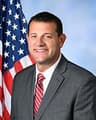
David Valadao (R-CA)
National Earthquake Hazards Reduction Program Reauthorization Act of 2025
A Republican bill with 3 Democratic cosponsors · See all 4 cosponsors
Last activity — Ordered to be Reported in the Nature of a Substitute (Amended) by Voice Vote.
Introduced, nothing more yet
Formally proposed, and not yet handed to a committee.
Nearly every bill is sent to a committee within days. Introduction alone is not a sign of support, of momentum, or of any likelihood of passing — any member may introduce any bill.
Its path through Congress
- Introduced
What this bill would do
This bill, known as the National Earthquake Hazards Reduction Program Reauthorization Act of 2025, seeks to reauthorize the Earthquake Hazards Reduction Act of 1977. It introduces several improvements to the national program to enhance earthquake hazard reduction efforts. The legislation expands the scope of program activities to include designing, evaluating, and retrofitting structures. It also emphasizes coordination with various agencies and the Federal Communications Commission for emergency alerts. Additionally, the bill updates the responsibilities of the United States Geological Survey regarding warning systems and data sharing. Finally, it provides specific funding authorizations for fiscal years 2026 through 2030.
Yes· 3 of 5
- Scored +6
Does this put more money into scientific research?
The bill provides significant funding for the Advanced National Seismic System and USGS earthquake research.
- Scored +5
Does this improve help for people hit by a disaster?
The bill enhances earthquake early warning systems and interagency coordination for natural disasters.
- Scored +5
Would Native Americans be better off under this?
The bill explicitly includes Tribal governments in program activities and advisory committees.
The opposite
No question was scored the opposite.
Who it would affect, and how
Potential Positive Impacts for People
-
Improved Infrastructure Safety: The bill expands program activities to include designing, constructing, evaluating, and retrofitting buildings, structures, and lifeline infrastructure (Section 2(a)(1) and 2(a)(2)). This could help ensure that community-prioritized buildings and services remain functional after an earthquake.
-
Enhanced Emergency Alerts: The legislation mandates coordination with the Federal Communications Commission to ensure earthquake alerts and early warnings are broadcast rapidly and reliably (Section 2(e)(4)(C)). These alerts are to be provided in the predominant languages of the affected region to maximize warning time for people (Section 2(e)(4)(E)).
-
Expanded Warning Systems: There is a directive to expand the earthquake early warning system to include additional high-risk hazard areas and improve detection capabilities (Section 2(e)(4)(F)).
-
Improved Coordination for Natural Disasters: The bill directs the USGS to coordinate with NOAA and FEMA on data sharing and resource allocation to support responses to oceanic earthquakes and tsunamis (Section 2(e)(4)(D)).
-
Increased Inclusion of Tribal Communities: The bill adds "Tribal" to the descriptions of government involvement in several areas, such as program activities and the advisory committee (Section 2(a)(1) and 2(d)).
-
Forecasts for Aftershocks: The USGS is directed to issue earthquake forecasts for aftershocks associated with significant earthquakes in the United States (Section 2(e)(4)(H)).
Potential Negative Impacts for People
- No negative impacts or burdens are explicitly stated in the provided text.
Groups and Interests Ranking
Every group the model scored this bill for, from -10 to +10. Tap or hover a score for the reason it gave.
- Environment Energy And Infrastructure
- Does this improve help for people hit by a disaster? — The bill enhances earthquake early warning systems and interagency coordination for natural disasters. Does this better protect air, water and wildlife? — The bill enhances natural hazard monitoring and structural standards to mitigate earthquake impacts. Does this repair or build roads and bridges? — The bill includes provisions for designing and retrofitting lifeline infrastructure.
- Education And Technology
- Does this put more money into scientific research? — The bill provides significant funding for the Advanced National Seismic System and USGS earthquake research.
- Demographic And Interest Groups
- Would Native Americans be better off under this? — The bill explicitly includes Tribal governments in program activities and advisory committees.
- 7/21/2026
- Committee Consideration and Mark-up Session Held
- Ordered to be Reported in the Nature of a Substitute (Amended) by Voice Vote.
- 1/12/2026
- Reported by the Committee on Natural Resources. H. Rept. 119-438, Part I.
- 9/23/2025
- 1 Cosponsor added.
- 9/2/2025
- 1 Cosponsor added.
- 6/25/2025
- Subcommittee on Energy and Mineral Resources Discharged
- Committee Consideration and Mark-up Session Held
- Ordered to be Reported by Unanimous Consent.
- 6/9/2025
- 1 Cosponsor added.
- 5/20/2025
- Subcommittee Hearings Held
- 5/13/2025
- Referred to the Subcommittee on Energy and Mineral Resources.
- 5/1/2025
- Referred to the Committee on Science, Space, and Technology, and in addition to the Committees on Natural Resources, and Transportation and Infrastructure, for a period to be subsequently determined by the Speaker, in each case for consideration of such provisions as fall within the jurisdiction of the committee concerned.
- Referred to the Subcommittee on Economic Development, Public Buildings, and Emergency Management.
- 1 Cosponsor added.
- Introduced in House
 Jim Costa
Democrat · California
 Suzan DelBene
Democrat · Washington
 Brian Fitzpatrick
Republican · Pennsylvania
 Eugene Vindman
Democrat · Virginia