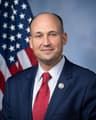
A Republican bill with 2 Republican cosponsors · See all 2 cosponsors
Last activity — Placed on the Union Calendar, Calendar No. 255.
Cleared committee, waiting for its first floor vote
A committee approved it and it is on the calendar of the chamber it started in.
This is further than most bills get, and still no promise of a vote: the calendar is a queue, and the majority leadership decides what is called. A bill can sit here until the Congress ends.
Its path through Congress
- Introduced
- On Calendar
What this bill would do
The State Energy Accountability Act seeks to amend the Public Utility Regulatory Policies Act of 1978. It requires State regulatory authorities that implement an intermittent energy policy to conduct a general evaluation of how those policies affect the reliability of the electric energy system. This evaluation must cover topics such as energy adequacy over a 10-year period, impact on electricity rates, and ability to meet demand during emergencies or extreme weather. Additionally, the bill requires the evaluation to address the replacement of removed reliable generation facilities and the need for out-of-state energy supplies. The Act also establishes specific timelines for making these evaluations and their results publicly available.
Yes· 3 of 4
- Scored +3
Does this make what the government does easier for the public to see?
Mandates public availability of energy reliability and cost evaluations.
- Scored +1
Would households on low incomes be better off under this?
Provides transparency regarding potential electricity rate increases.
- Scored +1
Would middle-income households be better off under this?
Provides transparency regarding potential electricity rate increases.
The opposite
No question was scored the opposite.
Who it would affect, and how
Potential Positive Impacts for People
-
Increased Transparency on Energy Reliability: State regulatory authorities must conduct and make publicly available an evaluation of how intermittent energy policies affect the reliability of the bulk-power system, including assessments of energy adequacy over a 10-year period (Section 2, Subparagraph A, i).
-
Insight into Emergency Preparedness: The bill requires an evaluation of whether energy resources can meet demand during emergencies, periods of high demand, or extreme weather events (Section 2, Subparagraph A, ii).
-
Clarity on Electricity Costs: The evaluation must include the effects of implementing intermittent energy policies on the rates charged by electric utilities (Section 2, Subparagraph A, iii).
-
Understanding of Energy Sourcing: The policy requires an evaluation of whether utilities must use replacement energy supplies generated by facilities located outside of the State to maintain reliability (Section 2, Subparagraph A, v).
Potential Negative Impacts for People
-
Potential for Increased Electricity Rates: The bill acknowledges that implementing intermittent energy policies can have effects on the rates charged by electric utilities, which could imply a cost burden (Section 2, Subparagraph A, iii).
-
Potential Reliance on Outside Energy Sources: The implementation of these policies may require electric utilities to use replacement electric energy supplies generated by facilities located outside of the State to maintain reliability (Section 2, Subparagraph A, v).
Groups and Interests Ranking
Every group the model scored this bill for, from -10 to +10. Tap or hover a score for the reason it gave.
- Governance And Ideology
- Does this make what the government does easier for the public to see? — Mandates public availability of energy reliability and cost evaluations.
- Demographic And Interest Groups
- Would households on low incomes be better off under this? — Provides transparency regarding potential electricity rate increases. Would middle-income households be better off under this? — Provides transparency regarding potential electricity rate increases.
- Economy And Finance
- Does this give people more protection from unfair business practices? — Provides better insight into how energy policies may affect future electricity rates.
- 9/17/2025
- Reported by the Committee on Energy and Commerce. H. Rept. 119-301.
- Placed on the Union Calendar, Calendar No. 255.
- 6/25/2025
- Committee Consideration and Mark-up Session Held
- Ordered to be Reported by the Yeas and Nays: 27 - 20.
- 6/17/2025
- 1 Cosponsor added.
- 6/5/2025
- Subcommittee Consideration and Mark-up Session Held
- Forwarded by Subcommittee to Full Committee by Voice Vote.
- 6/3/2025
- Referred to the Subcommittee on Energy.
- 5/1/2025
- Referred to the House Committee on Energy and Commerce.
- 1 Cosponsor added.
- Introduced in House
 Troy Balderson
Republican · Ohio
 Gabe Evans
Republican · Colorado