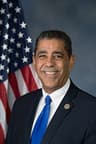
Adriano Espaillat (D-NY)
Green Climate Fund Authorization Act of 2025
A Democratic bill with no cosponsors
Last activity — Referred to the House Committee on Foreign Affairs.
In committee
Introduced and handed to a committee in the chamber it started in.
The committee holds it, and most bills are never heard from again. A hearing or a committee vote would be news; silence is the usual outcome, and it kills the bill without anyone voting against it.
Its path through Congress
- Introduced
- In Committee
What this bill would do
H.R. 2997, the "Green Climate Fund Authorization Act of 2025," authorizes appropriations for climate financing. The bill outlines congressional findings regarding the impact of climate change on vulnerable communities and the necessity of international cooperation. It authorizes $4,000,000,000 for each of the fiscal years 2026 and 2027 for contributions to the Green Climate Fund.
Potential Positive Impacts for People:
-
Section 2 highlights that climate change disproportionately impacts vulnerable and disadvantaged communities both in the United States and globally. This acknowledgment can lead to increased awareness and targeted support for these communities.
-
Section 2 also emphasizes that communities of color, indigenous communities, and low-income communities are often on the frontlines of climate change and lack resources to mitigate its impacts. This can inform policies and programs that prioritize aid and protection for these populations.
-
Section 3 outlines a policy of the United States to provide climate financing that upholds the principles of environmental and climate justice, and promotes gender equality. These principles may create more equitable and sustainable development outcomes within climate projects.
Potential Negative Impacts for People:
- The bill doesn't explicitly mention any potential negative impacts within the US.
Yes· 3 of 25
- Scored +10
Does this send more money or help to other countries?
The bill authorizes $8 billion in foreign climate financing for developing countries.
- Scored +9
Does this cut the pollution that drives climate change?
Finances projects that reduce or eliminate greenhouse gas emissions globally.
- Scored +9
Does this put more money into wind, solar and other renewable power?
Directs funds toward the transition to renewable energy in developing countries.
The opposite
- Scored -5
Does this reduce what the federal government spends?
The bill authorizes additional appropriations of $4 billion per year for two years.
- Scored -3
Does this make the government pay for what it commits to?
Increases public spending through new authorizations for international funds.
- Scored -2
Does this reduce what the federal government owes?
The bill authorizes $8 billion in new spending, which increases government expenditure.
Groups and Interests Ranking
Every group the model scored this bill for, from -10 to +10. Tap or hover a score for the reason it gave.
- Demographic And Interest Groups
- Would households on low incomes be better off under this? — Provides critical financing for the most vulnerable and low-income communities globally. Would women be better off under this? — Mandates the promotion of gender equality in all supported climate projects. Would Native Americans be better off under this? — Explicitly requires informed consent of indigenous peoples and protects their rights. Would farmers be better off under this? — Supports adaptation projects that benefit agricultural sustainability in developing countries. Would people in rural areas be better off under this? — Targets funding toward vulnerable rural communities in developing nations. Would children be better off under this? — Protects intergenerational equity and the rights of children facing climate change. Would immigrants be better off under this? — Addresses the rights of migrants affected by climate change under the Paris Agreement. Would people with disabilities be better off under this? — Acknowledges and protects the rights of people with disabilities in climate actions. Would people in their twenties and thirties be better off under this? — Aims to limit global warming to 1.5C, benefiting future generations. Would Black Americans be better off under this? — Acknowledges and seeks to mitigate the disproportionate impact of climate change on communities of color. Would Asian Americans be better off under this? — Acknowledges and seeks to mitigate the disproportionate impact of climate change on communities of color. Would Hispanic Americans be better off under this? — Acknowledges and seeks to mitigate the disproportionate impact of climate change on communities of color.
- Environment Energy And Infrastructure
- Does this put more money into wind, solar and other renewable power? — Directs funds toward the transition to renewable energy in developing countries. Does this cut the pollution that drives climate change? — Finances projects that reduce or eliminate greenhouse gas emissions globally. Does this better protect air, water and wildlife? — Supports conservation of biodiversity and critical habitats through the GCF. Does this reduce how much oil, gas and coal is produced? — Promotes a sustainable low carbon future as part of the Paris Agreement goals. Does this invest in rural communities? — Provides financing for adaptation and mitigation in developing, often rural, regions.
- National Security And Foreign Policy
- Does this send more money or help to other countries? — The bill authorizes $8 billion in foreign climate financing for developing countries. Does this strengthen ties with allied countries? — Fulfills international commitments to the Green Climate Fund and the Paris Agreement. Does this favour talking over confrontation abroad? — Promotes cooperation with global partners on environmental and climate justice.
- Social Issues And Justice
- Does this narrow the gap between how men and women are treated? — The bill mandates that climate financing promote gender equality as essential in all projects. Is this likely to lift people out of poverty? — Funding targets low-income communities globally to mitigate climate-driven economic loss. Does this narrow racial gaps in how people are treated? — The bill explicitly targets climate justice for communities of color and marginalized peoples. Does this expand the rights of people with disabilities? — The bill acknowledges the rights of persons with disabilities within the framework of the Paris Agreement.
- Economy And Finance
- Does this reduce what the federal government spends? — The bill authorizes additional appropriations of $4 billion per year for two years. Does this make the government pay for what it commits to? — Increases public spending through new authorizations for international funds. Does this reduce what the federal government owes? — The bill authorizes $8 billion in new spending, which increases government expenditure.
- Governance And Ideology
- Does this give the federal government more power? — Increases the federal government's role and spending authority in international climate finance.
- 4/24/2025
- Referred to the House Committee on Foreign Affairs.
- Introduced in House