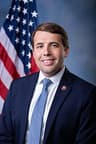
A Democratic bill with 5 Republican cosponsors · See all 7 cosponsors
Last activity — Referred to the Subcommittee on Economic Development, Public Buildings, and Emergency Management.
In committee
Introduced and handed to a committee in the chamber it started in.
The committee holds it, and most bills are never heard from again. A hearing or a committee vote would be news; silence is the usual outcome, and it kills the bill without anyone voting against it.
Its path through Congress
- Introduced
- In Committee
What this bill would do
The BUILD Act of 2025 aims to support infrastructure investment for small law enforcement agencies and small fire departments. It establishes a grant program for law enforcement agencies in jurisdictions with fewer than 50,000 residents to modify, upgrade, or construct facilities. This program also provides grants to career, combination, and volunteer fire departments serving jurisdictions of 50,000 people or fewer. Funds are intended for projects involving emergency services, training, recruitment, retention, community engagement, and safety. The Attorney General and the FEMA Administrator are responsible for overseeing the distribution and reporting of these grants.
Yes· 3 of 8
- Scored +4
Does this improve help for people hit by a disaster?
The bill empowers FEMA through grants to improve fire department infrastructure.
- Scored +4
Would people in rural areas be better off under this?
The bill specifically targets small jurisdictions with populations under 50,000, which are often rural.
- Scored +3
Does this invest in rural communities?
The bill targets small jurisdictions with populations under 50,000, often in rural areas.
The opposite
No question was scored the opposite.
Who it would affect, and how
Potential Positive Impacts for People
-
Law Enforcement Infrastructure Improvements: Law enforcement agencies in jurisdictions with fewer than 50,000 residents can use grants to modify, upgrade, or construct facilities related to emergency services, training, recruitment, retention, community engagement, or safety (Section 2, Sec. 3062).
-
Fire Department Infrastructure Improvements: Career, combination, and volunteer fire departments in jurisdictions of 50,000 people or fewer can use grants to improve emergency services, firefighting or EMS capabilities, training, personnel recruitment/retention, community engagement, and community safety (Section 3, subsection (e)).
-
Equitable Resource Distribution: The Attorney General and the Administrator are directed to ensure, to the extent practicable, an equitable geographic distribution of grants across the regions of the United States (Section 2, Sec. 3064; Section 3, subsection (f)).
-
Data-Driven Infrastructure Planning: The Attorney General, FEMA, and the GAO are tasked with conducting studies to identify the met and unmet construction and renovation needs of law enforcement and fire departments (Section 2, Sec. 3064; Section 2, subsection (b)(1); Section 3, subsection (i)(1); Section 3, subsection (i)(2)).
Potential Negative Impacts for People
- Restrictions on Fund Usage: Law enforcement agencies are prohibited from using these grant funds for any portion of a project that does not have a substantial nexus to the specific categories of improvement listed in the bill (Section 2, Sec. 3062(b)).
Groups and Interests Ranking
Every group the model scored this bill for, from -10 to +10. Tap or hover a score for the reason it gave.
- Environment Energy And Infrastructure
- Does this improve help for people hit by a disaster? — The bill empowers FEMA through grants to improve fire department infrastructure. Does this invest in rural communities? — The bill targets small jurisdictions with populations under 50,000, often in rural areas.
- Demographic And Interest Groups
- Would people in rural areas be better off under this? — The bill specifically targets small jurisdictions with populations under 50,000, which are often rural.
- Governance And Ideology
- Does this make what the government does easier for the public to see? — The bill requires periodic public reporting on grant distribution and needs assessments. Does this give the federal government more power? — The bill authorizes federal agencies like the DOJ and FEMA to distribute large sums of money to local jurisdictions.
- Healthcare
- Does this make health care easier to get in general? — The bill funds EMS capabilities and emergency services training.
- Economy And Finance
- Is this likely to create jobs? — The bill supports recruitment and retention of law enforcement and fire personnel.
- Social Issues And Justice
- Does this change how police departments operate? — The bill provides infrastructure support for local law enforcement agencies.
- 3/25/2026
- 1 Cosponsor added.
- 3/24/2026
- 1 Cosponsor added.
- 1/27/2026
- 1 Cosponsor added.
- 9/9/2025
- 1 Cosponsor added.
- 5/6/2025
- 1 Cosponsor added.
- 4/22/2025
- Referred to the Subcommittee on Economic Development, Public Buildings, and Emergency Management.
- 4/21/2025
- Referred to the Committee on the Judiciary, and in addition to the Committees on Transportation and Infrastructure, and Science, Space, and Technology, for a period to be subsequently determined by the Speaker, in each case for consideration of such provisions as fall within the jurisdiction of the committee concerned.
- 2 Cosponsors added.
- Introduced in House
 Brian Fitzpatrick
Republican · Pennsylvania
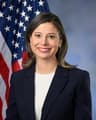 Maggie Goodlander
Democrat · New Hampshire
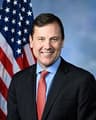 Thomas Kean
Republican · New Jersey
 Jennifer Kiggans
Republican · Virginia
 Julia Letlow
Republican · Louisiana
 Jimmy Panetta
Democrat · California
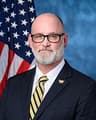 Derrick Van Orden
Republican · Wisconsin