
A Democratic bill with 19 Democratic cosponsors · See all 19 cosponsors
Last activity — Referred to the Committee on Financial Services, and in addition to the Committees on the Judiciary, Energy and Commerce, and Transportation and Infrastructure, for a period to be subsequently determined by the Speaker, in each case for consideration of such provisions as fall within the jurisdiction of the committee concerned.
In committee
Introduced and handed to a committee in the chamber it started in.
The committee holds it, and most bills are never heard from again. A hearing or a committee vote would be news; silence is the usual outcome, and it kills the bill without anyone voting against it.
Its path through Congress
- Introduced
- In Committee
What this bill would do
The Housing for All Act of 2025 aims to resolve the homelessness and housing crises in the United States. The bill establishes a massive Housing Trust Fund and expands various federal assistance programs to increase housing availability. It focuses on supportive housing for the elderly, people with disabilities, and extremely low-income families. Additionally, the legislation creates new grant programs for safe parking, mobile crisis intervention, and library-led outreach. It also seeks to improve the coordination between healthcare and homelessness services. Finally, the act aims to address racial equity and prevent evictions through increased funding and data analysis.
Yes· 3 of 28
- Scored +10
Would households on low incomes be better off under this?
The bill significantly expands rental assistance, vouchers, and eviction protections for low-income families.
- Scored +10
Does this make housing cost less?
The bill provides massive investments in the Housing Trust Fund, vouchers, and supportive housing to solve the housing crisis.
- Scored +10
Is this likely to reduce homelessness?
The central purpose of the bill is to address the homelessness crisis through diverse funding and support programs.
The opposite
No question was scored the opposite.
Who it would affect, and how
Potential Positive Impacts for People
-
Increased Housing for the Elderly and Disabled: The bill provides billions for supportive housing specifically for the elderly (Section 102) and people with disabilities (Section s103), which helps these vulnerable groups secure stable living arrangements.
-
Expansion of Rental Assistance: By expanding the housing choice voucher program (Section 201), the bill provides incremental vouchers to help low-income families secure rental assistance.
-
Support for People Living in Vehicles: The creation of safe parking program grants (Section 301) allows homeless persons living in vehicles to have a safe place to park overnight while accessing rehousing services and hygiene facilities.
-
Emergency Housing Conversions: Funding for the acquisition and conversion of hotels, motels, and commercial spaces (Section 302) can turn existing structures into permanent supportive housing or non-congregate shelters.
-
Legal Protection for Tenants: The eviction protection grant program (Section 303) provides legal assistance at no cost to low-income tenants who are at risk of being evicted.
-
Crisis Intervention Alternatives: Grants for mobile crisis intervention teams (Section 304) provide an alternative to law enforcement by deploying professionals trained to handle urgent medical or psychological needs.
-
Community-Based Outreach: Library consortium pilot grants (Section 305) allow libraries to help homeless individuals connect with resources like health information or help applying for government benefits.
Potential Negative Impacts for People
-
Restrictions on Funding Use: In the mobile crisis intervention program, funds cannot be used for healthcare, except for Naloxone availability and training (Section 309, subsection (d)(2)(A)).
-
Limitations on Housing and Health Support: Within the homelessness and behavioral health care coordination program, grant proceeds are prohibited from being used for rent or general healthcare (Section 309, subsection (d)(2)).
-
Constraints on Safe Parking Program Usage: While the program provides many services, it does not require participants to accept case management or rehousing services (Section 301, subsection (i)).
Groups and Interests Ranking
Every group the model scored this bill for, from -10 to +10. Tap or hover a score for the reason it gave.
- Demographic And Interest Groups
- Would households on low incomes be better off under this? — The bill significantly expands rental assistance, vouchers, and eviction protections for low-income families. Would people with disabilities be better off under this? — The bill provides substantial funding for supportive housing and services for people with disabilities. Would retired people be better off under this? — The bill specifically funds supportive housing programs for the elderly. Would people over 65 be better off under this? — The bill allocates billions specifically for supportive housing for the elderly. Would Native Americans be better off under this? — The bill provides specific funding and capacity-building for Tribal organizations. Would Black Americans be better off under this? — The bill addresses racial equity in housing through a dedicated commission. Would Asian Americans be better off under this? — The bill addresses racial equity in housing through a dedicated commission. Would Hispanic Americans be better off under this? — The bill addresses racial equity in housing through a dedicated commission. Would children be better off under this? — The bill includes provisions to prevent youth from entering homelessness. Would LGBTQ people be better off under this? — The bill includes anti-discrimination assurances for those experiencing homelessness. Would people in cities be better off under this? — The bill focuses on urban infill and transit-oriented development. Would veterans be better off under this, taking everything together? — The bill recognizes veterans as a population at higher risk of homelessness. Would women be better off under this? — The bill includes data collection on gender-based eviction risks.
- Social Issues And Justice
- Does this make housing cost less? — The bill provides massive investments in the Housing Trust Fund, vouchers, and supportive housing to solve the housing crisis. Is this likely to reduce homelessness? — The central purpose of the bill is to address the homelessness crisis through diverse funding and support programs. Does this narrow racial gaps in how people are treated? — It establishes a Racial Equity Commission to address structural racism in housing and homelessness. Does this expand the rights of people with disabilities? — Significant funding is allocated for supportive housing specifically for people with disabilities. Is this likely to lift people out of poverty? — Increased rental assistance and eviction protections directly target poverty-related housing instability. Does this change how police departments operate? — The bill funds mobile crisis intervention as an alternative to law enforcement responses. Does this expand the rights of LGBTQ people? — The bill includes anti-discrimination protections for gender-related identity in crisis intervention grants.
- Healthcare
- Does this make mental health care easier to get? — The bill funds mobile crisis intervention and behavioral health care coordination to improve mental health and substance use support. Does this do more about addiction and overdose deaths? — The bill provides funding for mobile crisis teams and Naloxone training to assist with substance use disorders. Does this make health care easier to get in general? — It enhances coordination between healthcare and homelessness services for vulnerable populations.
- Governance And Ideology
- Does this protect the right to fair treatment by the courts? — The bill provides legal assistance to low-income tenants to protect against eviction. Does this give the federal government more power? — The bill expands federal funding and oversight for housing and homelessness programs. Does this make what the government does easier for the public to see? — The bill mandates various reports to Congress regarding housing and eviction data.
- Environment Energy And Infrastructure
- Does this improve buses, trains and other public transport? — The bill supports transit-oriented development and transportation efficiency projects. Does this cut the pollution that drives climate change? — The bill includes provisions for transit-oriented development to enhance climate mitigation.
- 7/16/2026
- 1 Cosponsor added.
- 8/26/2025
- 1 Cosponsor added.
- 6/23/2025
- 1 Cosponsor added.
- 6/5/2025
- 1 Cosponsor added.
- 4/17/2025
- Referred to the Committee on Financial Services, and in addition to the Committees on the Judiciary, Energy and Commerce, and Transportation and Infrastructure, for a period to be subsequently determined by the Speaker, in each case for consideration of such provisions as fall within the jurisdiction of the committee concerned.
- 15 Cosponsors added.
- Introduced in House
One bill Congress.gov lists as related to this one — companions in the other chamber, earlier versions, and bills this one absorbed or was folded into.
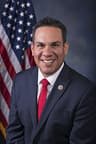 Pete Aguilar
Democrat · California
 Yassamin Ansari
Democrat · Arizona
 Nanette Barragán
Democrat · California
 Wesley Bell
Democrat · Missouri
 Salud Carbajal
Democrat · California
 Sheila Cherfilus-McCormick
Democrat · Florida
 Dwight Evans
Democrat · Pennsylvania
 Cleo Fields
Democrat · Louisiana
 Jimmy Gomez
Democrat · California
 Jesús García
Democrat · Illinois
 Henry Johnson
Democrat · Georgia
 Seth Magaziner
Democrat · Rhode Island
 LaMonica McIver
Democrat · New Jersey
 Eleanor Norton
Democrat · District of Columbia
 Jimmy Panetta
Democrat · California
 Delia Ramirez
Democrat · Illinois
 Janice Schakowsky
Democrat · Illinois
 Lateefah Simon
Democrat · California
 Shri Thanedar
Democrat · Michigan