
A Democratic bill with 4 Republican cosponsors · See all 36 cosponsors
Last activity — Referred to the House Committee on Education and Workforce.
In committee
Introduced and handed to a committee in the chamber it started in.
The committee holds it, and most bills are never heard from again. A hearing or a committee vote would be news; silence is the usual outcome, and it kills the bill without anyone voting against it.
Its path through Congress
- Introduced
- In Committee
What this bill would do
The Youth Workforce Readiness Act of 2025 aims to create a competitive grant program to support out-of-school-time programs for youth. These programs focus on providing employability skills, career exploration, and various work-based learning opportunities. The legislation seeks to increase access to training needed for the labor market and integrate these activities into existing economic development systems. Eligible youth include those between the ages of 6 and 18 (or 19 if in secondary school). The bill also establishes youth councils within local boards to ensure youth interests are represented.
Yes· 3 of 23
- Scored +7
Would people in their twenties and thirties be better off under this?
The bill is highly beneficial for youth preparing for the workforce and postsecondary education.
- Scored +7
Would students be better off under this?
The bill provides critical workforce readiness, mentorship, and educational support for students.
- Scored +5
Would households on low incomes be better off under this?
The program targets underserved communities to provide skill development and economic mobility.
The opposite
No question was scored the opposite.
Who it would affect, and how
Potential Positive Impacts for People
-
Increased Career Opportunities: The bill aims to increase access and opportunities for youth to obtain necessary education and training for the labor market (Section 2).
-
Skill Development: Programs can provide various benefits such as leadership development, financial literacy education, entrepreneurial skills training, and the development of fundamental employability skills like communication and critical thinking (Section 7).
-
Work Experience: Youth can access paid and unpaid work experiences, including summer employment, internships, job shadowing, and apprenticeship programs (Section 7).
-
Supportive Services: The bill allows for services such as adult mentoring for at least 12 months, as well as comprehensive guidance and counseling (Section 7).
-
Youth Voice in Governance: The establishment of youth councils allows for the representation of youth interests before local boards and involves parents and former program participants in the process (Section 10).
Potential Negative Impacts for People
-
Funding Limitations: The bill authorizes specific amounts of $100,000,000 for each fiscal year from 2026 through 2030, which places a cap on the total available resources (Section 9).
-
Strict Eligibility Requirements: To receive grants, entities must be national organizations with active chapters or affiliates in at least 35 States (Section 5).
Groups and Interests Ranking
Every group the model scored this bill for, from -10 to +10. Tap or hover a score for the reason it gave.
- Demographic And Interest Groups
- Would students be better off under this? — The bill provides critical workforce readiness, mentorship, and educational support for students. Would people in their twenties and thirties be better off under this? — The bill is highly beneficial for youth preparing for the workforce and postsecondary education. Would households on low incomes be better off under this? — The program targets underserved communities to provide skill development and economic mobility. Would children be better off under this? — The bill focuses on developing skills and opportunities for youth as young as six. Would Native Americans be better off under this? — The bill explicitly mentions inclusion of Indian tribes and tribal organizations in industry partnerships. Would people with disabilities be better off under this? — The bill specifically includes vulnerable populations, such as youth with disabilities, in decision-making. Would Black Americans be better off under this? — The bill targets underserved communities which may include minority youth populations. Would business owners be better off under this? — The bill helps address employer needs by training a skilled workforce. Would Hispanic Americans be better off under this? — The bill targets underserved communities which may include minority youth populations. Would people in rural areas be better off under this? — The bill ensures equitable geographic distribution including rural communities. Would people in cities be better off under this? — The bill ensures equitable geographic distribution including urban communities. Would middle-income households be better off under this? — It provides valuable workforce preparation for youth in middle-class families. Would union members be better off under this? — The bill includes local labor organizations as potential members of youth councils.
- Social Issues And Justice
- Is this likely to lift people out of poverty? — By increasing economic mobility for youth, the bill helps mitigate future poverty risks. Does this expand the rights of people with disabilities? — The bill explicitly includes vulnerable populations, including youth with disabilities, in its council representation. Does this narrow racial gaps in how people are treated? — The bill aims to serve populations from underserved communities and address employment disparities.
- Economy And Finance
- Is this likely to create jobs? — The bill promotes job readiness and workforce opportunities for youth through competitive grants. Is this likely to grow the economy? — By developing a skilled workforce, the bill supports long-term economic development.
- Environment Energy And Infrastructure
- Does this invest in rural communities? — The bill includes requirements for equitable distribution between urban and rural communities.
- Governance And Ideology
- Does this make what the government does easier for the public to see? — The bill requires periodic evaluations and reports to be made available to the public. Does this give the federal government more power? — The bill involves federal grant management and oversight by the Secretary of Labor.
- Education And Technology
- Does this make college cost less? — The bill supports the transition to postsecondary education and training.
- Healthcare
- Does this do more about addiction and overdose deaths? — The bill includes drug and alcohol abuse prevention services within its workforce readiness programs.
- 8/20/2026
- 1 Cosponsor added.
- 7/18/2026
- 1 Cosponsor added.
- 6/18/2026
- 1 Cosponsor added.
- 4/14/2026
- 1 Cosponsor added.
- 3/17/2026
- 1 Cosponsor added.
- 3/12/2026
- 1 Cosponsor added.
- 3/9/2026
- 2 Cosponsors added.
- 12/18/2025
- 1 Cosponsor added.
- 11/7/2025
- 1 Cosponsor added.
- 10/24/2025
- 2 Cosponsors added.
- 10/17/2025
- 1 Cosponsor added.
- 10/10/2025
- 1 Cosponsor added.
- 9/26/2025
- 1 Cosponsor added.
- 7/14/2025
- 2 Cosponsors added.
- 6/5/2025
- 3 Cosponsors added.
- 6/4/2025
- 2 Cosponsors added.
- 6/3/2025
- 7 Cosponsors added.
- 5/21/2025
- 2 Cosponsors added.
- 5/7/2025
- 2 Cosponsors added.
- 4/14/2025
- Referred to the House Committee on Education and Workforce.
- 3 Cosponsors added.
- Introduced in House
 Joyce Beatty
Democrat · Ohio
 Julia Brownley
Democrat · California
 Brendan Boyle
Democrat · Pennsylvania
 Don Bacon
Republican · Nebraska
 Nanette Barragán
Democrat · California
 Wesley Bell
Democrat · Missouri
 Robert Bresnahan
Republican · Pennsylvania
 Emanuel Cleaver
Democrat · Missouri
 Salud Carbajal
Democrat · California
 Sean Casten
Democrat · Illinois
 Donald Davis
Democrat · North Carolina
 Suzan DelBene
Democrat · Washington
 Sharice Davids
Democrat · Kansas
 Veronica Escobar
Democrat · Texas
 Brian Fitzpatrick
Republican · Pennsylvania
 Adelita Grijalva
Democrat · Arizona
 Raja Krishnamoorthi
Democrat · Illinois
 George Latimer
Democrat · New York
 Seth Moulton
Democrat · Massachusetts
 Lucy McBath
Democrat · Georgia
 Seth Magaziner
Democrat · Rhode Island
 LaMonica McIver
Democrat · New Jersey
 Jerrold Nadler
Democrat · New York
 Eleanor Norton
Democrat · District of Columbia
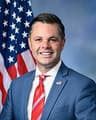 Zachary Nunn
Republican · Iowa
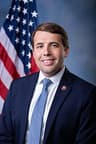 Chris Pappas
Democrat · New Hampshire
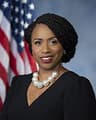 Ayanna Pressley
Democrat · Massachusetts
 Deborah Ross
Democrat · North Carolina
 Josh Riley
Democrat · New York
 Kim Schrier
Democrat · Washington
 Eric Sorensen
Democrat · Illinois
 Dina Titus
Democrat · Nevada
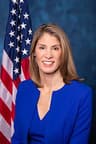 Lori Trahan
Democrat · Massachusetts
 Shri Thanedar
Democrat · Michigan
 Marc Veasey
Democrat · Texas
 George Whitesides
Democrat · California