A Democratic bill with 17 Democratic cosponsors · See all 17 cosponsors
Last activity — Referred to the House Committee on Education and Workforce.
In committee
Introduced and handed to a committee in the chamber it started in.
The committee holds it, and most bills are never heard from again. A hearing or a committee vote would be news; silence is the usual outcome, and it kills the bill without anyone voting against it.
Its path through Congress
- Introduced
- In Committee
What this bill would do
This bill is known as the Adult Education Workforce Opportunity and Reskilling for Knowledge and Success Act or the Adult Education WORKS Act. It amends the Adult Education and Family Literacy Act and the Workforce Innovation and Opportunity Act to strengthen adult education programs across the nation. The legislation introduces college and career navigators to help individuals access training, financial aid, and support services. It also expands learning focus to include digital literacy skills and information literacy skills. Furthermore, the bill authorizes new grant programs and increases funding appropriations for fiscal years 2026 through 2030.
Yes· 3 of 18
- Scored +6
Would households on low incomes be better off under this?
Increases access to workforce development and financial aid guidance for those in need.
- Scored +5
Would students be better off under this?
Provides significant support for navigating college and postsecondary education.
- Scored +5
Would people in rural areas be better off under this?
Uses public libraries to reach underserved or geographically distant communities.
The opposite
No question was scored the opposite.
Who it would affect, and how
Potential Positive Impacts for People
-
Section 101 and Section 171A: These sections establish college and career navigators and create grant programs for library-based and community-based navigators. This is a positive step because it provides individuals with tailored guidance, financial aid information, and intensive case management through accessible community locations like public libraries.
-
Section 101, Section 121, and Title II: These provisions integrate digital literacy skills and information literacy skills into adult education and workforce development programs. This helps everyday people gain essential technology and information-evaluation skills needed to function effectively as employees, parents, and members of society.
-
Section 203: This section increases the authorization of appropriations for adult education and literacy, scaling up funding from $810,000,000 for fiscal year 2026 to $1,350,000,000 by fiscal year 2030. This positive increase provides significantly more resources to support adult learners and educational providers.
-
Section 205: This section creates a pilot for innovative performance accountability systems. This allows states to test alternative performance measures that more accurately reflect the real-world objectives of their adult education programs instead of relying on a rigid, one-size-fits-all measuring system.
Potential Negative Impacts for People
Based strictly on the provided text, there are no specific sections or provisions identified that outline negative consequences or direct burdens for individuals or groups of people in the United States.
Groups and Interests Ranking
Every group the model scored this bill for, from -10 to +10. Tap or hover a score for the reason it gave.
- Demographic And Interest Groups
- Would households on low incomes be better off under this? — Increases access to workforce development and financial aid guidance for those in need. Would people in rural areas be better off under this? — Uses public libraries to reach underserved or geographically distant communities. Would students be better off under this? — Provides significant support for navigating college and postsecondary education. Would immigrants be better off under this? — Focus on English language acquisition and integration into the workforce. Would people in middle age be better off under this? — Adult education and reskilling opportunities are highly relevant for middle-aged workers. Would people with disabilities be better off under this? — Addresses learning differences and provides structured support for various learners. Would middle-income households be better off under this? — Provides opportunities for career advancement and skill updates. Would people in their twenties and thirties be better off under this? — The bill supports transitions into postsecondary education and workforce training. Would business owners be better off under this? — Provides a more skilled and job-ready workforce.
- Social Issues And Justice
- Is this likely to lift people out of poverty? — By improving adult education and workforce access, the bill helps individuals move toward economic self-sufficiency. Does this make child care cost less? — The bill includes support services such as child care to assist adult learners. Does this expand the rights of people with disabilities? — The bill addresses learning differences and ensures support for specific learner populations.
- Economy And Finance
- Is this likely to create jobs? — The bill promotes job readiness and workforce development through navigator programs and expanded training. Is this likely to grow the economy? — Enhancing workforce skills and digital literacy supports long-term economic productivity.
- Education And Technology
- Does this make college cost less? — The bill provides guidance on financial aid and helps transition students to postsecondary education. Does this get reliable internet to more people? — Emphasis on digital literacy skills helps individuals better utilize technology and the internet.
- Environment Energy And Infrastructure
- Does this invest in rural communities? — The bill uses public libraries to extend services to geographically distant or underserved communities.
- Governance And Ideology
- Does this make what the government does easier for the public to see? — Requires local boards to make membership information publicly available via websites.
- 10/5/2026
- 1 Cosponsor added.
- 9/24/2026
- 2 Cosponsors added.
- 9/2/2026
- 1 Cosponsor added.
- 8/17/2026
- 2 Cosponsors added.
- 6/18/2026
- 1 Cosponsor added.
- 5/20/2026
- 1 Cosponsor added.
- 4/6/2026
- 1 Cosponsor added.
- 2/25/2026
- 1 Cosponsor added.
- 2/4/2026
- 3 Cosponsors added.
- 5/13/2025
- 3 Cosponsors added.
- 4/9/2025
- Referred to the House Committee on Education and Workforce.
- 1 Cosponsor added.
- Introduced in House
One bill Congress.gov lists as related to this one — companions in the other chamber, earlier versions, and bills this one absorbed or was folded into.
 Suzanne Bonamici
Democrat · Oregon
 Everton Blair
Democrat · Georgia
 Angie Craig
Democrat · Minnesota
 Sheila Cherfilus-McCormick
Democrat · Florida
 Shomari Figures
Democrat · Alabama
 Adelita Grijalva
Democrat · Arizona
 Jahana Hayes
Democrat · Connecticut
 Henry Johnson
Democrat · Georgia
 Frank Mrvan
Democrat · Indiana
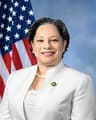 Jennifer McClellan
Democrat · Virginia
 Eleanor Norton
Democrat · District of Columbia
 Melanie Stansbury
Democrat · New Mexico
 Hillary Scholten
Democrat · Michigan
 Jill Tokuda
Democrat · Hawaii
 Shri Thanedar
Democrat · Michigan
 Eugene Vindman
Democrat · Virginia
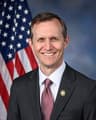 George Whitesides
Democrat · California