
A Republican bill with 15 Democratic cosponsors · See all 23 cosponsors
Last activity — Referred to the Committee on Science, Space, and Technology, and in addition to the Committees on Foreign Affairs, Agriculture, Energy and Commerce, and Education and Workforce, for a period to be subsequently determined by the Speaker, in each case for consideration of such provisions as fall within the jurisdiction of the committee concerned.
In committee
Introduced and handed to a committee in the chamber it started in.
The committee holds it, and most bills are never heard from again. A hearing or a committee vote would be news; silence is the usual outcome, and it kills the bill without anyone voting against it.
Its path through Congress
- Introduced
- In Committee
What this bill would do
The National Biotechnology Initiative Act of 2025 establishes a coordinated federal effort to advance biotechnology for national security, economic productivity, and competitiveness. The bill creates a National Biotechnology Coordination Office and an Interagency Committee to oversee a wide range of federal activities. These activities include supporting research and development, managing biological data, and developing a domestic workforce. The initiative also aims to streamline regulations and enhance biosafety and biosecurity. Participating agencies will work together to create a national strategy and a coordinated federal website. The office is intended to operate for a 20-year period before transitioning to an executive secretariat role.
Yes· 3 of 19
- Scored +8
Does this put more money into scientific research?
The bill provides sustained support for R&D to accelerate scientific understanding in biotechnology.
- Scored +7
Does this put more money into medical research?
The bill mandates sustained support for research and development in biotechnology.
- Scored +6
Is this likely to grow the economy?
The bill aims to boost economic productivity through sustained support for biotechnology research and private sector commercialization.
The opposite
No question was scored the opposite.
Who it would affect, and how
Potential Positive Impacts for People
-
Workforce Development: The bill supports creating a domestic workforce by providing training programs for students and workers, including undergraduate and graduate students, as well as professional development for veterans and industry professionals. (Section 3(c)(8); Section 6(8))
-
Economic and Research Support: It promotes economic productivity by supporting the private sector in translating and commercializing biotechnology products, which includes assisting with scale-up and providing access to advanced equipment and resources. (Section 3(c)(5); Section 6(5))
-
Information Access: The bill requires the creation of a coordinated federal website to provide clear, easy-to-find, and plain-language information about biotechnology for the public, innovators, and policymakers. (Section 3(c)(9); Section 4(b)(3)(A)(v); Section 4(c)(2))
-
Regulatory Efficiency: It seeks to ease the regulatory burden for biotechnology products that are well-understood, which can help move products through the system more efficiently. (Section 3(c)(6); Section 6(6)(B))
-
Scientific Advancement: Through sustained support for research and development, the bill aims to accelerate scientific understanding and technological innovation. (Section 3(c)(3); Section 6(3)(A))
Potential Negative Impacts for People
-
National Security and Privacy Risks: While the bill aims to address these, the focus on "biological data" and "genomics" involves managing highly sensitive information that requires strict security to protect the privacy of human genetic information. (Section 4(e)(2)(F); Section 6(4)(B))
-
Regulatory Changes: The initiative includes plans for "regulatory streamlining" and easing burdens, which involves changing how biotechnology products are regulated. (Section 3(c)(6); Section 6(6))
-
International Risks: The bill addresses the need to manage risks associated with foreign investments and acquisitions from adversarial countries, implying potential economic or security tensions. (Section 4(b)(3)(B)(ii); Section 6(2)(A))
Groups and Interests Ranking
Every group the model scored this bill for, from -10 to +10. Tap or hover a score for the reason it gave.
- Demographic And Interest Groups
- Would business owners be better off under this? — The bill facilitates private sector translation and commercialization of biotech products. Would students be better off under this? — The bill provides for undergraduate and graduate education and training programs. Would veterans be better off under this, taking everything together? — The bill includes support for training programs for veterans. Would farmers be better off under this? — The bill involves the Department of Agriculture and biotechnology in food and agriculture.
- National Security And Foreign Policy
- Does this better protect the country from computer attacks? — The bill addresses cybersecurity risks related to biotechnology infrastructure and data. Does this strengthen ties with allied countries? — The bill emphasizes international partnerships and regulatory/commercial diplomacy. Does this make trade with other countries easier? — The bill aims to expand market access for U.S. biotechnology products through diplomacy. Does this favour talking over confrontation abroad? — The act includes provisions for international outreach and engagement.
- Economy And Finance
- Is this likely to grow the economy? — The bill aims to boost economic productivity through sustained support for biotechnology research and private sector commercialization. Is this likely to create jobs? — The bill focuses on developing a domestic workforce and supporting workforce development through training programs. Does this make it easier to run a small business? — The bill leverages existing small business programs to support biotechnology proof of concept and startup formation.
- Governance And Ideology
- Does this make what the government does easier for the public to see? — The bill mandates a coordinated website and annual reports to provide information to the public. Does this give the federal government more power? — The bill establishes a new National Biotechnology Coordination Office within the Executive Office of the President. Does this protect people from being watched or searched? — The bill addresses the privacy of information within biological databases.
- Education And Technology
- Does this put more money into scientific research? — The bill provides sustained support for R&D to accelerate scientific understanding in biotechnology. Does this give people more control over their personal data? — The bill includes provisions for protecting the privacy and security of biological data.
- Healthcare
- Does this put more money into medical research? — The bill mandates sustained support for research and development in biotechnology. Does this make health care easier to get in general? — The bill supports biological data to advance human health understanding.
- Environment Energy And Infrastructure
- Does this better protect air, water and wildlife? — The bill addresses environmental stewardship and monitoring via biotechnology.
- 6/30/2026
- 1 Cosponsor added.
- 6/29/2026
- 1 Cosponsor added.
- 6/2/2026
- 1 Cosponsor added.
- 5/15/2026
- 1 Cosponsor added.
- 4/29/2026
- 1 Cosponsor added.
- 4/16/2026
- 1 Cosponsor added.
- 4/15/2026
- 1 Cosponsor added.
- 2/9/2026
- 2 Cosponsors added.
- 1/13/2026
- 1 Cosponsor added.
- 11/25/2025
- 1 Cosponsor added.
- 11/19/2025
- 1 Cosponsor added.
- 10/31/2025
- 1 Cosponsor added.
- 10/3/2025
- 1 Cosponsor added.
- 9/30/2025
- 2 Cosponsors added.
- 9/3/2025
- 1 Cosponsor added.
- 7/22/2025
- 1 Cosponsor added.
- 6/26/2025
- 1 Cosponsor added.
- 6/25/2025
- 1 Cosponsor added.
- 6/3/2025
- 1 Cosponsor added.
- 4/29/2025
- 1 Cosponsor added.
- 4/9/2025
- Referred to the Committee on Science, Space, and Technology, and in addition to the Committees on Foreign Affairs, Agriculture, Energy and Commerce, and Education and Workforce, for a period to be subsequently determined by the Speaker, in each case for consideration of such provisions as fall within the jurisdiction of the committee concerned.
- 1 Cosponsor added.
- Introduced in House
One bill Congress.gov lists as related to this one — companions in the other chamber, earlier versions, and bills this one absorbed or was folded into.
 Jake Auchincloss
Democrat · Massachusetts
 Gus Bilirakis
Republican · Florida
 Ami Bera
Democrat · California
 James Baird
Republican · Indiana
 Nikki Budzinski
Democrat · Illinois
 Donald Davis
Democrat · North Carolina
 Mike Flood
Republican · Nebraska
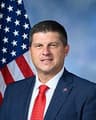 Brad Finstad
Republican · Minnesota
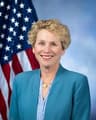 Chrissy Houlahan
Democrat · Pennsylvania
 Ro Khanna
Democrat · California
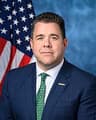 Nick LaLota
Republican · New York
 Greg Landsman
Democrat · Ohio
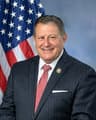 Joseph Morelle
Democrat · New York
 James Moylan
Republican · Guam
 Max Miller
Republican · Ohio
 April McClain Delaney
Democrat · Maryland
 Joe Neguse
Democrat · Colorado
 Deborah Ross
Democrat · North Carolina
 Josh Riley
Democrat · New York
 Pete Sessions
Republican · Texas
 Eric Sorensen
Democrat · Illinois
 Eugene Vindman
Democrat · Virginia
 George Whitesides
Democrat · California