
A Republican bill with 2 Republican cosponsors · See all 2 cosponsors
Last activity — Referred to the House Committee on Ways and Means.
In committee
Introduced and handed to a committee in the chamber it started in.
The committee holds it, and most bills are never heard from again. A hearing or a committee vote would be news; silence is the usual outcome, and it kills the bill without anyone voting against it.
Its path through Congress
- Introduced
- In Committee
What this bill would do
This bill, known as the "Protect TANF Resources for Families Act," aims to amend the Social Security Act. It focuses on how Federal funds for temporary assistance for needy families are used by States. The bill requires that Federal funds supplement, rather than replace, existing State and local spending. It includes a requirement for State chief executive officers to certify that these funds are used appropriately. Additionally, the bill provides a two-year reauthorization for certain activities under the Temporary Assistance for Needy Families program.
Yes· 3 of 6
- Scored +4
Is this likely to lift people out of poverty?
By mandating that federal funds supplement rather than supplant state funds, it protects resources for low-income families.
- Scored +4
Would households on low incomes be better off under this?
The bill protects the stability of the TANF program which serves low-income households.
- Scored +3
Does this strengthen Social Security?
The bill ensures continuity of TANF through 2026 and prevents states from reducing their own spending on needy families.
The opposite
- Scored -2
Does this leave more decisions to the states?
The bill limits state discretion by prohibiting the use of federal funds to replace state revenue.
Who it would affect, and how
Potential Positive Impacts for People
-
Ensures Additional Funding for Programs: By requiring that Federal funds be used only to supplement rather than replace State and local funds, the bill aims to ensure that programs receive extra support rather than seeing a reduction in local spending (Section 2(a)).
-
Accountability Through Certification: The bill requires the chief executive officer of a State to certify that Federal funds will not be used to replace State or non-Federal funds, which creates a layer of oversight for services and activities (Section 2(b)).
-
Program Continuity: The bill provides a two-year reauthorization for certain activities within the Temporary Assistance for Needy Families program through September 30, 2026, ensuring those programs continue (Section 3).
Potential Negative Impacts for People
- No negative impacts or burdens are explicitly mentioned in the provided text.
Groups and Interests Ranking
Every group the model scored this bill for, from -10 to +10. Tap or hover a score for the reason it gave.
- Social Issues And Justice
- Is this likely to lift people out of poverty? — By mandating that federal funds supplement rather than supplant state funds, it protects resources for low-income families. Does this strengthen Social Security? — The bill ensures continuity of TANF through 2026 and prevents states from reducing their own spending on needy families.
- Demographic And Interest Groups
- Would households on low incomes be better off under this? — The bill protects the stability of the TANF program which serves low-income households. Would children be better off under this? — Ensuring TANF resources are preserved may benefit families with children.
- Governance And Ideology
- Does this give the federal government more power? — The bill increases federal oversight by requiring state executive certification of fund usage. Does this make what the government does easier for the public to see? — The requirement for state certification increases accountability in how federal funds are utilized. Does this leave more decisions to the states? — The bill limits state discretion by prohibiting the use of federal funds to replace state revenue.
- 5/14/2026
- 1 Cosponsor added.
- 4/1/2025
- Referred to the House Committee on Ways and Means.
- 1 Cosponsor added.
- Introduced in House
 Aaron Bean
Republican · Florida
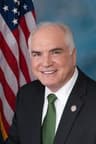 Mike Kelly
Republican · Pennsylvania