
A Democratic bill with 2 Republican cosponsors · See all 11 cosponsors
Last activity — Referred to the Subcommittee on General Farm Commodities, Risk Management, and Credit.
In committee
Introduced and handed to a committee in the chamber it started in.
The committee holds it, and most bills are never heard from again. A hearing or a committee vote would be news; silence is the usual outcome, and it kills the bill without anyone voting against it.
Its path through Congress
- Introduced
- In Committee
What this bill would do
The New Producer Economic Security Act aims to establish a new program within the Farm Service Agency. This program will provide grants, cooperative agreements, or other capital support to eligible entities to carry out covered projects. These projects are intended to help qualified beneficiaries access land, capital, and markets. The goal is to strengthen food systems security and support farm establishment and long-term business viability. The program focuses on assisting individuals such as farmers, ranchers, or forest owners who meet specific economic or experience criteria.
Yes· 3 of 19
- Scored +8
Would farmers be better off under this?
The bill is highly beneficial for new and aspiring farmers seeking land and capital.
- Scored +7
Would households on low incomes be better off under this?
The bill specifically targets qualified beneficiaries with incomes at or below 200% of the poverty level.
- Scored +7
Would Native Americans be better off under this?
The bill provides specific priorities for Tribal citizens, governments, and communities.
The opposite
No question was scored the opposite.
Who it would affect, and how
Potential Positive Impacts for People
-
Increased access to land and capital: The program seeks to increase access to land, capital, and markets for qualified beneficiaries (Section 2(c)(1)).
-
Support for farm establishment and viability: Projects are designed to support farm establishment, long-term farm business viability, and the financial viability of qualified beneficiaries (Section 2(c)(2)(A) and (B)).
-
Land access and preservation: The program aims to increase land access, prevent land loss, and support the voluntary transition of agricultural land from existing producers to qualified beneficiaries (Section 2(c)(2)(D), (E), and (G)).
-
Direct financial assistance: Priority is given to projects that provide direct financial assistance to qualified beneficiaries (Section 2(d)(2)(C)(i)).
-
Technical assistance and services: Funds can be used to provide technical assistance, including translation and interpretation services, to meet the specific needs of qualified beneficiaries (Section 2(d)(2)(C)(vi) and Section 2(e)(2)(E)).
-
Infrastructure and land improvement: Assistance can be used for activities such as conducting land surveys, improving or remediating land, water, and soil, and constructing or repairing infrastructure (Section 2(e)(1)(E), (F), and (G)).
Potential Negative Impacts for People
-
Repayment requirements for noncompliance: If an eligible entity violates the terms or conditions of the assistance provided, they are required to reimburse the Secretary for that assistance (Section 2(e)(5)).
-
Exclusions from eligibility: The bill explicitly excludes certain groups, such as corporations that are foreign-based or foreign-owned, from being considered "eligible entities" (Section 2(a)(3)(B)). Additionally, "natural areas" are excluded from being considered "eligible land" (Section 2(a)(4)(B)).
Groups and Interests Ranking
Every group the model scored this bill for, from -10 to +10. Tap or hover a score for the reason it gave.
- Demographic And Interest Groups
- Would farmers be better off under this? — The bill is highly beneficial for new and aspiring farmers seeking land and capital. Would households on low incomes be better off under this? — The bill specifically targets qualified beneficiaries with incomes at or below 200% of the poverty level. Would Native Americans be better off under this? — The bill provides specific priorities for Tribal citizens, governments, and communities. Would business owners be better off under this? — It provides essential capital and land access for new farm and forest business owners. Would people in rural areas be better off under this? — The program is designed to bolster the agricultural economy which is vital to rural communities. Would people in their twenties and thirties be better off under this? — The program targets those with limited experience and low income, which often includes younger producers. Would Black Americans be better off under this? — The program's focus on community-led solutions can benefit various minority agricultural communities. Would Hispanic Americans be better off under this? — The focus on technical assistance including translation services helps accessibility for diverse populations. Would people in cities be better off under this? — The bill defines eligible land to include urban land, supporting urban agriculture. Would middle-income households be better off under this? — The program assists those at half of the median household income, providing a ladder for economic upward mobility.
- Economy And Finance
- Does this make it easier to run a small business? — The bill specifically targets new producers to help them access capital, land, and markets for long-term business viability. Is this likely to grow the economy? — By investing in food system security and farm viability, the bill aims to strengthen the agricultural economy. Is this likely to create jobs? — The program supports farm establishment and business viability which can lead to increased agricultural employment.
- Social Issues And Justice
- Is this likely to lift people out of poverty? — The program assists those with incomes at or below 200 percent of the poverty level to gain land and economic security. Does this narrow racial gaps in how people are treated? — The bill includes provisions for Tribal organizations and focuses on community-led solutions that can benefit historically underserved groups.
- Environment Energy And Infrastructure
- Does this invest in rural communities? — The program invests in agricultural infrastructure and land access which supports rural economic development. Does this better protect air, water and wildlife? — The bill supports the adoption of conservation practices consistent with NRCS standards.
- Healthcare
- Does this make mental health care easier to get? — The bill explicitly states that supporting the physical and mental health of qualified beneficiaries is a purpose of the program.
- Governance And Ideology
- Does this give the federal government more power? — The bill empowers the Secretary of Agriculture to establish and manage a new federal program.
- 6/4/2026
- 1 Cosponsor added.
- 4/20/2026
- 1 Cosponsor added.
- 11/4/2025
- 1 Cosponsor added.
- 5/13/2025
- 1 Cosponsor added.
- 5/6/2025
- 1 Cosponsor added.
- 4/18/2025
- Referred to the Subcommittee on General Farm Commodities, Risk Management, and Credit.
- 4/1/2025
- Referred to the House Committee on Agriculture.
- 6 Cosponsors added.
- Introduced in House
One bill Congress.gov lists as related to this one — companions in the other chamber, earlier versions, and bills this one absorbed or was folded into.
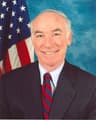 Joe Courtney
Democrat · Connecticut
 Donald Davis
Democrat · North Carolina
 Sharice Davids
Democrat · Kansas
 Brian Fitzpatrick
Republican · Pennsylvania
 Josh Harder
Democrat · California
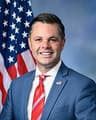 Zachary Nunn
Republican · Iowa
 Josh Riley
Democrat · New York
 Bradley Schneider
Democrat · Illinois
 Eric Sorensen
Democrat · Illinois
 Jill Tokuda
Democrat · Hawaii
 Gabe Vasquez
Democrat · New Mexico