
Diana Harshbarger (R-TN)
Seniors’ Access to Critical Medications Act of 2025
A Republican bill with 10 Democratic cosponsors · See all 26 cosponsors
Last activity — Ordered to be Reported by the Yeas and Nays: 38 - 7.
Introduced, nothing more yet
Formally proposed, and not yet handed to a committee.
Nearly every bill is sent to a committee within days. Introduction alone is not a sign of support, of momentum, or of any likelihood of passing — any member may introduce any bill.
Its path through Congress
- Introduced
What this bill would do
The Seniors' Access to Critical Medications Act of 2025 aims to change the Social Security Act regarding physician self-referrals. It establishes an exception that allows certain outpatient prescription drugs to be dispensed by a physician practice under the Medicare program. This exception applies to covered part D drugs furnished between January 1, 2026, and December 31, 2030. To qualify, the patient must have an ongoing relationship and a recent in-person encounter with the prescribing physician or their group practice. The bill also directs the Comptroller General to conduct a study on pharmacy networks and physician dispensing arrangements. Finally, it adjusts the Medicare Improvement Fund amount.
Yes
- Scored +7
Would people over 65 be better off under this?
The bill specifically targets Medicare participants, aiding senior access to medications through their physicians.
- Scored +7
Would retired people be better off under this?
The bill provides practical benefits for retirees who are also Medicare beneficiaries by facilitating medication access.
- Scored +6
Does this make health care easier to get in general?
The bill enhances healthcare access by allowing physician practices to dispense certain Part D drugs directly to patients.
The opposite
- Scored -1
Does this make the government pay for what it commits to?
The bill reduces the Medicare Improvement Fund, which slightly impacts fiscal allocation.
Who it would affect, and how
Potential Positive Impacts for People
-
Expanded Drug Access via Physician Practices: The bill creates an exception to the physician self-referral prohibition, which allows certain outpatient prescription drugs to be dispensed directly by a physician, a member of the same group practice, or someone supervised by the physician (Section 2(a)).
-
Convenient Delivery Options: Under the new exception, drugs can be obtained through in-person pickup by the individual, a caregiver, or a family member, or through mail, delivery, or courier services (Section 2(a)(iv)).
-
Continuity of Care: The provision requires an ongoing relationship and at least one face-to-face, in-person encounter with the physician or group practice within a one-year period before the drugs are dispensed (Section 2(a)(ii)-(iii)).
Potential Negative Impacts for People
-
Potential Conflicts of Interest: The bill recognizes that physician-led dispensing arrangements may pose potential conflicts of interest that could influence prescribing decisions or patterns (Section 2(b)(1)(C)).
-
Reduction in Medicare Improvement Fund: The amendment reduces the amount listed in the Medicare Improvement Fund from $1,804,000,000 to $1,786,000,000 (Section 3).
Groups and Interests Ranking
Every group the model scored this bill for, from -10 to +10. Tap or hover a score for the reason it gave.
- Demographic And Interest Groups
- Would retired people be better off under this? — The bill provides practical benefits for retirees who are also Medicare beneficiaries by facilitating medication access. Would people over 65 be better off under this? — The bill specifically targets Medicare participants, aiding senior access to medications through their physicians.
- Healthcare
- Does this make health care easier to get in general? — The bill enhances healthcare access by allowing physician practices to dispense certain Part D drugs directly to patients.
- Economy And Finance
- Does this make the government pay for what it commits to? — The bill reduces the Medicare Improvement Fund, which slightly impacts fiscal allocation.
- 6/8/2026
- 1 Cosponsor added.
- 5/14/2026
- 1 Cosponsor added.
- 3/16/2026
- 1 Cosponsor added.
- 2/5/2026
- 1 Cosponsor added.
- 12/9/2025
- 1 Cosponsor added.
- 12/3/2025
- 2 Cosponsors added.
- 11/18/2025
- 1 Cosponsor added.
- 11/17/2025
- 2 Cosponsors added.
- 11/7/2025
- 1 Cosponsor added.
- 11/4/2025
- 1 Cosponsor added.
- 10/31/2025
- 2 Cosponsors added.
- 9/23/2025
- 2 Cosponsors added.
- 8/29/2025
- 1 Cosponsor added.
- 6/30/2025
- 1 Cosponsor added.
- 6/11/2025
- 1 Cosponsor added.
- 6/3/2025
- 1 Cosponsor added.
- 5/19/2025
- 1 Cosponsor added.
- 4/29/2025
- Committee Consideration and Mark-up Session Held
- Ordered to be Reported by the Yeas and Nays: 38 - 7.
- 3/31/2025
- Referred to the Committee on Energy and Commerce, and in addition to the Committee on Ways and Means, for a period to be subsequently determined by the Speaker, in each case for consideration of such provisions as fall within the jurisdiction of the committee concerned.
- 5 Cosponsors added.
- Introduced in House
 Gus Bilirakis
Republican · Florida
 Troy Balderson
Republican · Ohio
 Tim Burchett
Republican · Tennessee
 Aaron Bean
Republican · Florida
 Dan Crenshaw
Republican · Texas
 Donald Davis
Democrat · North Carolina
 Ron Estes
Republican · Kansas
 Sarah Elfreth
Democrat · Maryland
 Josh Gottheimer
Democrat · New Jersey
 Jared Golden
Democrat · Maine
 Richard Hudson
Republican · North Carolina
 Mike Kelly
Republican · Pennsylvania
 Raja Krishnamoorthi
Democrat · Illinois
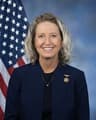 Jennifer Kiggans
Republican · Virginia
 Nicole Malliotakis
Republican · New York
 Carol Miller
Republican · West Virginia
 Mariannette Miller-Meeks
Republican · Iowa
 Nathaniel Moran
Republican · Texas
 Chellie Pingree
Democrat · Maine
 Michael Rulli
Republican · Ohio
 Josh Riley
Democrat · New York
 Terri Sewell
Democrat · Alabama
 Darren Soto
Democrat · Florida
 W. Steube
Republican · Florida
 Joe Wilson
Republican · South Carolina
 Debbie Wasserman Schultz
Democrat · Florida