
Beth Van Duyne (R-TX)
Portable Ultrasound Reimbursement Equity Act of 2025
A Republican bill with 17 Democratic cosponsors · See all 41 cosponsors
Last activity — Referred to the Committee on Energy and Commerce, and in addition to the Committee on Ways and Means, for a period to be subsequently determined by the Speaker, in each case for consideration of such provisions as fall within the jurisdiction of the committee concerned.
In committee
Introduced and handed to a committee in the chamber it started in.
The committee holds it, and most bills are never heard from again. A hearing or a committee vote would be news; silence is the usual outcome, and it kills the bill without anyone voting against it.
Its path through Congress
- Introduced
- In Committee
What this bill would do
This bill, known as the "Portable Ultrasound Reimbursement Equity Act of 2025," aims to amend the Social Security Act. It seeks to include ultrasound tests alongside diagnostic X-ray tests under certain coverage provisions. Specifically, it directs the Secretary to provide separate payments for the transportation and setup of portable ultrasound services. This payment structure would mirror how portable X-ray services are currently handled. The changes are intended to apply to services provided on or after January 1, 2027.
Yes· 3 of 27
- Scored +8
Would people over 65 be better off under this?
Directly benefits Medicare recipients by expanding the coverage of portable ultrasound services.
- Scored +8
Would retired people be better off under this?
Primarily targets Medicare recipients, who are mostly retirees.
- Scored +7
Would people with disabilities be better off under this?
Portable services are specifically designed to assist those who cannot easily travel to a clinic.
The opposite
- Scored -2
Does this reduce what the federal government spends?
Adding new reimbursable services under Medicare increases federal healthcare expenditures.
- Scored -1
Does this reduce what the federal government owes?
Expanding Medicare coverage for additional services likely increases government spending.
- Scored -1
Does this make the government pay for what it commits to?
Expansion of spending without a specified funding source slightly reduces fiscal conservatism.
Who it would affect, and how
Potential Positive Impacts for People
- Equitable Payment for Services: The bill requires the Secretary to provide separate payments for portable ultrasound transportation and set up services, just as they do for portable X-ray services. This is found in Section 2(b)(1).
Potential Negative Impacts for People
- No specific negative impacts or burdens are explicitly mentioned in the text provided.
Groups and Interests Ranking
Every group the model scored this bill for, from -10 to +10. Tap or hover a score for the reason it gave.
- Demographic And Interest Groups
- Would retired people be better off under this? — Primarily targets Medicare recipients, who are mostly retirees. Would people over 65 be better off under this? — Directly benefits Medicare recipients by expanding the coverage of portable ultrasound services. Would people with disabilities be better off under this? — Portable services are specifically designed to assist those who cannot easily travel to a clinic. Would people in rural areas be better off under this? — Significantly reduces the need for long-distance travel to receive diagnostic ultrasounds. Would business owners be better off under this? — Benefits owners of medical supply and portable diagnostic service companies. Would households on low incomes be better off under this? — Reduces out-of-pocket costs for Medicare beneficiaries who need portable diagnostics. Would farmers be better off under this? — Provides better access to diagnostics for those in remote farming communities. Would middle-income households be better off under this? — Improves healthcare coverage and accessibility for middle-class seniors. Would women be better off under this? — Ultrasound services are frequently used in women's health diagnostics. Would Black Americans be better off under this? — Increases access to healthcare services for elderly populations who may face mobility or transportation barriers. Would Asian Americans be better off under this? — Increases access to healthcare services for elderly populations who may face mobility or transportation barriers. Would Hispanic Americans be better off under this? — Increases access to healthcare services for elderly populations who may face mobility or transportation barriers. Would men be better off under this? — Improves access to diagnostic imaging. Would Native Americans be better off under this? — Increases access to healthcare services for elderly populations who may face mobility or transportation barriers. Would people in cities be better off under this? — Improves options for home-based care in dense urban environments. Would veterans be better off under this, taking everything together? — Many veterans utilize Medicare and may require portable diagnostic services due to disability. Would white Americans be better off under this? — Increases access to healthcare services for elderly populations who may face mobility or transportation barriers. Would high-income households be better off under this? — General improvement in healthcare delivery.
- Healthcare
- Does this make health care easier to get in general? — Ensuring reimbursement for portable ultrasounds increases access to diagnostics for homebound or mobility-impaired patients. Does this put more money into Medicare, the health coverage for people over 65? — The bill explicitly expands the scope of services covered by the Medicare program.
- Social Issues And Justice
- Does this expand the rights of people with disabilities? — Increases access to essential diagnostic services for individuals with limited mobility. Does this strengthen Social Security? — Amends the Social Security Act to provide broader benefit coverage for Medicare recipients.
- Economy And Finance
- Does this make it easier to run a small business? — Medical supply companies and portable diagnostic services will see new reimbursement opportunities. Is this likely to create jobs? — Increased reimbursement for portable ultrasound services may create more demand for technicians and providers. Is this likely to grow the economy? — Increased healthcare service reimbursement can stimulate growth in the medical equipment and service sector. Does this reduce what the federal government spends? — Adding new reimbursable services under Medicare increases federal healthcare expenditures. Does this make the government pay for what it commits to? — Expansion of spending without a specified funding source slightly reduces fiscal conservatism. Does this reduce what the federal government owes? — Expanding Medicare coverage for additional services likely increases government spending.
- Environment Energy And Infrastructure
- Does this invest in rural communities? — Portable diagnostics are especially beneficial for rural areas with limited hospital access.
- Governance And Ideology
- Does this give the federal government more power? — The Secretary of Health and Human Services will set requirements for suppliers.
- 9/14/2026
- 1 Cosponsor added.
- 6/9/2026
- 1 Cosponsor added.
- 6/8/2026
- 1 Cosponsor added.
- 5/29/2026
- 1 Cosponsor added.
- 5/11/2026
- 1 Cosponsor added.
- 3/5/2026
- 1 Cosponsor added.
- 1/12/2026
- 1 Cosponsor added.
- 1/8/2026
- 1 Cosponsor added.
- 12/15/2025
- 1 Cosponsor added.
- 11/21/2025
- 1 Cosponsor added.
- 11/18/2025
- 1 Cosponsor added.
- 10/28/2025
- 2 Cosponsors added.
- 10/21/2025
- 1 Cosponsor added.
- 10/14/2025
- 1 Cosponsor added.
- 9/15/2025
- 1 Cosponsor added.
- 9/11/2025
- 2 Cosponsors added.
- 8/12/2025
- 1 Cosponsor added.
- 7/23/2025
- 1 Cosponsor added.
- 6/11/2025
- 3 Cosponsors added.
- 6/5/2025
- 2 Cosponsors added.
- 6/3/2025
- 3 Cosponsors added.
- 6/2/2025
- 1 Cosponsor added.
- 5/21/2025
- 1 Cosponsor added.
- 5/15/2025
- 1 Cosponsor added.
- 5/9/2025
- 2 Cosponsors added.
- 5/7/2025
- 5 Cosponsors added.
- 3/27/2025
- Referred to the Committee on Energy and Commerce, and in addition to the Committee on Ways and Means, for a period to be subsequently determined by the Speaker, in each case for consideration of such provisions as fall within the jurisdiction of the committee concerned.
- 3 Cosponsors added.
- Introduced in House
One bill Congress.gov lists as related to this one — companions in the other chamber, earlier versions, and bills this one absorbed or was folded into.
 Don Bacon
Republican · Nebraska
 Janelle Bynum
Democrat · Oregon
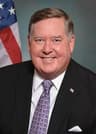 Ken Calvert
Republican · California
 Earl Carter
Republican · Georgia
 Dan Crenshaw
Republican · Texas
 Mike Carey
Republican · Ohio
 Sheila Cherfilus-McCormick
Democrat · Florida
 Donald Davis
Democrat · North Carolina
 Sharice Davids
Democrat · Kansas
 Pat Fallon
Republican · Texas
 Randy Feenstra
Republican · Iowa
 Michelle Fischbach
Republican · Minnesota
 Brad Finstad
Republican · Minnesota
 Glenn Grothman
Republican · Wisconsin
 Vicente Gonzalez
Democrat · Texas
 Laura Gillen
Democrat · New York
 J. Hill
Republican · Arkansas
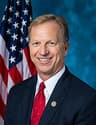 Kevin Hern
Republican · Oklahoma
 Josh Harder
Democrat · California
 Julie Johnson
Democrat · Texas
 Young Kim
Republican · California
 Stephen Lynch
Democrat · Massachusetts
 Carol Miller
Republican · West Virginia
 Mariannette Miller-Meeks
Republican · Iowa
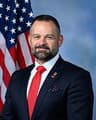 Cory Mills
Republican · Florida
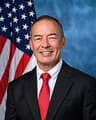 James Moylan
Republican · Guam
 April McClain Delaney
Democrat · Maryland
 Sarah McBride
Democrat · Delaware
 Zachary Nunn
Republican · Iowa
 Maria Salazar
Republican · Florida
 Bradley Schneider
Democrat · Illinois
 Darren Soto
Democrat · Florida
 Derek Schmidt
Republican · Kansas
 Bennie Thompson
Democrat · Mississippi
 Glenn Thompson
Republican · Pennsylvania
 Claudia Tenney
Republican · New York
 Lori Trahan
Democrat · Massachusetts
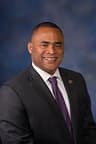 Marc Veasey
Democrat · Texas
 Eugene Vindman
Democrat · Virginia
 Robert Wittman
Republican · Virginia
 Randy Weber
Republican · Texas