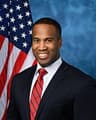
A Republican bill with 3 Democratic cosponsors · See all 4 cosponsors
Last activity — Received in the Senate. Read twice. Placed on Senate Legislative Calendar under General Orders. Calendar No. 62.
Waiting for a floor vote in the other chamber
Passed one chamber and is on the other chamber's calendar.
The calendar is a queue, not a date. The majority leadership decides what comes to the floor and when; much of what is placed on it is never called, and a bill that is never called simply expires with the Congress.
Its path through Congress
- Introduced
- Passed House voice vote
- Awaiting Senate
- On Senate calendar
The House by voice vote (members called out yes or no together): no member's position on it was recorded.
What this bill would do
The Promoting Resilient Supply Chains Act of 2025 creates a program within the Department of Commerce to protect critical supply chains and emerging technologies. It assigns the Assistant Secretary of Commerce new duties to monitor supply chain stability and encourage domestic manufacturing. The bill establishes a Supply Chain Resilience Working Group involving multiple federal agencies to map vulnerabilities and prepare for supply chain shocks. It requires the government to identify critical goods and industries and develop a national strategy for resiliency. This effort focuses on reducing reliance on certain foreign countries and increasing partnerships with allies. The act expires 10 years after it becomes law.
Yes· 3 of 20
- Scored +5
Is this likely to create jobs?
The bill specifically identifies opportunities to create high-quality manufacturing jobs.
- Scored +5
Does this strengthen ties with allied countries?
Focuses on increasing partnerships and building capacity with allies and key international partner nations.
- Scored +4
Would business owners be better off under this?
Supports domestic manufacturers and provides a framework for supply chain stability.
The opposite
- Scored -2
Does this protect people from being watched or searched?
Contains exceptions to the protection of voluntarily shared information.
- Scored -2
Does this give people more control over their personal data?
Allows disclosure of voluntarily shared information for criminal investigations or reporting to Congress.
Who it would affect, and how
Potential Positive Impacts for People
-
Job Creation: The bill directs the government to identify opportunities to create high-quality manufacturing jobs (Section 3(b)(1)(F)(ii)).
-
Economic Stability: The Assistant Secretary is tasked with promoting the stability and resilience of critical supply chains to strengthen national security (Section 2(1)).
-
Improved Crisis Response: The act requires the development of contingency plans and coordination mechanisms to better respond to supply chain shocks (Section 3(b)(2)(F)).
-
Support for Underserved Areas: The required national strategy must assess how supply chain shocks specifically affect rural, Tribal, and underserved communities (Section 3(f)(1)(C)(iv)).
-
Domestic Growth: The bill encourages the growth and competitiveness of United States production and manufacturing for emerging technologies (Section 2(3)).
Potential Negative Impacts for People
-
No New Funding: The bill explicitly states that no additional funds are authorized to carry out these programs (Section 5), which may limit the effectiveness of the proposed initiatives.
-
Limited Privacy for Voluntary Data: While the bill protects voluntarily shared information from FOIA requests, it allows the government to disclose that information without consent for criminal investigations or when reporting to Congress and the GAO (Section 3(i)(1)(A)(iv)).
Groups and Interests Ranking
Every group the model scored this bill for, from -10 to +10. Tap or hover a score for the reason it gave.
- Demographic And Interest Groups
- Would business owners be better off under this? — Supports domestic manufacturers and provides a framework for supply chain stability. Would Native Americans be better off under this? — Explicitly requires assessments of the impact of supply chain shocks on Tribal communities. Would people in rural areas be better off under this? — Focuses on the impact of supply chain shocks on rural communities. Would union members be better off under this? — Focuses on creating high-quality manufacturing jobs domestically. Would farmers be better off under this? — Includes the Department of Agriculture in the working group to secure critical supply chains. Would households on low incomes be better off under this? — Includes assessments of how supply chain shocks affect underserved communities.
- Economy And Finance
- Is this likely to create jobs? — The bill specifically identifies opportunities to create high-quality manufacturing jobs. Is this likely to grow the economy? — Promotes the growth and competitiveness of domestic production and emerging technologies. Does this make it easier to run a small business? — Includes the Small Business Administration in the Working Group and supports domestic enterprises. Is this likely to slow the rise in prices? — Improving supply chain resilience can help mitigate price spikes caused by supply shocks. Does this make the government pay for what it commits to? — The bill explicitly authorizes no additional funds to be appropriated.
- National Security And Foreign Policy
- Does this strengthen ties with allied countries? — Focuses on increasing partnerships and building capacity with allies and key international partner nations. Does this better protect the country from computer attacks? — Includes cybersecurity technologies as emerging technologies critical to national security. Does this favour talking over confrontation abroad? — Requires consultation with ally nations to secure critical supply chains. Does this make trade with other countries easier? — Aims to diversify trade partners and reduce reliance on adversarial nations.
- Environment Energy And Infrastructure
- Does this improve help for people hit by a disaster? — Develops coordination mechanisms to respond to natural disasters as supply chain shocks. Does this invest in rural communities? — The national strategy must specifically assess how supply chain shocks affect rural and Tribal communities.
- Healthcare
- Does this make the country readier for the next outbreak? — Defines pandemics as supply chain shocks and requires contingency plans to respond to them.
- Governance And Ideology
- Does this give the federal government more power? — Expands the duties and oversight authority of the Assistant Secretary of Commerce. Does this make it easier to do business across state lines? — Aims to stabilize the movement of critical goods across the US. Does this protect people from being watched or searched? — Contains exceptions to the protection of voluntarily shared information.
- Education And Technology
- Does this give people more control over their personal data? — Allows disclosure of voluntarily shared information for criminal investigations or reporting to Congress.
In the queue for a floor vote, with no date set
- 4/29/2025
- Received in the Senate. Read twice. Placed on Senate Legislative Calendar under General Orders. Calendar No. 62.
- 4/28/2025
- Motion to reconsider laid on the table Agreed to without objection.
- Passed/agreed to in House: On motion to suspend the rules and pass the bill Agreed to by voice vote. (text: CR H1653-1656)
- On motion to suspend the rules and pass the bill Agreed to by voice vote. (text: CR H1653-1656)
- DEBATE - The House proceeded with forty minutes of debate on H.R. 2444.
- Considered under suspension of the rules. (consideration: CR H1653-1657)
- Mr. Bilirakis moved to suspend the rules and pass the bill.
- 4/24/2025
- Reported by the Committee on Energy and Commerce. H. Rept. 119-68.
- Placed on the Union Calendar, Calendar No. 45.
- 4/8/2025
- Committee Consideration and Mark-up Session Held
- Ordered to be Reported by the Yeas and Nays: 50 - 1.
- 4/1/2025
- 1 Cosponsor added.
- 3/27/2025
- Referred to the House Committee on Energy and Commerce.
- 3 Cosponsors added.
- Introduced in House
One bill Congress.gov lists as related to this one — companions in the other chamber, earlier versions, and bills this one absorbed or was folded into.
 Debbie Dingell
Democrat · Michigan
 Erin Houchin
Republican · Indiana
 Robin Kelly
Democrat · Illinois
 Patrick Ryan
Democrat · New York