
A Republican bill with 3 Republican cosponsors · See all 3 cosponsors
Last activity — Referred to the House Committee on Education and Workforce.
In committee
Introduced and handed to a committee in the chamber it started in.
The committee holds it, and most bills are never heard from again. A hearing or a committee vote would be news; silence is the usual outcome, and it kills the bill without anyone voting against it.
Its path through Congress
- Introduced
- In Committee
What this bill would do
This bill, titled the Protect Local Farms Act, aims to amend the Fair Labor Standards Act of 1938. It specifically targets the preemption of certain State overtime laws regarding agricultural employees. The legislation seeks to ensure that federal law takes precedence over state laws that set a maximum workweek for agricultural workers at less than 60 hours. This change would be applied to Section 18 of the Fair Labor Standards Act.
Yes
- Scored +5
Does this give the federal government more power?
The bill expands federal authority by establishing a uniform federal standard that overrides state-level labor protections.
- Scored +4
Would farmers be better off under this?
The bill provides more flexibility for farm owners by preventing states from enforcing shorter maximum workweeks.
- Scored +2
Would people in rural areas be better off under this?
The bill provides more regulatory certainty for the agricultural industry which is central to many rural economies.
The opposite· 3 of 5
- Scored -5
Does this leave more decisions to the states?
The bill reduces state authority by preempting state laws regarding maximum workweeks for agricultural workers.
- Scored -4
Would households on low incomes be better off under this?
Agricultural workers, who are often low-income, may lose benefits from state laws that limit long workweeks.
- Scored -4
Would union members be better off under this?
The bill undermines state-level labor standards that could otherwise protect agricultural workers from excessive hours.
Who it would affect, and how
Potential Positive Impacts for People
- Uniformity in Workweek Standards: By preempting state laws that set a maximum workweek for agricultural employees at less than 60 hours, the bill establishes a federal standard for these workers. This is found in Section 2.
Potential Negative Impacts for People
- Reduction of State-Level Protections: The bill would preempt any State law that provides for a maximum workweek for employees employed in agriculture of less than 60 hours, which could impact workers who currently benefit from shorter maximum workweeks under state law. This is found in Section 2.
Groups and Interests Ranking
Every group the model scored this bill for, from -10 to +10. Tap or hover a score for the reason it gave.
- Demographic And Interest Groups
- Would farmers be better off under this? — The bill provides more flexibility for farm owners by preventing states from enforcing shorter maximum workweeks. Would people in rural areas be better off under this? — The bill provides more regulatory certainty for the agricultural industry which is central to many rural economies. Would households on low incomes be better off under this? — Agricultural workers, who are often low-income, may lose benefits from state laws that limit long workweeks. Would union members be better off under this? — The bill undermines state-level labor standards that could otherwise protect agricultural workers from excessive hours. Would Hispanic Americans be better off under this? — Since Hispanic Americans are disproportionately represented in agricultural labor, the preemption of state workweek limits may negatively impact them.
- Economy And Finance
- Does this strengthen the rights of workers to organise? — The bill weakens worker protections by preempting state laws that establish shorter maximum workweeks for agricultural employees.
- Governance And Ideology
- Does this give the federal government more power? — The bill expands federal authority by establishing a uniform federal standard that overrides state-level labor protections. Does this leave more decisions to the states? — The bill reduces state authority by preempting state laws regarding maximum workweeks for agricultural workers.
- 4/7/2025
- 1 Cosponsor added.
- 1/7/2025
- Referred to the House Committee on Education and Workforce.
- 2 Cosponsors added.
- Introduced in House
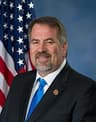 Doug LaMalfa
Republican · California
 Nicholas Langworthy
Republican · New York
 Elise Stefanik
Republican · New York