A Republican bill with 28 Democratic cosponsors · See all 36 cosponsors
Last activity — Ordered to be Reported in the Nature of a Substitute (Amended) by the Yeas and Nays: 29 - 0.
Introduced, nothing more yet
Formally proposed, and not yet handed to a committee.
Nearly every bill is sent to a committee within days. Introduction alone is not a sign of support, of momentum, or of any likelihood of passing — any member may introduce any bill.
Its path through Congress
- Introduced
What this bill would do
This bill establishes the National Artificial Intelligence Research Resource (NAIRR) to foster innovation and expand access to artificial intelligence research. The program aims to provide computational resources, datasets, and educational tools to researchers and students across the United States. It creates a governance structure including a Steering Subcommittee and a Program Management Office within the National Science Foundation. The initiative intends to improve capacity for AI research and support the testing and evaluation of AI systems. By democratizing access, the bill seeks to ensure that the benefits of AI development are shared more broadly.
Yes· 3 of 13
- Scored +7
Does this put more money into scientific research?
The act creates a substantial new resource for scientific inquiry and computational capacity.
- Scored +6
Does this make it easier to run a small business?
The bill explicitly includes small business concerns as eligible entities to access high-level computational resources.
- Scored +6
Would students be better off under this?
The bill specifically targets students through educational tools and technical training.
The opposite
- Scored -3
Would immigrants be better off under this?
The bill includes specific restrictions on users employed by certain foreign countries.
Who it would affect, and how
Potential Positive Impacts for People
-
Improved Access to Research Tools: The bill aims to improve access to artificial intelligence resources for researchers and students (Section 5602(a)(2)).
-
Increased Innovation and Capacity: The establishment of the NAIRR is intended to spur innovation, advance AI development, and improve the overall capacity for research in the United States (Section 5602(a)(1-3)).
-
Support for Testing and Evaluation: The resource is designed to support the testing, benchmarking, and evaluation of artificial intelligence systems developed and deployed in the U.S. (Section 5602(a)(4)).
-
Educational Opportunities: The NAIRR will provide educational tools and services, including technical training, user support, and targeted outreach to increase participation in STEM fields (Section 5603(b)(3)).
-
Democratizing Technology: The findings suggest that providing access to computational and data resources will help address the lack of diversity in the AI research community (Section 2(3)).
Potential Negative Impacts for People
-
User Restrictions: Individuals employed by certain foreign countries listed in specific federal code are excluded from being eligible users (Section 5604(a)(3)(A)).
-
Potential Costs for Access: While a free tier is mentioned, the bill allows for a fee schedule that may include cost-based charges for users wishing to purchase resources beyond the subsidized tier (Section 5604(e)(2-3)).
-
Security Requirements: Users must comply with minimum security requirements established by the Program Management Office (Section 5604(d)(1)).
Groups and Interests Ranking
Every group the model scored this bill for, from -10 to +10. Tap or hover a score for the reason it gave.
- Economy And Finance
- Does this make it easier to run a small business? — The bill explicitly includes small business concerns as eligible entities to access high-level computational resources. Is this likely to grow the economy? — Spurring innovation through shared AI resources is intended to drive long-term economic competitiveness and growth. Is this likely to create jobs? — The expansion of AI research capabilities and support for small businesses may indirectly stimulate job growth in the technology sector.
- Demographic And Interest Groups
- Would students be better off under this? — The bill specifically targets students through educational tools and technical training. Would business owners be better off under this? — Small business owners benefit from expanded access to expensive computational resources. Would people in their twenties and thirties be better off under this? — Increased access to educational tools and STEM outreach benefits students and those entering the workforce. Would immigrants be better off under this? — The bill includes specific restrictions on users employed by certain foreign countries.
- Education And Technology
- Does this put more money into scientific research? — The act creates a substantial new resource for scientific inquiry and computational capacity. Does this give people more control over their personal data? — The bill establishes specific governance and auditing requirements for privacy and ethics in AI research. Does this put more rules on large technology companies? — The bill aims to democratize access to tools currently dominated by large tech companies through a public resource.
- Governance And Ideology
- Does this give the federal government more power? — The bill centralizes the provision of AI research resources through the National Science Foundation. Does this make what the government does easier for the public to see? — The bill mandates annual public reports on the progress and performance of the NAIRR. Does this protect people from being watched or searched? — The legislation includes mandates for reviewing and auditing resources for privacy concerns.
- National Security And Foreign Policy
- Does this better protect the country from computer attacks? — The establishment of secure, government-overseen AI resources helps bolster national technological security.
- 10/5/2026
- 1 Cosponsor added.
- 10/1/2026
- 1 Cosponsor added.
- 8/17/2026
- 1 Cosponsor added.
- 6/30/2026
- 1 Cosponsor added.
- 6/25/2026
- Committee Consideration and Mark-up Session Held
- Ordered to be Reported in the Nature of a Substitute (Amended) by the Yeas and Nays: 29 - 0.
- 6/3/2026
- 1 Cosponsor added.
- 4/30/2026
- 1 Cosponsor added.
- 3/24/2026
- 1 Cosponsor added.
- 3/17/2026
- 1 Cosponsor added.
- 3/4/2026
- 1 Cosponsor added.
- 1/21/2026
- 1 Cosponsor added.
- 1/16/2026
- 1 Cosponsor added.
- 12/11/2025
- 1 Cosponsor added.
- 12/10/2025
- 1 Cosponsor added.
- 12/5/2025
- 1 Cosponsor added.
- 11/17/2025
- 1 Cosponsor added.
- 11/12/2025
- 1 Cosponsor added.
- 10/21/2025
- 1 Cosponsor added.
- 10/17/2025
- 1 Cosponsor added.
- 9/11/2025
- 1 Cosponsor added.
- 6/30/2025
- 1 Cosponsor added.
- 6/26/2025
- 1 Cosponsor added.
- 6/5/2025
- 1 Cosponsor added.
- 6/3/2025
- 1 Cosponsor added.
- 6/2/2025
- 1 Cosponsor added.
- 4/17/2025
- 4 Cosponsors added.
- 4/2/2025
- 5 Cosponsors added.
- 4/1/2025
- 1 Cosponsor added.
- 3/27/2025
- 1 Cosponsor added.
- 3/26/2025
- Referred to the House Committee on Science, Space, and Technology.
- 1 Cosponsor added.
- Introduced in House
One bill Congress.gov lists as related to this one — companions in the other chamber, earlier versions, and bills this one absorbed or was folded into.
 Suzanne Bonamici
Democrat · Oregon
 Donald Beyer
Democrat · Virginia
 Earl Carter
Republican · Georgia
 Salud Carbajal
Democrat · California
 Troy Carter
Democrat · Louisiana
 Christopher Deluzio
Democrat · Pennsylvania
 Suzan DelBene
Democrat · Washington
 Neal Dunn
Republican · Florida
 Brian Fitzpatrick
Republican · Pennsylvania
 Scott Franklin
Republican · Florida
 Valerie Foushee
Democrat · North Carolina
 Josh Gottheimer
Democrat · New Jersey
 Laura Gillen
Democrat · New York
 Josh Harder
Democrat · California
 Sara Jacobs
Democrat · California
 Young Kim
Republican · California
 Thomas Kean
Republican · New Jersey
 Jennifer Kiggans
Republican · Virginia
 Ted Lieu
Democrat · California
 Susie Lee
Democrat · Nevada
 Mike Levin
Democrat · California
 Sam Liccardo
Democrat · California
 Doris Matsui
Democrat · California
 Seth Moulton
Democrat · Massachusetts
 Richard McCormick
Republican · Georgia
 Kevin Mullin
Democrat · California
 Kristen McDonald Rivet
Democrat · Michigan
 Sarah McBride
Democrat · Delaware
 Dave Min
Democrat · California
 Brittany Pettersen
Democrat · Colorado
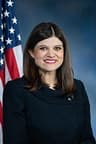 Haley Stevens
Democrat · Michigan
 Hillary Scholten
Democrat · Michigan
 Andrea Salinas
Democrat · Oregon
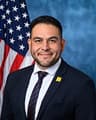 Gabe Vasquez
Democrat · New Mexico
 Eugene Vindman
Democrat · Virginia
 James Walkinshaw
Democrat · Virginia