
A Republican bill with 5 Democratic cosponsors · See all 7 cosponsors
Last activity — Received in the Senate.
Passed one chamber, waiting for the other to take it up
Passed one chamber, and the other has not yet sent it to a committee or put it on its calendar.
The other chamber will hand it to a committee, place it on its calendar, or leave it where it is. Nothing has been decided, and a bill can sit here indefinitely.
Its path through Congress
- Introduced
- Passed House voice vote
- Awaiting Senate
The House by voice vote (members called out yes or no together): no member's position on it was recorded.
What this bill would do
This Act, known as the "WIPPES Act," requires certain products to include specific labeling regarding flushability. It mandates that "covered products," which include various types of premoistened wipes, must display a "Do Not Flush" label notice and symbol. The law outlines specific placement requirements for different types of packaging, such as cylindrical, flexible film, or rigid packaging. It also prohibits companies from making any express or implied claims that these products can be flushed. The Federal Trade Commission is tasked with enforcing these rules and treating violations as unfair or deceptive practices.
Yes
- Scored +6
Does this better protect air, water and wildlife?
The bill protects wastewater infrastructure from pollution caused by non-flushable wipes.
- Scored +5
Does this give people more protection from unfair business practices?
The bill enhances consumer protection by mandating clear warnings and prohibiting deceptive claims regarding product flushability.
- Scored +4
Does this give the federal government more power?
The bill expands federal oversight via the FTC and preempts state-level labeling laws.
The opposite
- Scored -5
Does this leave more decisions to the states?
The bill includes preemption language that restricts the ability of states to create their own labeling requirements.
- Scored -3
Would business owners be better off under this?
Manufacturers and retailers face new compliance costs and strict labeling requirements.
Who it would affect, and how
Potential Positive Impacts for People
-
Increased Consumer Awareness: The bill requires the "Do Not Flush" label notice and symbol to be displayed in a "clear and conspicuous location" that is "reasonably visible to the user" during use (Section 2(a); Section 2(b)). This ensures users are informed about the product's disposal requirements.
-
Standardized Labeling Clarity: By mandating that the symbol and label notice must be at least 2 percent of the surface area of the principal display panel and have "high contrast" with the background, the law ensures the warnings are easily readable by an ordinary individual (Section 2(c)).
-
Prevention of Misleading Claims: The Act prohibits "covered entities" from making any "express or implied representation" that the products can or should be flushed, protecting consumers from deceptive marketing (Section 2(d)).
Potential Negative Impacts for People
-
Preemption of State Laws: This Act prevents any State or political subdivision from establishing or continuing any "Do Not Flush" labeling requirements that are not "identical to the requirements of this section," which limits the ability of local governments to set their own standards (Section 2(f)).
-
Compliance Burdens for Entities: "Covered entities," which include manufacturers, wholesalers, suppliers, and retailers, must adhere to specific and detailed packaging, visibility, and contrast requirements for various product types (Section 2(b); Section 2(g)(3)).
Groups and Interests Ranking
Every group the model scored this bill for, from -10 to +10. Tap or hover a score for the reason it gave.
- Environment Energy And Infrastructure
- Does this better protect air, water and wildlife? — The bill protects wastewater infrastructure from pollution caused by non-flushable wipes.
- Economy And Finance
- Does this give people more protection from unfair business practices? — The bill enhances consumer protection by mandating clear warnings and prohibiting deceptive claims regarding product flushability.
- Demographic And Interest Groups
- Would business owners be better off under this? — Manufacturers and retailers face new compliance costs and strict labeling requirements.
- Governance And Ideology
- Does this give the federal government more power? — The bill expands federal oversight via the FTC and preempts state-level labeling laws. Does this leave more decisions to the states? — The bill includes preemption language that restricts the ability of states to create their own labeling requirements.
- 6/24/2025
- Received in the Senate.
- 6/23/2025
- Motion to reconsider laid on the table Agreed to without objection.
- Passed/agreed to in House: On motion to suspend the rules and pass the bill Agreed to by voice vote. (text: CR H2852-2853)
- On motion to suspend the rules and pass the bill Agreed to by voice vote. (text: CR H2852-2853)
- DEBATE - The House proceeded with forty minutes of debate on H.R. 2269.
- Considered under suspension of the rules. (consideration: CR H2852-2854)
- Mr. Bilirakis moved to suspend the rules and pass the bill.
- 6/12/2025
- Reported by the Committee on Energy and Commerce. H. Rept. 119-154.
- Placed on the Union Calendar, Calendar No. 120.
- 6/5/2025
- 1 Cosponsor added.
- 5/13/2025
- 2 Cosponsors added.
- 4/9/2025
- 1 Cosponsor added.
- 4/8/2025
- Committee Consideration and Mark-up Session Held
- Ordered to be Reported by Voice Vote.
- 3/21/2025
- Referred to the House Committee on Energy and Commerce.
- 3 Cosponsors added.
- Introduced in House
One bill Congress.gov lists as related to this one — companions in the other chamber, earlier versions, and bills this one absorbed or was folded into.
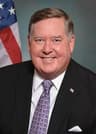 Ken Calvert
Republican · California
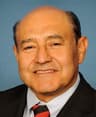 J. Correa
Democrat · California
 Jared Huffman
Democrat · California
 Pramila Jayapal
Democrat · Washington
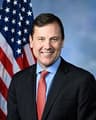 Thomas Kean
Republican · New Jersey
 Kevin Mullin
Democrat · California
 Chellie Pingree
Democrat · Maine