
Nicole Malliotakis (R-NY)
Medical Supply Chain Resiliency Act
A Republican bill with 14 Democratic cosponsors · See all 21 cosponsors
Last activity — Referred to the Committee on Ways and Means, and in addition to the Committee on Rules, for a period to be subsequently determined by the Speaker, in each case for consideration of such provisions as fall within the jurisdiction of the committee concerned.
In committee
Introduced and handed to a committee in the chamber it started in.
The committee holds it, and most bills are never heard from again. A hearing or a committee vote would be news; silence is the usual outcome, and it kills the bill without anyone voting against it.
Its path through Congress
- Introduced
- In Committee
What this bill would do
The Medical Supply Chain Resiliency Act authorizes the President to enter into trade agreements with "trusted trade partners" to reduce or eliminate duties and import restrictions on medical goods. This legislation aims to strengthen national security and public health by diversifying the United States' medical supply chain. The bill seeks to reduce reliance on a limited number of import partners and establish more reliable supplier networks. It includes provisions for regulatory cooperation, intellectual property protection, and increased access to government procurement markets. The Act also establishes specific congressional oversight, notice, and review requirements for these agreements.
Yes· 3 of 12
- Scored +8
Does this make the country readier for the next outbreak?
The bill specifically aims to prevent supply chain disruptions during future public health emergencies like pandemics.
- Scored +7
Does this make trade with other countries easier?
The bill actively promotes more efficient and reciprocal international trade of medical goods.
- Scored +6
Does this strengthen ties with allied countries?
The bill strengthens ties with trusted trading partners through reciprocal agreements.
The opposite
No question was scored the opposite.
Who it would affect, and how
Potential Positive Impacts for People
-
Improved Supply Chain Security: The bill aims to diversify and expand supplier networks to ensure a reliable supply of medical goods during emergency situations (Section 3).
-
Enhanced National Security and Public Health: By establishing a framework for trade with trusted partners, the act intends to contribute to the national security and public health of the United States (Section 5).
-
Streamlined Movement of Medical Goods: The act seeks to expedite the cross-border movement of critical medical goods and eliminate unnecessary trade barriers (Section 3).
-
Increased Research and Development Cooperation: The legislation encourages international collaboration and facilitates data flows for life science research and development (Section 3).
-
Regulatory Efficiency: The bill aims to promote regulatory cooperation and harmonization to assist in the authorization and licensing of medical devices and pharmaceutical goods (Section 3).
Potential Negative Impacts for People
-
Potential for Trade Disruptions: The President has the authority to proclaim modifications to existing duties, such as additional duties, which could impact trade costs (Section 5).
-
Risk of Dependency on Agreements: While the goal is diversification, the President may enter into agreements that involve the reduction or elimination of existing duties, quotas, and other trade barriers (Section 5).
Groups and Interests Ranking
Every group the model scored this bill for, from -10 to +10. Tap or hover a score for the reason it gave.
- Healthcare
- Does this make the country readier for the next outbreak? — The bill specifically aims to prevent supply chain disruptions during future public health emergencies like pandemics. Does this make health care easier to get in general? — Ensuring a reliable supply of medical goods improves the overall availability of essential healthcare supplies. Does this put more money into medical research? — The act facilitates international collaboration and data flows to support life science research and development. Does this lower the price of prescription medicines? — The reduction of duties and trade barriers may help stabilize and potentially lower the cost of essential medications.
- National Security And Foreign Policy
- Does this make trade with other countries easier? — The bill actively promotes more efficient and reciprocal international trade of medical goods. Does this strengthen ties with allied countries? — The bill strengthens ties with trusted trading partners through reciprocal agreements. Does this favour talking over confrontation abroad? — It utilizes trade negotiations as a tool for diplomatic and economic cooperation.
- Governance And Ideology
- Does this make what the government does easier for the public to see? — The bill mandates several reporting and consultation requirements to ensure congressional oversight. Does this give the federal government more power? — The bill grants the President expanded authority to negotiate trade agreements for medical goods.
- Economy And Finance
- Does this give people more protection from unfair business practices? — By securing medical supply chains, the bill helps ensure the availability of essential medical goods for consumers.
- Environment Energy And Infrastructure
- Does this improve help for people hit by a disaster? — By securing medical supplies, the bill enhances the country's ability to respond to public health disasters.
- Education And Technology
- Does this make patent and copyright rules fairer? — The bill emphasizes the protection of intellectual property as a condition for trade agreements.
- 9/15/2026
- 1 Cosponsor added.
- 8/27/2026
- 1 Cosponsor added.
- 2/4/2026
- 1 Cosponsor added.
- 1/30/2026
- 2 Cosponsors added.
- 1/6/2026
- 1 Cosponsor added.
- 12/18/2025
- 1 Cosponsor added.
- 12/1/2025
- 1 Cosponsor added.
- 9/16/2025
- 1 Cosponsor added.
- 9/9/2025
- 1 Cosponsor added.
- 8/5/2025
- 1 Cosponsor added.
- 7/29/2025
- 2 Cosponsors added.
- 7/16/2025
- 1 Cosponsor added.
- 7/15/2025
- 1 Cosponsor added.
- 6/26/2025
- 1 Cosponsor added.
- 6/25/2025
- 1 Cosponsor added.
- 5/29/2025
- 1 Cosponsor added.
- 5/5/2025
- 1 Cosponsor added.
- 4/28/2025
- 1 Cosponsor added.
- 3/18/2025
- Referred to the Committee on Ways and Means, and in addition to the Committee on Rules, for a period to be subsequently determined by the Speaker, in each case for consideration of such provisions as fall within the jurisdiction of the committee concerned.
- 1 Cosponsor added.
- Introduced in House
One bill Congress.gov lists as related to this one — companions in the other chamber, earlier versions, and bills this one absorbed or was folded into.
 Jake Auchincloss
Democrat · Massachusetts
 J. Correa
Democrat · California
 Donald Davis
Democrat · North Carolina
 Sharice Davids
Democrat · Kansas
 Al Green
Democrat · Texas
 Josh Gottheimer
Democrat · New Jersey
 Laura Gillen
Democrat · New York
 Steven Horsford
Democrat · Nevada
 Julie Johnson
Democrat · Texas
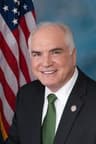 Mike Kelly
Republican · Pennsylvania
 Darin LaHood
Republican · Illinois
 Carol Miller
Republican · West Virginia
 Gregory Murphy
Republican · North Carolina
 Mariannette Miller-Meeks
Republican · Iowa
 Max Miller
Republican · Ohio
 Stacey Plaskett
Democrat · Virgin Islands
 Deborah Ross
Democrat · North Carolina
 Bradley Schneider
Democrat · Illinois
 Thomas Suozzi
Democrat · New York
 Claudia Tenney
Republican · New York
 Eugene Vindman
Democrat · Virginia