
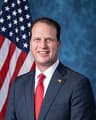
Ryan Mackenzie (R-PA)
DHS Intelligence Rotational Assignment Program and Law Enforcement Support Act
A Republican bill with 3 Republican cosponsors · See all 3 cosponsors
Last activity — Received in the Senate and Read twice and referred to the Committee on Homeland Security and Governmental Affairs.
In the other chamber's committee
Passed one chamber and has been handed to a committee in the other.
The committee decides whether it goes any further, and most bills that reach a committee never leave it. A committee that simply does nothing kills a bill without anyone ever voting against it, so no news from here is usually the news.
Its path through Congress
- Introduced
- Passed House voice vote
- In Senate committee
The House by voice vote (members called out yes or no together): no member's position on it was recorded.
What this bill would do
This Act is titled the ``DHS Intelligence Rotational Assignment Program and Law Enforcement Support Act.'' It seeks to amend the Homeland Security Act of 2002. The primary purpose is to establish the Intelligence Rotational Assignment Program. Specifically, it mandates that the Secretary require all DHS components within the Intelligence Enterprise to participate in the ODNI Intelligence Community Civilian Joint Duty Program. This program must be carried out according to policies set by the Director of National Intelligence.
Yes
- Scored +5
Does this tighten control of the border?
The establishment of intelligence rotational assignments may enhance the efficiency and coordination of border security intelligence operations.
- Scored +3
Does this give the federal government more power?
The bill increases federal power by mandating participation in a joint program directed by the ODNI.
- Scored +2
Does this give the government more power to monitor people inside the country?
The program likely enhances the integration of intelligence capabilities within the DHS, potentially increasing domestic intelligence-gathering efficiency.
The opposite
No question was scored the opposite.
Who it would affect, and how
Potential Positive Impacts for People
- Mandatory Participation in Joint Duty Program: The bill requires all components of the Department that are part of the DHS Intelligence Enterprise to participate in the ODNI Intelligence Community Civilian Joint Duty Program (Section 2). This establishes a requirement for participation in the program.
Potential Negative Impacts for People
- No negative impacts are explicitly mentioned in the text provided.
Groups and Interests Ranking
Every group the model scored this bill for, from -10 to +10. Tap or hover a score for the reason it gave.
- Social Issues And Justice
- Does this tighten control of the border? — The establishment of intelligence rotational assignments may enhance the efficiency and coordination of border security intelligence operations.
- Governance And Ideology
- Does this give the federal government more power? — The bill increases federal power by mandating participation in a joint program directed by the ODNI.
- National Security And Foreign Policy
- Does this give the government more power to monitor people inside the country? — The program likely enhances the integration of intelligence capabilities within the DHS, potentially increasing domestic intelligence-gathering efficiency.
- 11/18/2025
- Received in the Senate and Read twice and referred to the Committee on Homeland Security and Governmental Affairs.
- 11/17/2025
- Motion to reconsider laid on the table Agreed to without objection.
- Passed/agreed to in House: On motion to suspend the rules and pass the bill, as amended Agreed to by voice vote. (text: CR H4680)
- On motion to suspend the rules and pass the bill, as amended Agreed to by voice vote. (text: CR H4680)
- DEBATE - The House proceeded with forty minutes of debate on H.R. 2212.
- Considered under suspension of the rules. (consideration: CR H4680-4681)
- Mr. Garbarino moved to suspend the rules and pass the bill, as amended.
- 11/12/2025
- Reported (Amended) by the Committee on Homeland Security. H. Rept. 119-374.
- Placed on the Union Calendar, Calendar No. 325.
- 9/3/2025
- Committee Consideration and Mark-up Session Held
- Ordered to be Reported (Amended) by the Yeas and Nays: 22 - 0.
- 6/2/2025
- 1 Cosponsor added.
- 3/25/2025
- Subcommittee Consideration and Mark-up Session Held
- Forwarded by Subcommittee to Full Committee by Voice Vote.
- 3/21/2025
- 1 Cosponsor added.
- 3/18/2025
- Referred to the Subcommittee on Counterterrorism and Intelligence.
- Referred to the House Committee on Homeland Security.
- 1 Cosponsor added.
- Introduced in House
 Gabe Evans
Republican · Colorado
 Michael Guest
Republican · Mississippi
 August Pfluger
Republican · Texas