
A Democratic bill with 6 Democratic cosponsors · See all 6 cosponsors
Last activity — Referred to the House Committee on Energy and Commerce.
In committee
Introduced and handed to a committee in the chamber it started in.
The committee holds it, and most bills are never heard from again. A hearing or a committee vote would be news; silence is the usual outcome, and it kills the bill without anyone voting against it.
Its path through Congress
- Introduced
- In Committee
What this bill would do
The Expanding Medical Education Act seeks to create a grant program for schools of medicine and osteopathic medicine. These funds are intended to support the establishment, improvement, or expansion of these schools or their branch campuses. Priority is given to institutions located in medically underserved communities or health professional shortage areas. The program also emphasizes support for minority-serving institutions. Funds can be used for student recruitment, curriculum development, and infrastructure construction. The Act requires regular reporting to Congress to track the program's impact on the healthcare workforce.
Yes· 3 of 20
- Scored +7
Does this make health care easier to get in general?
The bill expands the medical workforce and establishes schools in underserved and rural areas to improve access.
- Scored +6
Would people in rural areas be better off under this?
The bill specifically aims to improve healthcare access and medical education in rural areas.
- Scored +6
Does this narrow racial gaps in how people are treated?
The bill prioritizes minority-serving institutions and recruitment of underrepresented racial and ethnic groups.
The opposite
No question was scored the opposite.
Who it would affect, and how
Potential Positive Impacts for People
-
Increased Medical Education in Underserved Areas: The Secretary may award grants to establish or expand schools of medicine or osteopathic medicine in areas where no other such school is based, specifically targeting medically underserved communities or health professional shortage areas (Section 2(b)(1)).
-
Support for Diverse Student Populations: Grant funds are required to be used to recruit, enroll, and retain students from disadvantaged backgrounds, including those from racial and ethnic groups underrepresented in medicine, rural and underserved areas, low-income individuals, and first-generation college students (Section 2(d)(1)(A)).
-
Improved Healthcare Services: The bill directs funds toward developing curricula that emphasize care for rural and underserved populations, including care that is accessible and culturally and linguistically appropriate (Section 2(d)(1)(B)).
-
Support for Minority-Serving Institutions: Priority is given to minority-serving institutions or those proposing to establish such institutions in areas where no other such school exists (Section 2(b)(1)(A) and (b)(2)).
-
Workforce and Infrastructure Development: Funds may be used to hire faculty from underrepresented racial and ethnic groups, modernize infrastructure, and support educational programs (Section 2(d)(2)).
Potential Negative Impacts for People
- No negative impacts or burdens are explicitly stated in the provided text.
Groups and Interests Ranking
Every group the model scored this bill for, from -10 to +10. Tap or hover a score for the reason it gave.
- Demographic And Interest Groups
- Would people in rural areas be better off under this? — The bill specifically aims to improve healthcare access and medical education in rural areas. Would Black Americans be better off under this? — The bill supports minority-serving institutions and recruiting underrepresented racial groups. Would Hispanic Americans be better off under this? — The bill supports minority-serving institutions and recruiting underrepresented racial groups. Would households on low incomes be better off under this? — The bill prioritizes low-income individuals for medical school recruitment and provides better healthcare access. Would Native Americans be better off under this? — The bill targets underserved areas which often include tribal lands. Would students be better off under this? — The bill provides specific support for recruitment and retention of medical students. Would people in their twenties and thirties be better off under this? — Medical students are typically young adults who will benefit from these educational opportunities. Would retired people be better off under this? — Increased healthcare access benefits the elderly population. Would people over 65 be better off under this? — Improved healthcare access benefits the elderly population in underserved areas.
- Healthcare
- Does this make health care easier to get in general? — The bill expands the medical workforce and establishes schools in underserved and rural areas to improve access. Does this put more money into medical research? — The grants support educational curricula and infrastructure which indirectly supports medical knowledge expansion.
- Social Issues And Justice
- Does this narrow racial gaps in how people are treated? — The bill prioritizes minority-serving institutions and recruitment of underrepresented racial and ethnic groups. Is this likely to lift people out of poverty? — By targeting low-income individuals for medical education, it provides a pathway to higher income potential.
- Education And Technology
- Does this make college cost less? — The bill supports recruitment and retention of students from disadvantaged and low-income backgrounds. Does this put more money into scientific research? — The bill includes funding for the development of medical curricula.
- Environment Energy And Infrastructure
- Does this invest in rural communities? — The bill specifically targets rural areas for the establishment of new medical school infrastructure.
- Economy And Finance
- Is this likely to create jobs? — The creation of new medical schools and branch campuses will likely create jobs in faculty and administrative roles. Is this likely to grow the economy? — Investing in higher education and medical infrastructure can provide localized economic stimulation.
- Governance And Ideology
- Does this make what the government does easier for the public to see? — The bill mandates regular public reporting to Congress and on the HHS website. Does this give the federal government more power? — The bill expands federal grant authority and reporting requirements through the Secretary.
- 8/10/2026
- 1 Cosponsor added.
- 1/6/2026
- 1 Cosponsor added.
- 5/5/2025
- 1 Cosponsor added.
- 4/21/2025
- 2 Cosponsors added.
- 3/14/2025
- Referred to the House Committee on Energy and Commerce.
- 1 Cosponsor added.
- Introduced in House
One bill Congress.gov lists as related to this one — companions in the other chamber, earlier versions, and bills this one absorbed or was folded into.
 Steve Cohen
Democrat · Tennessee
 Troy Carter
Democrat · Louisiana
 Donald Davis
Democrat · North Carolina
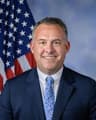 Adam Gray
Democrat · California
 Josh Harder
Democrat · California
 Terri Sewell
Democrat · Alabama